

Amalienbad, Vienna: Art Deco Pool and Sauna Guide
Amalienbad in Favoriten is Vienna's 1920s Art Deco swimming and sauna complex. Here's how a visit works, the sauna rooms, mixed nudity and getting there.
On this page
Amalienbad is a municipal swimming and sauna complex in Vienna's tenth district, Favoriten, housed in a 1920s building whose interior is the reason many people make the trip out to Reumannplatz. It combines a serious swimming pool, complete with diving boards, and a sauna area with several themed rooms, so a single ticket can cover both halves of a visit. Think of it as a Viennese civic bathhouse first and a sauna destination second.
What Amalienbad is and who it suits
This is a pool with a sauna attached, not a dedicated sauna house. Swimmers get proper lanes and a deep diving section, while bathers who came for heat get a sauna wing with themed rooms rather than a single hot cabin. If you want a long, quiet Löyly circuit in a wood-lined room, the Finnish sauna tradition is the better reference point for what that feels like, and Vienna has venues built around it.
Amalienbad suits architecture-minded bathers, families using the pool, and anyone who wants a swim and a sauna in one outing without committing a whole afternoon to a spa. It is a poor fit for purists who want repeated Aufguss ceremonies and a silent, dimly lit sauna landscape. Set expectations at 'handsome historic bathhouse with a sauna wing' and you will enjoy it.
The building itself is the draw: symmetrical wooden cabin doors, mosaic tiles and a Red Vienna pedigree that the city's own tourism pages treat as a story worth telling. If you are compiling a sauna itinerary across the city, it earns a place alongside the bigger sauna venues covered in our guide to saunas in Vienna.
Where it is: Reumannplatz in Favoriten
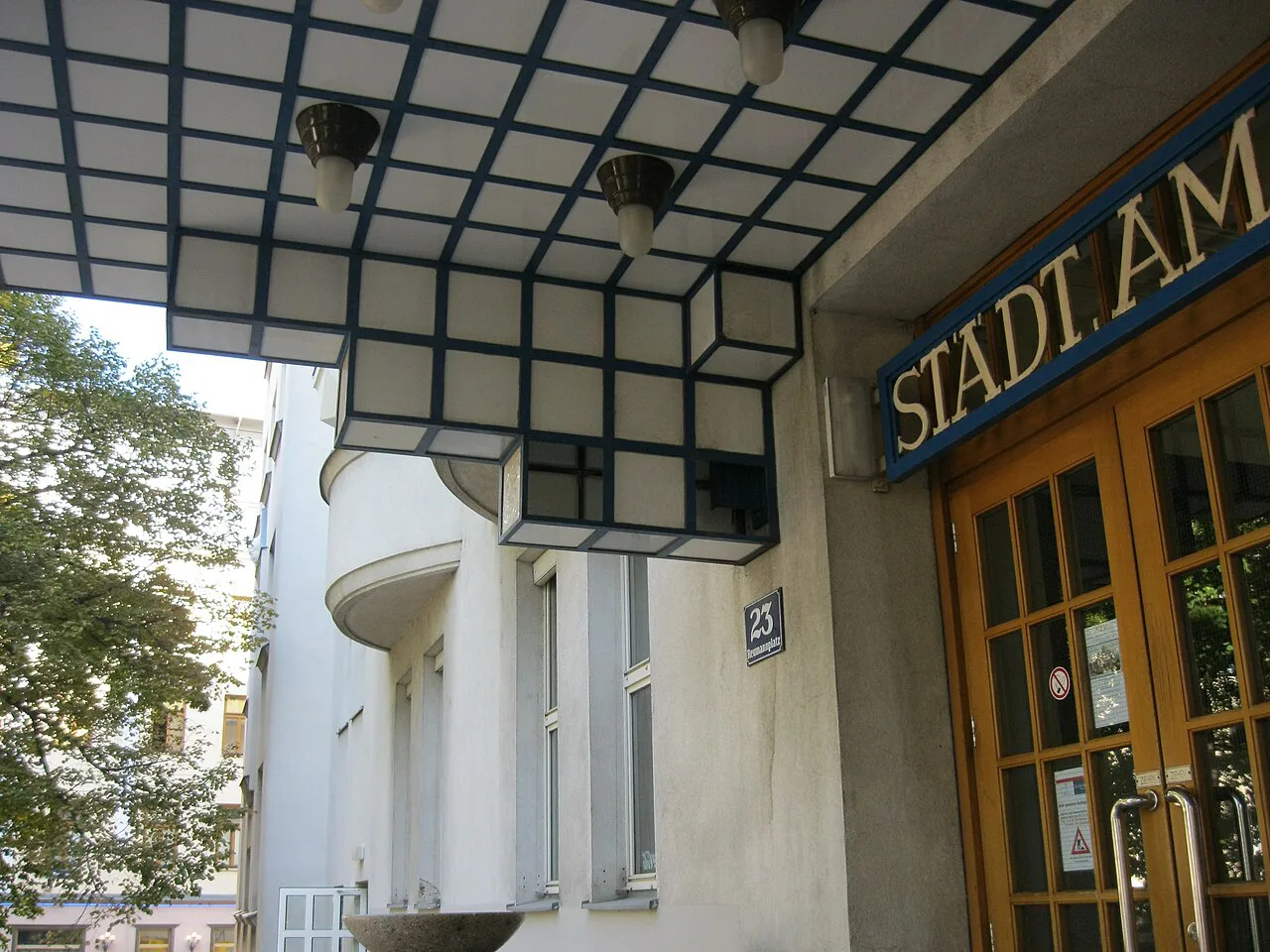
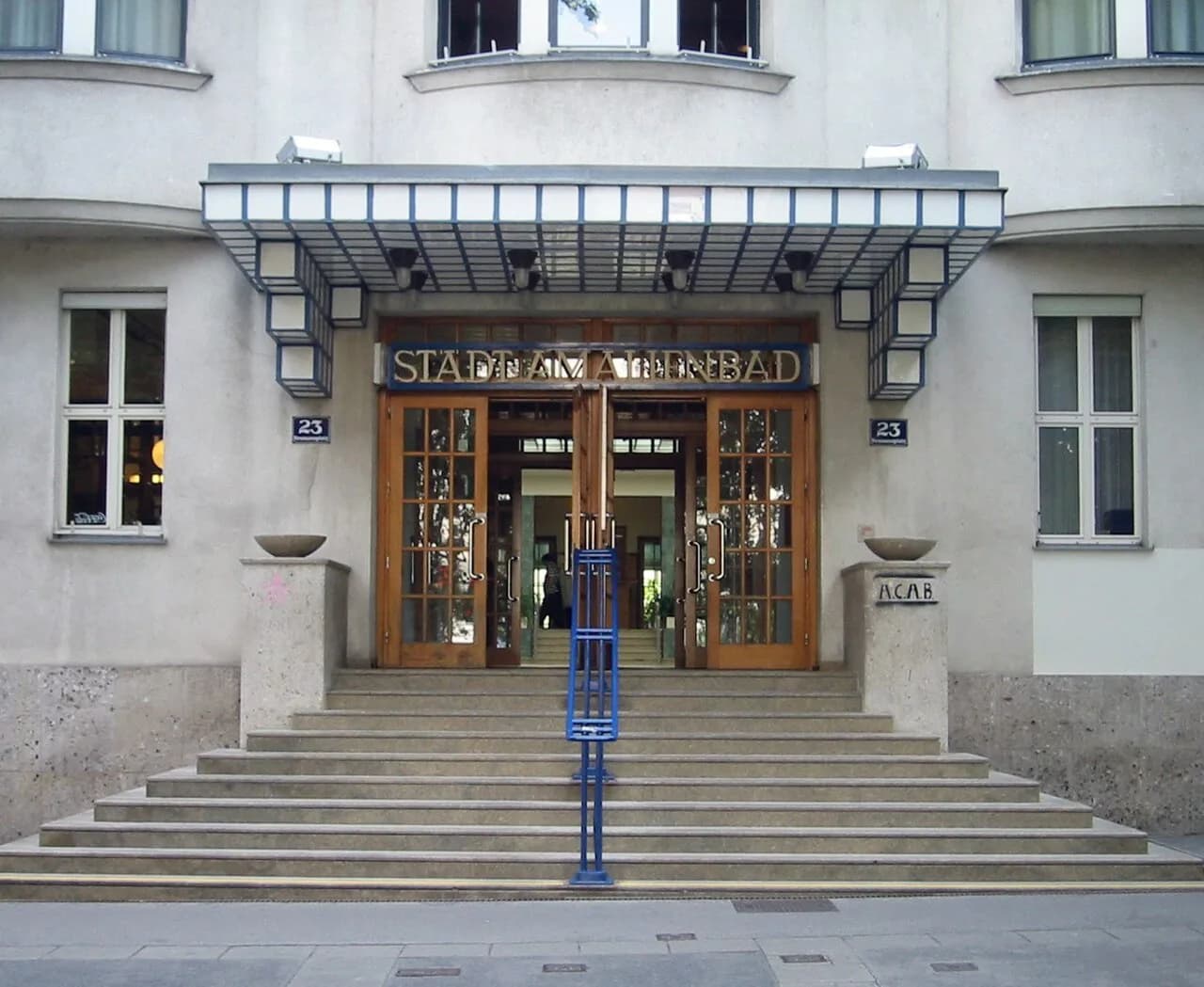
Amalienbad sits at Reumannplatz 23 in 1100 Wien, in the heart of Favoriten, the large workers' district south of the centre. This is not the Ringstrasse: it is a residential quarter of courtyard blocks and tram lines, and the bathhouse was built to serve the neighbourhood.
Treat the ride out as part of the plan rather than an afterthought. Reumannplatz is the southern end of the U1 line, so the trip from the inner city is a straight underground run with no changes, and trams also serve the square. Coming back in the evening is equally simple, which makes an afternoon slot realistic even on a short city break.
The building: Red Vienna, Art Deco and mosaic tiles
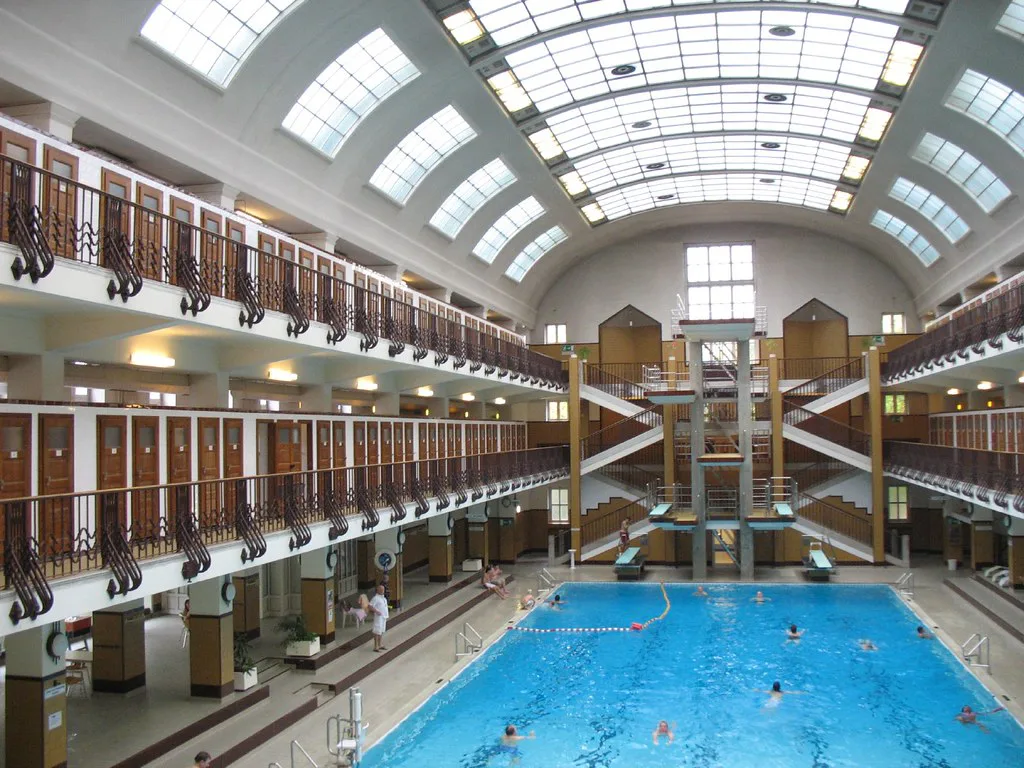
Amalienbad was built in the 1920s as part of the Red Vienna municipal programme, and its interior is a confident piece of Art Deco and Art Nouveau detailing: coloured mosaic tilework, tall ceilings and rows of matching wooden changing cabins that give the hall its symmetry. The facade is deliberately plain, so first-time visitors are often surprised by the interior.
One piece of history to look for: the pool once had a sliding roof that could be closed over the water like a car roof, making it a convertible pool. That detail is the city's own framing of the building's past, and it is the sort of thing worth knowing before you walk in.
Maintenance matters in a building of this age, and recent visitor descriptions consistently single out the cleanliness of the pool and the upkeep of the sauna area alongside the architecture. Come for the tiles, but expect a working municipal bathhouse rather than a museum.
The pools: depths, lanes and the 10-metre diving area
The main pool is a proper swimming pool with varied depths, including a section with a ten-metre diving area and a separate area of swim lanes. That combination makes it unusually versatile for a historic hall: you can do lengths, and you can also watch divers drop from the top platform.
Lane swimmers should head for the marked lanes and keep the diving end clear; the pool is shared with recreational bathers and children, so pace yourself accordingly. If you want a calm swim, arrive early in a session rather than mid-afternoon.
The sauna area: themed rooms and how a round works
The sauna wing is made up of themed rooms rather than one large cabin, and the local habit is to circulate hot air with a towel, which spreads the heat more evenly around the room. Expect a mixture of men and women and a mixed-nudity convention; the sauna is the one part of the building where textiles usually come off.
The rhythm is continental rather than Finnish: a stretch of dry heat, a cool-down, a rest, then another room. If you are used to the Finnish sauna, with its short rounds and a plunge between them, the towel-fanning and longer sits will feel like a cousin rather than the same thing. Austrian practice around Aufguss and nudity varies between houses, and our Austrian sauna etiquette notes cover the general conventions.
Seat cover and towel go under you, not around you, and the towel is also the tool for fanning. Showers before entering and between rounds are the norm. A short cool-down after each round keeps the session comfortable.
How a visit works step by step
Buy your ticket at the entrance or online in advance and choose whether you want the pool only or a sauna-and-swimming combination, which gives you both halves in one visit. Buying online is the recommended way to skip the confusion at the entrance.
Inside, change in the wooden cabins, shower, then pick your order: swim first and sauna after, or the reverse. The sauna area operates separately from the water, so you will be changing zones, and a robe or large towel saves repeated trips to the cabin.
There is no restaurant to plan around in the way a big spa would have one, so eat before or after rather than mid-visit. Allow a comfortable block of time rather than squeezing it between two museum slots.
Tickets and prices
Admission is charged as a municipal pool entry, with a sauna supplement or a combined ticket depending on what you use, which puts Amalienbad in the affordable end of Vienna bathing. The city runs the bathhouse, and the desk staff can tell you what a combination ticket includes on the day you visit.
Pay attention to what your ticket covers if you plan to move between pool and sauna, because the two are ticketed separately in some configurations. If you are weighing up a bigger sauna session elsewhere in the city, Stadthallenbad Vienna is the other municipal option worth comparing.
Opening hours and booking online
Hours vary by day and are not uniform: the listing gives a Monday closure, an evening slot on Wednesday and Thursday, and short morning windows followed by an afternoon session on Tuesday, Wednesday and Friday. Weekend opening stretches across the middle of the day. That pattern rewards an afternoon visit rather than a speculative early start.
Buy your ticket online where you can, and go straight to the entrance rather than lingering at the ticket desk. The pool's online ticket option exists precisely for that, and it removes the main friction from a visit.
Swimwear, nudity and mixed sauna sessions
In the pool, swimwear is standard. In the sauna area, mixed nudity is the rule, and it is the single thing most first-timers get wrong: visitors arrive in bathing suits and find themselves the odd one out. Read the signage at the sauna entrance and follow the house convention rather than your home habit.
Bring a large towel for sitting on and a second for drying, and leave jewellery in the cabin. If you are travelling with someone who prefers to stay clothed, the pool half of the visit is the answer.
Best time to go and how busy it gets
Sunday mornings and afternoons are the quietest stretch according to visitor reports, which makes them the best bet for a relaxed sauna. Weekday afternoon sessions after the short morning windows close and reopen are the other sensible slot.
Expect the pool to be busy with families and school groups at the usual after-school hours, and expect the sauna rooms to be quieter. Because some days only open for a short morning window, a badly timed arrival can leave you waiting for the afternoon slot.
Getting there by U-Bahn and tram
Take the U1 to Reumannplatz; the bathhouse is right at the square, so the walk is short in any weather. Trams also serve the square, which helps if you are coming from the south or west of the city rather than the centre.
If you are carrying a towel and a change of clothes, the underground is easier than a tram change. The ride out and back is short enough that the trip does not eat into your bathing time.
What to bring and what to leave behind
Bring swimwear, two towels, flip-flops for the wet floors and a water bottle. A robe is useful if you plan to move between the pool and the sauna more than once, and a plastic bag keeps wet kit away from everything else.
Leave valuables at home or in the cabin, and do not bring glass into the bathing areas. Bring coins for a locker, the usual requirement in Vienna's municipal baths.
Practical tips and one safety line
Stay hydrated, skip alcohol before bathing, leave the sauna if you feel unwell, and ask a doctor first if you have a heart condition or are pregnant. Beyond that, the main skill is pacing: short first rounds, longer rest between them, and no rush to prove anything.
Check the venue's own site once for the current day's opening window before you set out, since the split morning sessions are easy to misread. Book online if you are visiting at a weekend and want to skip the desk.
Other saunas and bathing spots in Vienna
Vienna has a wide spread of bathing options, from the large municipal sauna landscapes to open-air summer pools. Therme Wien and the bigger public baths sit in a different category from Amalienbad, and the city's sauna venues differ sharply in scale.
If you are touring the country beyond the capital, our guide to saunas in Austria covers the regional picture. For a full comparison of Vienna's municipal sauna houses, Stadthallenbad is the natural next stop after Amalienbad.
Amalienbad in One Visit
Amalienbad is worth the U1 ride for the building alone: the mosaic tiles, the wooden cabins and the sliding-roof story make it one of Vienna's most distinctive municipal baths. Add the pool, the diving boards and the sauna wing, and a single visit covers swimming and heat in one outing.
Go in the afternoon, take the combination ticket, bring two towels and leave your swimwear in the cabin when you enter the sauna. That is the whole method.
Frequently Asked Questions
Do you have to be naked in the sauna at Amalienbad?
The sauna area follows the mixed-nudity convention common in Austrian baths, so bathers are typically unclothed and sit on a towel. The swimming pool is a normal swimwear pool. Read the signage at the sauna entrance and follow the house rules.
Is Amalienbad open on Mondays?
The published schedule shows Amalienbad closed on Mondays, with opening on the other days split into short morning windows and longer afternoon or evening sessions. Check the venue's own page once for the day you plan to visit, because the split sessions are easy to misread.
How do you get to Amalienbad?
Take the U1 underground line to Reumannplatz; the bathhouse is at the square in Favoriten, 1100 Wien. Trams also serve the square, so the trip from the city centre is short and needs no changes on the underground.
Can you swim and use the sauna in one visit?
Yes. A combination ticket covers both the pool and the sauna area, and buying online avoids the queue at the desk. Plan the order to suit you, but remember you will be changing zones between the pool and the sauna, so a robe or large towel helps.
What should you bring to Amalienbad?
Bring swimwear, two towels, flip-flops and a water bottle, plus coins for a locker. One towel goes under you in the sauna and doubles as the fanning towel. Leave valuables at home.
When is Amalienbad quietest?
Visitor reports point to Sunday mornings and afternoons as the calmest stretch, and weekday afternoons after the short morning window closes are the other sensible slot. The pool fills up after school, while the sauna rooms stay quieter.
Sources
Sauna notes for your next trip
Optional updates to our sauna guides.
You might also like


Continue reading
More guides you'll find useful