
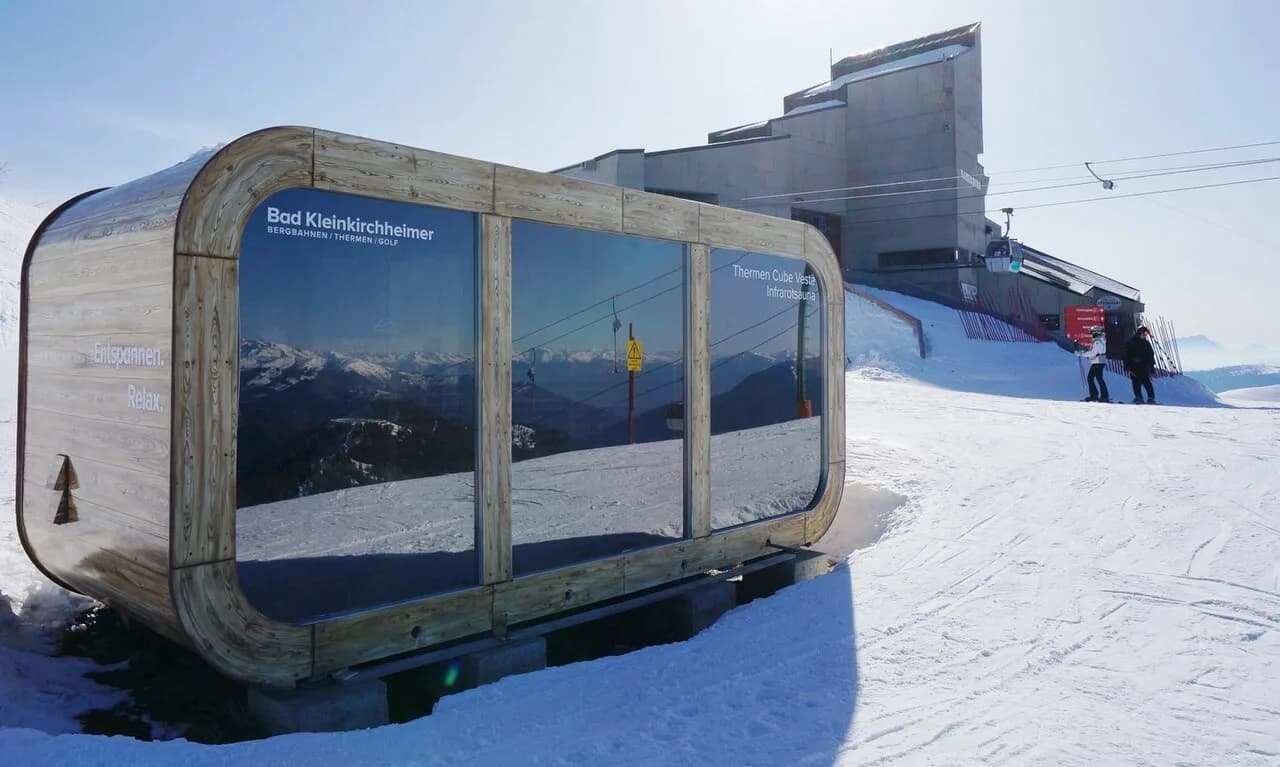
Saunas in Austria: Etiquette, Aufguss and Where to Go
Austrian saunas are textile-free, usually mixed and built around the Aufguss ritual. Here is how a visit works, what to bring and where to plan a sauna trip.
On this page
Saunas in Austria are a mainstream public habit rather than a niche treat: they sit inside municipal pools, thermal baths and sports centres across the country, and most are inexpensive enough to visit on an ordinary weekday evening. The one thing that reliably surprises visitors is not the heat but the format, because Austrian cabins are usually textile-free, frequently mixed and often run to a ritual timetable. Read the posted rules before you undress, then settle in for a slow two to three hours rather than a quick sweat.
The single experience most likely to unsettle a first-timer is the Aufguss, a scheduled pouring of water onto hot stones with a towel-waving sauna master. Understanding that one ritual, plus the nudity conventions around it, covers most of what makes an Austrian sauna different from what visitors expect at home.
Why Austria Is a Sauna Country
Saunas appear all over Austria: in thermal baths, public swimming pools, hotels and private homes, and they draw crowds well beyond the cold winter months. That breadth matters for planning, because a sauna visit is often an add-on to a normal swim rather than a separate destination, and most public pools operate several heat rooms side by side. Expect a traditional Finnish-style cabin alongside stone saunas, steam baths, infrared cabins and hot tubs under one roof.
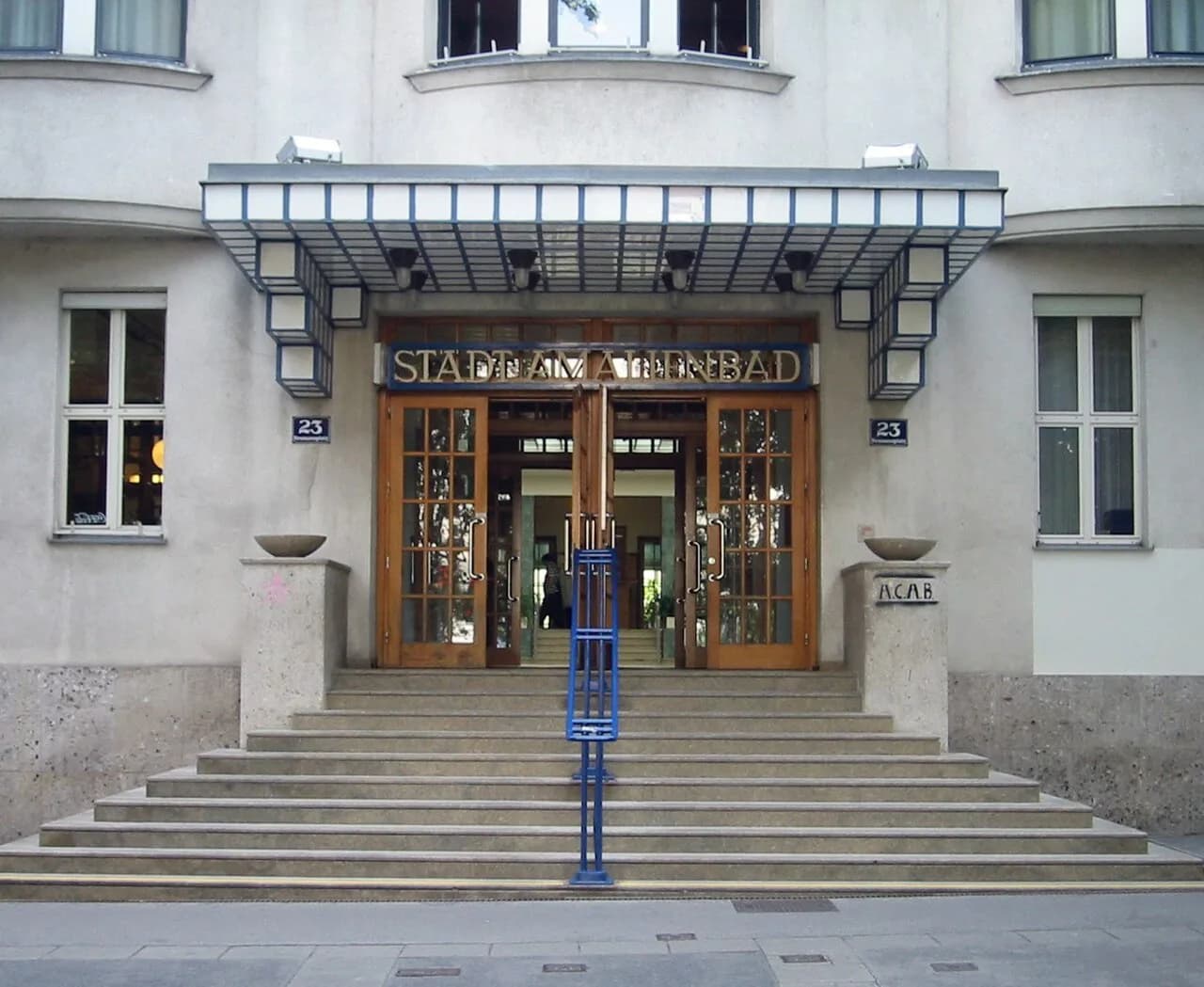
In Vienna the public bathing infrastructure is unusually deep, with municipal swimming halls and historic bathhouses that include sauna areas alongside their pools. Those buildings are worth a visit for the architecture alone, and a sauna ticket usually buys access to a whole complex rather than one cabin.
Textile-Free: What Nudity Rules Mean in Practice
Austrian saunas are Textilfrei, meaning textile-free zones where guests are expected to remove every piece of clothing, swimwear included, and most public saunas post signs to that effect. The reasoning given is hygiene, since soggy trunks are worse than bare skin, and equality, since everyone in the room is in the same state. Treat the sign as the rule and leave the swimsuit in the locker.
Towels are the grey area. In a Dampfbad, the humid steam bath, a towel around you quickly becomes a wet burden and is generally not recommended, while in a dry cabin the towel is primarily something to sit on. Some venues ask guests to stay nude throughout, others do not enforce it, and much depends on who else is in the cabin, since traditionalists may object to cover-ups. Bring a large towel and a second smaller one, and follow what the room is doing.
Nudity here is not read as sexual, and Austrian attitudes are relaxed enough that naked swimming in the Danube happens outside designated areas too. Sexual activity is explicitly forbidden and posted as such, and photography or filming inside sauna areas is not allowed.
Mixed or Single-Sex: What to Expect
Most Austrian sauna areas are mixed, with men and women sharing cabins, steam rooms and relaxation rooms. Some venues offer separate men's and women's sauna boxes, or a women-only sauna alongside a mixed one, but this is a bonus rather than a guarantee. If single-sex bathing matters to you, look for that specifically in the venue's own facility list before you commit to a ticket.
How a Session Actually Works
The customary shape of a visit is up to three rounds of five to twenty minutes each, with rests at least as long as the round you just finished and twenty to thirty minutes being a common recommendation. That adds up to a two- to three-hour outing, so plan an afternoon or an evening rather than squeezing a sauna between two other appointments. Sit lower on the benches for your first round, since heat rises and the top tier is noticeably fiercer.
Rests happen outside the cabin, in fresh air or in a cooler relaxation room, and they are part of the format rather than dead time. Many venues also provide a quiet room with loungers, and walking between the hot cabin and the cooling area is often a short indoor stroll rather than a dash through the cold.
The Aufguss Ritual
An Aufguss is a scheduled infusion in which someone pours water over the hot stones and then moves the rising steam around with a rolled towel, sometimes fanning each guest in turn for a burst of intense heat. Venues may run Geführte Sauna-Aufgüsse at set times with particular infusions or salt treatments, and an experienced guest may improvise one in an ordinary cabin. The ritual runs in silence apart from the reactions of the bathers, and a round of applause afterwards is optional.
Three behaviours cause friction: talking loudly, entering or leaving the cabin during the Aufguss, and declining the infusion if you are in an Aufguss-type sauna. Time your entry and exit between rituals, keep conversation for the rest area, and if you are unsure whether a session is coming, watch the door and the posted schedule. Most pools publish their sauna timetable at the entrance to the sauna area.
Showers, Towels and Cabin Hygiene
Shower before you enter the cabin, every time, whether or not you are carrying a towel. If there is a hose inside the sauna box, it is there so you can rinse your seat before sitting when you have no towel, and so you can wash down the bench as you leave rather than leaving a pool of sweat behind. Open and close the door quickly and avoid lingering in the doorway.
Take two towels: a large one for drying after showers and a smaller one to sit on. Many regulars also carry flip-flops for the tiled floors and a water bottle for after the session, since drinking happens between rounds rather than inside the cabin.
Beyond the Finnish Cabin: Dampfbad, Stone Saunas and Infrared
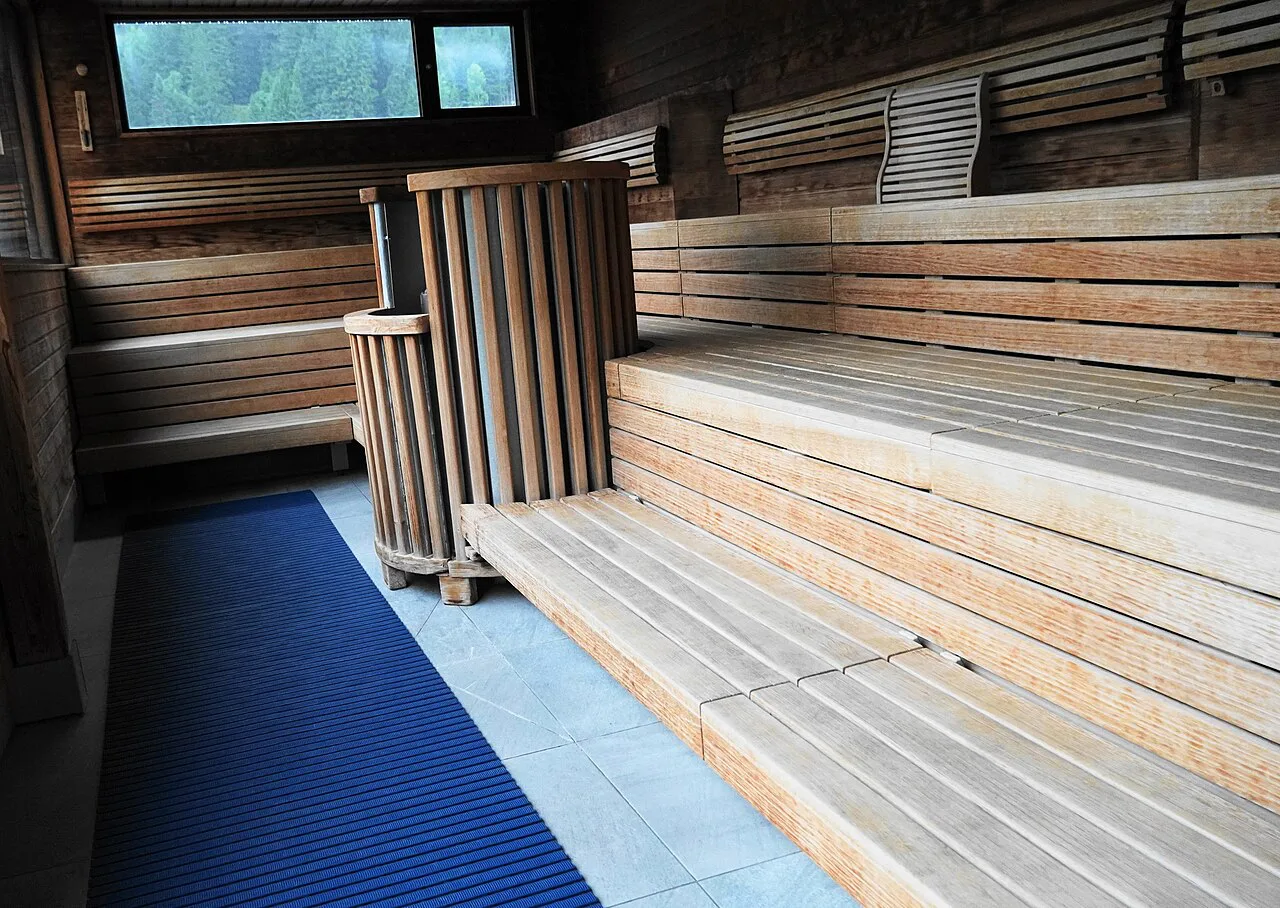
The Finnish cabin is only one option in an Austrian sauna area, and a single ticket often unlocks a menu of heat rooms. A Dampfbad is a steam bath at very high humidity where towels are impractical and sessions feel shorter and stickier; stone saunas and infrared cabins run drier and gentler. Because the rooms differ so much, budget time to try two or three rather than committing to one bench for the whole visit.
If the Finnish cabin itself is what you are after, the ritual at its origin is worth understanding first, and our guide to the Finnish sauna explains the round-and-rest rhythm that Austrian cabins inherited. The Finnish version is simpler in its staging but shares the same logic of short rounds, long rests and cool air in between.
Cooling Off: Showers, Fresh Air and Cold Water
Austrian pools usually build the cool-down into the building: cold showers, a plunge pool or Kneipp basin, an outdoor terrace and a quiet room. At lakeside and riverside pools, the cool option is the water itself, and in winter a quick dip or a cold shower between rounds is a normal sight rather than an eccentric one. Carry a robe or towel to the cooling area, because the walk from cabin to cold water is often the coldest part of the visit.
Prices and Booking in General Terms
Public saunas in Austria are generally an affordable outing, and the sauna area is typically part of a municipal pool or thermal bath complex rather than a standalone business. Expect to pay for a time-based ticket covering the pool and sauna together, with longer evening or day rates, and to rent towels or a robe on site if you travel light. Admission is set by each operator, and municipal pools, private thermal baths and hotel-adjacent facilities all price differently.
Walk-in is the norm at public pools, but popular Aufguss slots and weekend evenings fill up, and some venues sell a limited number of tickets per time band. Arriving at opening or mid-afternoon is usually calmer than the after-work rush.
Etiquette in Brief: Greetings, Quiet and Doors
A simple nod or a quiet Servus when you enter the cabin is the standard greeting, and it is meant to be brief rather than a conversation opener. Saunas are quiet spaces, and loud talk is the fastest way to annoy a room. Keep staring out of the equation, though eye contact and a glance around are entirely normal.
Door discipline matters more than most newcomers expect: enter and leave quickly, and do not slip in during an Aufguss or immediately after one. Photography is forbidden, phone use belongs outside the sauna area, and the relaxation room is for silence.
Where to Sauna in Austria: Vienna and Beyond
Vienna is the practical base for a sauna-focused trip, with municipal swimming halls and historic bathhouses spread across the districts and easy to reach on the city's public transport. The city's sauna scene rewards a bit of planning, and our guide to the saunas in Vienna sets out which bathhouses suit a first visit and which are better for a long afternoon. Go by tram or U-Bahn rather than driving, since parking near the big municipal baths is limited.
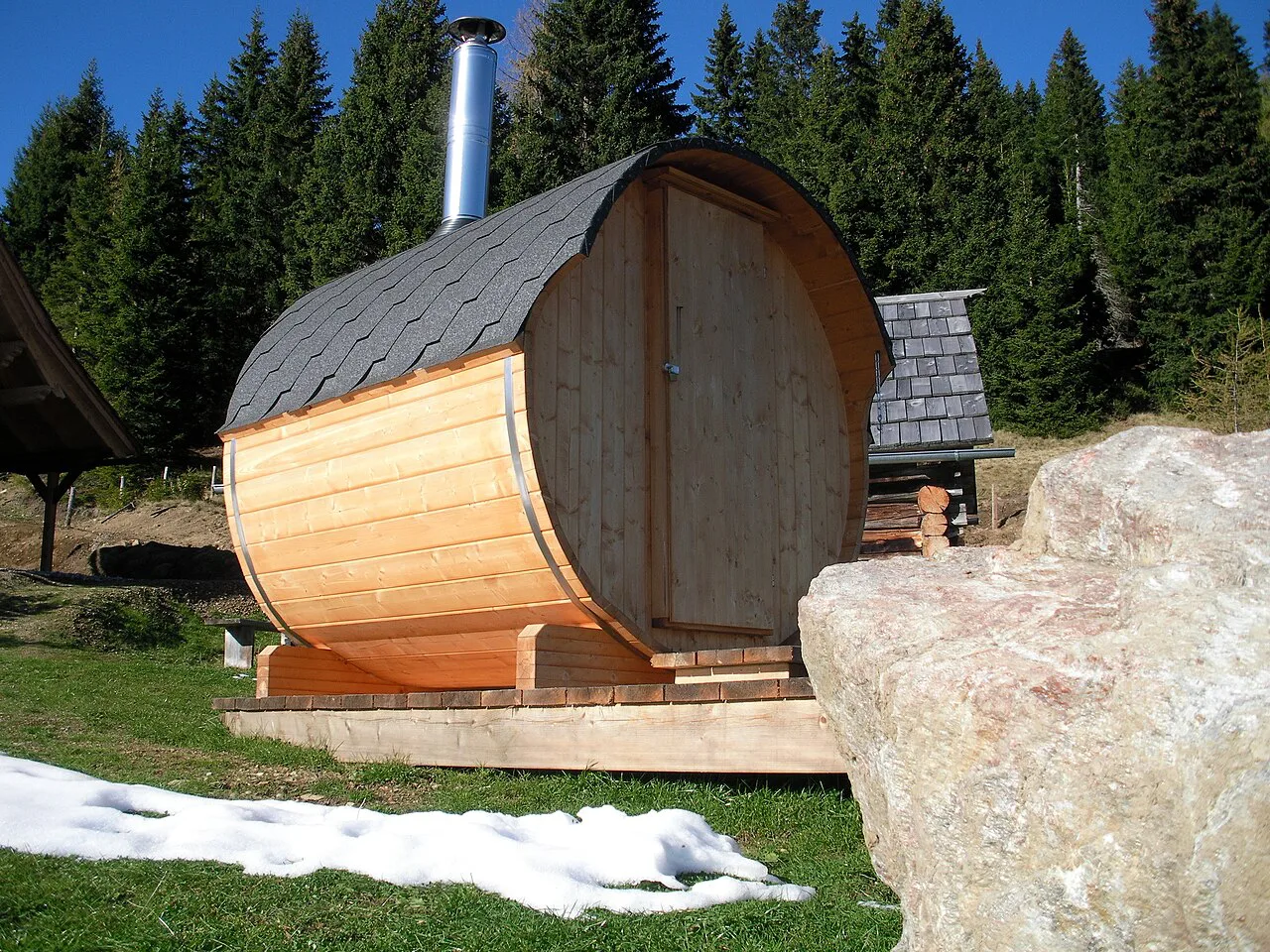
Beyond the capital, sauna culture runs through the provincial capitals and spa towns, where thermal baths combine pools, steam rooms and sauna cabins under one ticket. In the mountains, many villages have a public swimming hall with a sauna attached, which makes a wet afternoon useful rather than wasted. The one caveat is seasonal: outdoor pools and lake swimming close outside the summer season, while the indoor sauna cabins usually keep going year-round.
Winter and Summer Visits
Winter is high season in Austrian saunas, and the contrast between a hot cabin and cold outdoor air is the point of the visit for many regulars. Summer sauna-going is less crowded and pairs naturally with lake swimming, though some outdoor facilities shorten their hours outside the main season.
How Austrian Saunas Differ from the Finnish Sauna
The Finnish sauna is the reference point for the Austrian version: the same hot cabin, the same short rounds and the same cool air afterwards, but staged with more ceremony. The Aufguss is the clearest divergence, since the ritual with a sauna master and a towel is a formal event in Austria rather than an occasional guest gesture. Nudity is expected in both traditions, and both treat the sauna as an ordinary social space rather than a spa treatment.
What to Bring on a First Visit
Pack two towels, flip-flops, a water bottle and a robe if you have one, and leave the swimsuit in the locker once you are inside the textile-free area. A small bag for wet towels is useful, as is a hair tie or a cap if you dislike heat on your head. If you forget something, most public pools rent towels and sell basic kit at the counter.
Plan Your Austrian Sauna Afternoon
Build the visit around time rather than a single cabin: aim for two to three hours, three rounds of five to twenty minutes, and rests as long as the rounds. Check the day's Aufguss times at the entrance so you enter between rituals rather than during one, and sit low on the benches for your first round.
Remember that the posted house rules are the authority for each venue, and that the venue's own site lists current admission, hours and Aufguss schedules. Stay hydrated, skip alcohol before bathing, leave the cabin if you feel unwell, and consult a doctor beforehand if you have a heart condition or are pregnant.
Explore more Austria sauna guides
Frequently Asked Questions
Do you have to be naked in Austrian saunas?
In most public saunas, yes. Austrian sauna areas are usually Textilfrei, textile-free zones, and signs ask guests to remove swimwear as well as clothing. Towel use is more variable: a towel to sit on is standard, but whether guests cover themselves depends on the venue and on the other people in the cabin. Read the posted rules at the entrance before you undress.
What happens during an Aufguss?
A sauna master, or sometimes an experienced guest, pours water over the hot stones and then fans the rising steam around with a rolled towel, often directing a wave of heat at each bather in turn. Larger venues schedule guided infusions with specific scents or salt treatments. The ritual runs in silence, entering or leaving mid-Aufguss causes friction, and a round of applause afterwards is optional.
Are Austrian saunas mixed?
Mixed sauna areas are the norm, with men and women sharing cabins, steam rooms and rest areas. Some venues add a women-only sauna or separate sauna boxes, but that is not universal, so check the facility list on the venue's site if single-sex bathing matters to you.
How long should you stay in an Austrian sauna?
A customary visit is up to three rounds of five to twenty minutes each, with a rest at least as long as the round, and twenty to thirty minutes of rest being common. The whole outing usually runs two to three hours. Newcomers do better on a lower bench, where the heat is less intense.
Is it rude to leave during an Aufguss?
Yes. Walking in or out while the infusion is under way disturbs the room and draws complaints, and the same applies just after the ritual ends. Time your movements between sessions and check the posted schedule before you commit to a bench.
What should you bring to an Austrian sauna?
Take two towels, one for drying and a smaller one to sit on, plus flip-flops for the tiled floors and a water bottle for between rounds. A robe helps on the walk to the cooling area. Swimwear stays in the locker inside a textile-free sauna area, and many public pools rent towels at the counter if you arrive empty-handed.
How much does a public sauna visit in Austria cost?
Public saunas are generally an affordable outing, and the sauna is usually part of a municipal pool or thermal bath complex covered by a time-based ticket rather than a separate fee. Rates vary between municipal pools, private thermal baths and hotel facilities, so compare the venue's own admission page before you go.
Do Austrian saunas close in winter?
Indoor sauna areas generally operate year-round, and winter is the busiest season. Outdoor pools and lake swimming are seasonal and shut outside the summer months, which affects the cold-water side of a visit more than the cabins themselves. Seasonal hours are published by each venue.
Sources
Sauna notes for your next trip
Optional updates to our sauna guides.
You might also like


Continue reading
More guides you'll find useful