Sauna am Fluss, Zurich: A Riverside Sauna Guide
Sauna am Fluss sits on the Sihl at Sihlquai in Zurich. Here is how a visit works, the Finnish tradition behind it and how to reach it by tram or on foot.
On this page
Sauna am Fluss is a Zurich sauna at Sihlquai, set along the Sihl rather than on the lake, which makes it a city-centre option rather than an excursion. The name says the point plainly: heat inside, a river outside, and a short walk between the two. It suits travellers who want a proper sauna round close to Hauptbahnhof and who do not need a lake panorama or a resort spa wrapped around it.
The register here is Finnish rather than Swiss-wellness: rounds of heat, a cooling break, rest, then another round. If that rhythm is unfamiliar, read the Finnish sauna background first so the etiquette of short rounds and cooling makes sense before you arrive. The setting matters too — a city-street façade, a riverbank a few steps away, and the sound of traffic rather than wind in trees.
What Sauna am Fluss is and who it suits
This is a sauna venue in the city, not a swimming hall with saunas attached and not a hotel spa. The draw is straightforward: arrive, change, sweat, cool, rest, repeat, then walk back out into Zurich. Travellers with two hours to spare between trains are the obvious fit, as are locals who want a sauna without crossing to the lake.
It suits people who are comfortable with a compact, urban changing room and with shared nudity in the heat, which is standard in Swiss and Finnish saunas. It is less suited to anyone expecting poolside loungers, a large outdoor terrace or a quiet lakeside view. If those are the priority, the lake baths are the better answer, and our notes on the saunas in Zurich set out the alternatives side by side.
Where it is: Sihlquai and the river setting
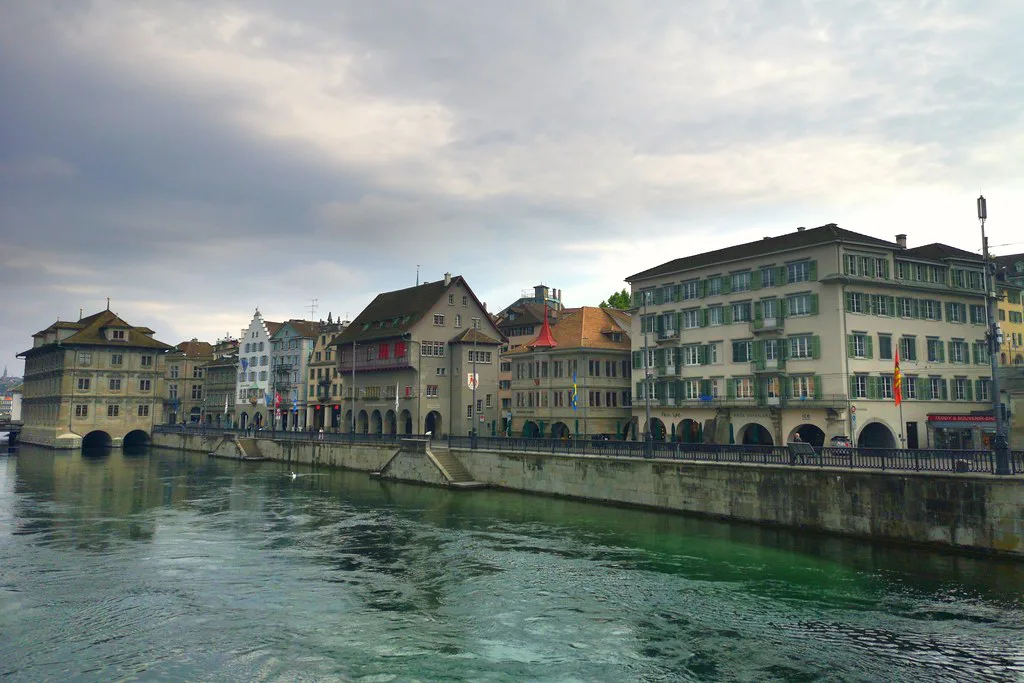
The address is Sihlquai in Zurich, on the left bank of the Sihl, the river that runs through the city before meeting the Limmat. That places it north-west of the old town, in a district of workshops, offices and rail infrastructure rather than postcard quays. The upside is proximity: Hauptbahnhof and the main tram spine are within easy walking distance, so the venue slots into a travel day rather than consuming it. The Sihl itself is the local reference point — a working river with banks and paths, not a mountain lake.
Being on the river rather than the lake changes the cooling decision. At a lake bath you usually step from the sauna building onto a deck and into open water in one move; at a city river sauna the walk, the access point and the current are part of the plan. Cool in the air outside first if the water is high or cold, or use a shower, then decide whether a river dip belongs in your round. Practical caution matters more here than at a still, shallow bathing area.
The sauna itself and the Finnish tradition behind it
The Finnish tradition is the reference point: a hot timber room, water poured on stones for a burst of steam, and a cooling break afterwards. Aufguss sessions, where a member of staff distributes heat and scent through the room with a towel, are a regular feature of Swiss sauna culture and worth joining if the timing works. The Löyly — the steam itself — is the whole point, not a side effect, and Finns usually stay five to fifteen minutes per round rather than endure as long as possible.
How a session works, step by step
Arrive, pay, take a wristband or key, and change in the single-sex changing area. Shower before entering the hot room, take a towel to sit on, and leave shoes and street clothes behind. Most visitors do two to four rounds with a cooling break and a rest between each, which is a comfortable two-hour visit rather than a marathon.
Inside, sit on the upper bench for more heat and the lower bench for less, keep conversation low, and leave when you have had enough rather than by a clock. Between rounds, cool down gradually — outside air first, then a shower or a river dip if conditions allow — and sit out the rest period properly before going back in. The sequence matters more than the time spent.
Do not go straight from a hot room into cold water if you are unsure how you react, and skip the sauna entirely after alcohol. Stay hydrated, leave the room if you feel unwell, and take a doctor's advice if you have a heart condition or are pregnant.
Tickets and prices
Entry is priced in Swiss francs at the level of a city sauna rather than a resort spa, and the venue publishes its current rates on its own site. If you are weighing the cost against the lake baths, remember that a sauna ticket here buys heat and rest, not a swimming pool and lake access. Prices for comparable riverside and lakeside saunas in Switzerland vary enough that a direct comparison is worth doing before you commit to a long session.
At the lake baths the pattern is a fixed entry fee for a set number of hours, which suits a short visit; private and mobile saunas in Switzerland tend to be rented by the hour or half day and cost considerably more. A city sauna like this one sits at the affordable end of that range for a solo traveller, and the trade-off is simpler facilities and less space. For a sense of how Swiss sauna pricing and formats compare, our overview of saunas in Switzerland is a useful starting point.
Opening pattern and booking
Sauna am Fluss operates as an everyday city sauna rather than a seasonal bath, so an evening slot after work is the typical visit. Sessions are commonly booked online in advance, and hot rooms have limited benches, so a weekend evening can fill before the day itself. Book a specific time if you are travelling to a train, and aim for an off-peak afternoon if you want space.
Swimwear, nudity and mixed or single-sex bathing
Swiss and Finnish sauna practice is textile-free in the hot room: swimwear comes off, a towel goes under you on the bench, and you shower before and after. Mixed sessions are normal, and that is the convention rather than a niche rule. Bring a large towel rather than a small one, since it serves as both seat cover and drying cloth.
If mixed nudity is not for you, look for a women-only slot; several Zurich venues run dedicated hours, and the lake baths set aside particular days for women. Some visitors also prefer the lake baths for the same reason: at Seebad Enge, Zurich the winter sauna season runs from late September to early May with daily hours from 10 to 23.
When it is quiet and when it fills up
Weekday afternoons are the calmest window; late evenings and weekends bring the after-work and group trade, when the benches, showers and changing space all get tight. Aufguss sessions draw a crowd into one room at a set time, so the sauna can feel empty ten minutes before and packed during. If you have a train to catch, go early and leave before the rush rather than squeezing a third round in.
The compact layout is the honest trade-off. A city sauna of this kind has little room to spread out, so a busy evening means queuing for a shower and changing shoulder to shoulder. The compensation is that you lose almost no time getting there and back.
Getting there: tram, train and on foot
Sihlquai runs along the Sihl just north of Zurich Hauptbahnhof, so the simplest approach is on foot from the station's north side in around ten minutes. Trams run along the Limmat quays and through the adjacent district, with stops a few minutes' walk away. If you are coming from the airport, the train to Hauptbahnhof is the direct route, and you continue on foot from there.
Cycling works well in this part of the city, and there is riverside path along much of the Sihl. By car, central Zurich parking is expensive and limited, so public transport is the sensible choice. Allow extra time for the walk in winter, when the riverbank is cold and the streets dark.
What to bring and how to behave
Bring a large towel, flip-flops for the wet areas, and a water bottle; a bathrobe helps for the walk between hot room and shower in cold weather. Leave jewellery, phones and watches outside the hot room, since metal gets uncomfortably hot. Shower before your first round, sit on your towel, and keep voices low in the rest area.
Etiquette is simple: no swimwear in the hot room, no street shoes inside, no phones. Sit where there is space rather than squeezing onto a full bench, and step out if a session becomes too intense. Nothing is gained by staying longer than is comfortable.
Other Zurich saunas worth knowing
If you want a lake view with your sauna, Seebad Utoquai, Zurich is the historic timber bath on the eastern shore, open year-round, with a sauna and the lake on the doorstep. It is a grander swim than the Sihl and a longer walk from the station, but the combination of old bathhouse and open water is hard to beat in the city centre.
For a women-only option on the Limmat, Frauenbad Stadthausquai is Zurich's ladies' bath, with sauna sessions in the colder months. It is a short tram ride from the main station and a very different experience from a mixed city sauna: smaller, quieter and restricted to women. Those who want scale and architecture instead should consider the Hürlimannbad & Spa Zurich, whose thermal baths and rooftop pool make a full-day visit rather than a quick round.
Beyond Zurich, Swiss river and lake saunas share a seasonal logic: many open in autumn and close in spring, which is why the RhySauna in Schaffhausen becomes a sauna village on the Rhine each winter. If you are travelling on, Bains des Pâquis in Geneva is the other great city-bath institution, with winter saunas and a lake jetty. Both reward a bit of planning around the season.
Plan Your Visit
Pick Sauna am Fluss when convenience and a proper Finnish round matter more than a view, and book a slot if your evening is fixed. Choose a lake bath instead when you want open water, a terrace and a whole afternoon by the shore. Either way, bring a large towel, arrive early in the round rather than late, and treat the cooling break as part of the session rather than an interruption.
Explore more Zurich sauna guides
Frequently Asked Questions
What is Sauna am Fluss in Zurich?
It is a sauna venue on the Sihl at Sihlquai, in the city centre north-west of the old town rather than out on Lake Zurich. The draw is the classic Finnish rhythm of short hot rounds with cooling and rest between them, close to Zurich Hauptbahnhof.
Do you need to book ahead?
Bench space in the hot rooms is limited, so a weekend evening can fill before the day itself. Booking a set time is the safer route if a train or dinner reservation follows, and a weekday afternoon usually leaves more room to spread out.
Do you wear swimwear at Sauna am Fluss?
No: as in most Swiss and Finnish saunas, the hot room is textile-free and you sit on a towel. Mixed sessions are the norm, and some Zurich venues run women-only hours if you prefer a single-sex slot.
Is there cold water at Sauna am Fluss?
The Sihl runs past the venue, so the river is the local cooling reference rather than a lake or plunge pool. Whether a dip is sensible depends on the water level and current on the day, and a shower or outside air are the simpler options.
How do you reach Sihlquai without a car?
Walk from Zurich Hauptbahnhof's north side in around ten minutes, or take a tram along the Limmat quays and finish on foot. From the airport, the train to Hauptbahnhof is the direct route; by car, central parking is expensive and limited.
Sources
Sauna notes for your next trip
Optional updates to our sauna guides.
You might also like
Continue reading
More guides you'll find useful