
Saunas in Switzerland: Where to Go and How They Work
Swiss saunas mean Aufguss rituals, mixed sessions and cold lake plunges. Here is how a session works and which venue is worth the trip.
On this page
Saunas in Switzerland are a ritual-driven, largely mixed and often lakeside affair: you book or walk into a public bath, take a place in a heated room, sit through a timed Aufguss pour, then cool off in a lake, a plunge pool or a cold shower. The country's institution for this is less a spa and more a public bathing house, and Geneva's Bains des Pâquis is the clearest example: wooden saunas and steam rooms on stilts over Lake Geneva, with direct access to the water.
First-timers should know three things before booking. Sessions are organised rather than free-form in most ritual-minded houses, mixed bathing is normal outside dedicated women's hours, and the cold side of the loop is usually a lake or river rather than a spa plunge pool.
Why Swiss saunas are their own thing
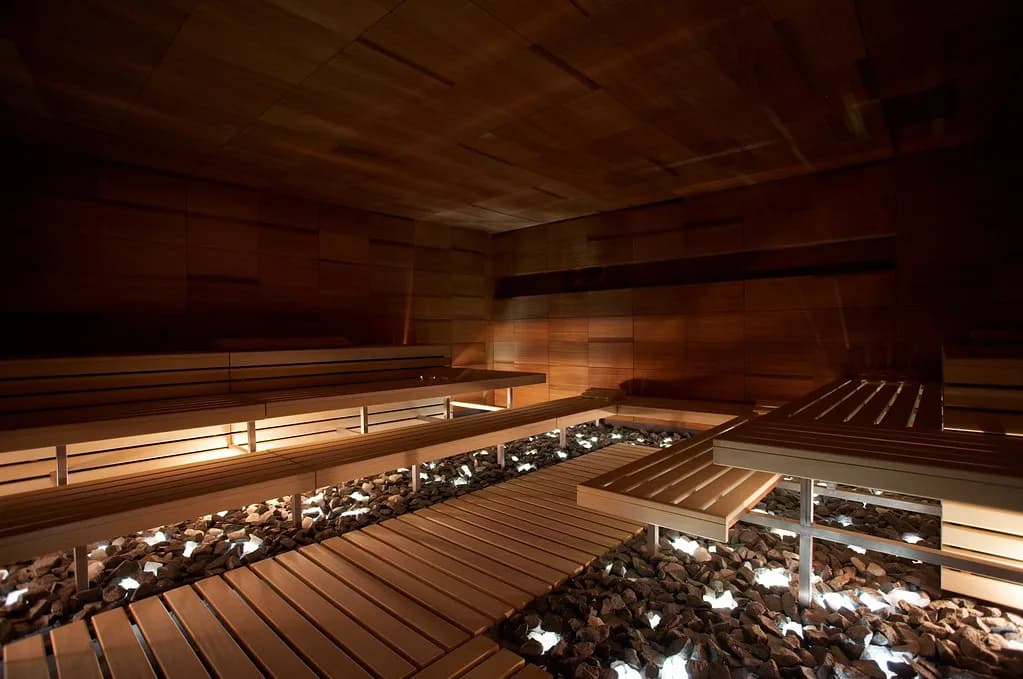
The surprise for visitors from Britain or North America is the social model: Swiss public saunas are typically mixed, quiet and textile-free in the hot rooms, with conversation reserved for the rest area or café. The Aufguss ritual sets the rhythm in ritual-led houses, where a staff member pours water or ice onto the stones, moves the hot air around the room with a towel and works to a timetable rather than whenever the room fills.
The second difference is the cold side. Because so many bathing houses sit on a lake or river, the cooling step becomes part of the building rather than an afterthought: at Bains des Pâquis there is direct access to Lake Geneva from the wellness area, which lets you go from bench to water in seconds and back again.
The Finnish sauna is the reference point behind all of this, and knowing the Finnish model helps you read a Swiss house. If you want the vocabulary and the round-by-round logic before you go, start with our guide to the Finnish sauna.
How a session works in Switzerland
Expect a fixed loop: shower, dry off, sit on a towel or cloth, take heat for a round, cool down, rest, repeat. Bains des Pâquis publishes the order plainly: shower before the sauna, leave bathing shoes on the shelves outside, hang the towel you walk around in in the airlock, and lay a large towel between skin and bench, both to absorb sweat and to protect skin from hot wood.
The heat itself is standard dry sauna rather than steam: air between roughly 70 and 100°C with low humidity. Beginners should sit on a lower bench, where the temperature is gentler, and move up only when a round feels comfortable; the venue's own advice is to repeat the heat-and-cool cycle about three times rather than trying to last longer in one go.
Mixed and single-sex sessions coexist. At Bains des Pâquis, Tuesdays are reserved for women and the space is mixed on all other days, with two mixed saunas, one mixed steam room, a women's steam room and a Turkish bath. If you want a single-sex slot, build the day around that; not every bathing house offers one.
Swimwear and fabrics
The nude-or-wrapped question is settled locally more often than nationally. Bains des Pâquis does not require nudity in the sauna, but from September 2026 it bars synthetic fabrics from the sauna areas, including ordinary swimsuits, on the grounds that they shed microparticles and odours when heated. The house solution is a thin cotton voile cloth that can be rented or bought on site or brought from home.
In the hammam the rules are different: a swimsuit is allowed, but Bermuda shorts and swim shorts are not, and when you move between facilities the body must be wrapped in a cloth. Practically, that means packing two cloths, one for the sauna bench and one for walking and resting, plus slippers and a bathrobe for comfort.
Rentals exist for travellers without kit: cloths, slippers and a cotton voile towel can all be hired at the counter. Check the venue's own site for current rules if you plan to wear a swimsuit, since fabric policy is the one thing that has changed recently.
The cold-water question
For most Swiss bathing houses the cold plunge is a lake, a river or an unheated shower, not an ice bath with a temperature display. At Bains des Pâquis you step from the sauna area straight into Lake Geneva, which is bracing from autumn through spring and far milder in summer.
Dress for the walk between heat and water. The venue advises two cloths, slippers and a bathrobe, and the practical logic is obvious on a cold day: a cotton wrap over wet skin and something on your feet make the crossing to the lake tolerable rather than a sprint.
If you plan to sauna in Zurich instead, the city's lake baths follow the same pattern of heated rooms and Lake Zurich as the cooling step. Our guide to the saunas in Zurich covers the bathing houses and their seasons, including the Hürlimannbad & Spa Zurich for travellers who want a larger complex rather than a lakeside hut.
Geneva: Bains des Pâquis
Bains des Pâquis is the Geneva sauna worth planning around. The wellness area has operated since 1994 on stilts at the foot of Lake Geneva, with a view of the Jet d'Eau, the Salève and Mont Blanc, and it combines two mixed saunas, a mixed steam room, a women's steam room, a Turkish bath, an outdoor rest deck and an indoor sauna lounge.
The house runs on silence: saunas, steam rooms, the Turkish bath and the relaxation room are quiet zones, while the outdoor rest area and the sauna operators' lounge in the rotunda are where you talk, drink and eat. The Turkish bath here differs from a washing hammam: clothes and shoes stay outside and you rinse your place before and after.
Expect queues at peak weekend times. When the area is full you take a buzzer and wait, with a drink at the refreshment bar, so an early start or a weekday visit is the lower-friction choice.
Prices and booking at Bains des Pâquis
Prices are published and simple. A single ticket costs CHF 22.00 every day except Monday, when it is CHF 15.00, and an 11-ticket pass costs CHF 170.00. There are no reservations or privatisations, so entry is walk-in and you stay as long as you like, with exit definitive.
Extras are modest: cloth rental is CHF 5 each, slippers CHF 2 per pair, and a cotton voile towel is CHF 2.00 to rent or CHF 25.00 to buy. Budget for a cloth even if you bring your own towel, since the sauna cloth and the walking cloth serve different jobs.
Pay attention to closing time rather than arrival time: last admission is one hour before closing. The Monday rate is the obvious bargain, and Monday hours run later in the evening, which suits a post-work visit better than a lunchtime one.
Seasonal rhythm and full-moon evenings
This is a seasonal sauna, not a year-round one. The 2026/2027 season runs from September 20, 2026 to May 23, 2027, opening Tuesday to Friday 9am to 9pm, Saturday and Monday 9am to 10:30pm, and Sunday 8am to 10:30pm.
Once a month, on the evening of the full moon, the winter facilities stay open until midnight with clay baths, mint tea, ice cubes, orange wedges and braziers. It is the one night the place behaves like a small festival rather than a quiet bathhouse, and it is worth timing a Geneva trip around if you like atmosphere over solitude.
Outside the season the wellness area closes, so a summer visit to Geneva means swimming at the baths rather than sweating in them. Plan lake saunas for autumn, winter and early spring, and treat high summer as beach season.
Where to sauna next in Switzerland
Zurich is the other city to build a sauna trip around, because its lake baths combine heated rooms with a cold lake and a short tram ride from the centre. Seebad Enge, the Seebad Utoquai, Zurich and the Frauenbad Stadthausquai each run to their own seasons and hours, and the last is a women-only bath, which makes it the natural pick if mixed sessions are not what you want.
Use the city guides rather than guesswork: the saunas in Zurich page sets out which bathing houses have saunas, when they open and how the lake fits in. From there you can match a venue to the season and to whether you want a mixed crowd or a single-sex slot.
Beyond the two big cities, treat Switzerland as a country of local bathing houses rather than a national sauna circuit. Pick the city first, then the house, then the season, and the trip plans itself.
Etiquette in brief
Silence in the hot rooms is the norm, not a suggestion. At Bains des Pâquis, food, telephones and computers are banned in the facilities and the relaxation room, loungers stay where they are, and blankets are folded and put away after use.
The two-cloth system does most of the work of good manners: one cloth absorbs sweat on the bench, the other wraps you as you move between rooms. Shower before you start, keep doors closed, and rinse your place in the hammam before and after you use it.
Photography without consent is prohibited, and disrespectful behaviour leads to expulsion. In practice, leave the phone in the locker and the conversation in the lounge.
Safety and customs
One plain line covers it: stay hydrated, skip alcohol before bathing, leave the room if you feel unwell, and ask a doctor first if you have a heart condition or are pregnant. Customs are the other half of the picture: a round of five to fifteen minutes is normal, and cooling down between rounds matters as much as the heat itself.
Metal jewellery is best left in the locker, and infectious illness means staying home. Beyond that, the culture rewards calm and penalises performance: nobody is impressed by the longest sit.
Saunas in Switzerland versus the Finnish sauna
The Finnish original is quieter and more domestic: a wood-heated room, a lake or a snowbank, a towel and a bucket, and very little ceremony. The Swiss version borrows the heat-and-cold loop but adds organisation, published session times, Aufguss performances and a public-bath social model, which makes it easier for a first-timer to walk in alone.
Which suits you depends on what you want from the visit. Choose a Swiss bathing house for structure, a lake view and a mixed crowd; choose a Finnish sauna for the plain version, where the ritual is the room itself rather than the show. If you only have one sauna trip in you and want the tradition at its source, read our guide to the Finnish sauna, and check current prices and opening times before you go.
Plan Your Visit
Build a Swiss sauna trip around one city and one house. Geneva means Bains des Pâquis between late September and late May, with Monday the cheapest day and the full-moon evening the most atmospheric; Zurich means the lake baths and a cold dip in Lake Zurich.
Pack two cloths, slippers, a bathrobe and no synthetic swimwear for the sauna, and arrive an hour or more before closing. If you want the wider Zurich picture, start with the saunas in Zurich and pick the season that matches the water temperature you can handle.
Explore more Switzerland sauna guides
Frequently Asked Questions
Are Swiss saunas coed?
Often, yes. Mixed bathing is the default at many public bathing houses, but single-sex slots exist: at Bains des Pâquis in Geneva, Tuesdays are reserved for women and the space is mixed on all other days. Check the specific house before you go if a single-sex session matters to you.
Do you wear a swimsuit in a Swiss sauna?
Rules vary by house. At Bains des Pâquis nudity is not imposed, but from September 2026 synthetic fabrics, including ordinary swimsuits, are barred from the sauna areas, and thin cotton voile cloths are offered instead. In the hammam a swimsuit is allowed, though swim shorts and Bermuda shorts are not.
What is Aufguss and how often does it happen?
Aufguss is a timed ritual in which a staff member pours water or ice onto the hot stones and circulates the air with a towel. Houses publish their own schedules, so the number of pours per day differs by venue and season; check the venue's own site for the day you plan to visit.
Is a hammam the same as a sauna?
No. A sauna is a dry, hot room, while a hammam is a steam bath with high humidity and a washing tradition. At Bains des Pâquis the Turkish bath differs again from a washing hammam: clothes and shoes stay outside and you rinse your place before and after use.
Which country is most famous for saunas?
Finland, where the sauna is a everyday institution rather than a wellness add-on. Swiss houses borrow the heat-and-cold loop but add organised Aufguss sessions, published timetables and a public-bath setting.
What should I pack for a Swiss sauna?
Two cloths, one for the bench and one for walking, plus slippers, a bathrobe and a water bottle. Synthetic swimwear is best left at home for the sauna itself, and rentals are available at the counter if you travel light.
When is the sauna season in Switzerland?
It depends on the house. Lakeside wellness areas often run autumn to spring: Bains des Pâquis opens for 2026/2027 from September 20, 2026 to May 23, 2027. Summer tends to be swimming season rather than sauna season.
Can I book a sauna session in advance?
Some houses take no bookings at all. Bains des Pâquis runs on a walk-in basis with no reservations or privatisations, and when the area is full you take a buzzer and wait. Check the venue's own site once before you travel for current details.
Sources
Sauna notes for your next trip
Optional updates to our sauna guides.
You might also like
Continue reading
More guides you'll find useful