
Kalma Saun, Tallinn: A Guide to the 1928 Kalamaja Bathhouse
Kalma Saun is a 1928 public sauna in Tallinn's Kalamaja district, with separate men's and women's sides, private rooms and a small cooling pool.
On this page
Kalma Saun is Tallinn's stately 1928 bathhouse in Kalamaja, one of the oldest public saunas still running in the city, with separate men's and women's public sides, hourly private saunas and a small cooling pool. It suits travellers who want a working neighbourhood sauna with a genuine patina rather than a designed spa experience, and it rewards anyone willing to plan their visit around which side is open.
The name puts some first-timers off: kalma is simply a contraction of Kalamaja, the district around it, not a reference to anything morbid. Once past the doorway the building opens into a spacious lobby, and despite repeated renovations the age of the place still shows in the architecture and the way it is run.
What Kalma Saun is
Built in 1928, Kalma Saun has operated through several renovations while keeping the atmosphere of an old neighbourhood bathhouse, which is why it appears on the city's own list of public saunas. The building sits on Vana-Kalamaja and is identified by the sauna itself as one of the oldest in Tallinn.
It is a public sauna in the northern-European sense: single-sex washing and sweating on the main sides, a cool-down pool, and private rooms bookable by the hour for groups. It is not a spa hotel and not a silent wellness retreat; expect tiled changing rooms, steam, conversation at normal volume and the brisk practicality of a place that has done this for nearly a century.
The bathhouse's design is credited to the architect Aleksandr Vladovski, a detail recorded in visitor listings rather than on the sauna's own pages. Treat it as background colour: the draw here is the routine of the sauna itself, not the plaque on the wall.
For a city with this many bathhouses, use Tallinn as a base and branch out: the wider set of saunas in Tallinn runs from 1882 classics to harbour-side igloo cabins, and Kalma works well as the anchor of a longer sauna itinerary.
Where Kalma Saun is and how the building reads from the street
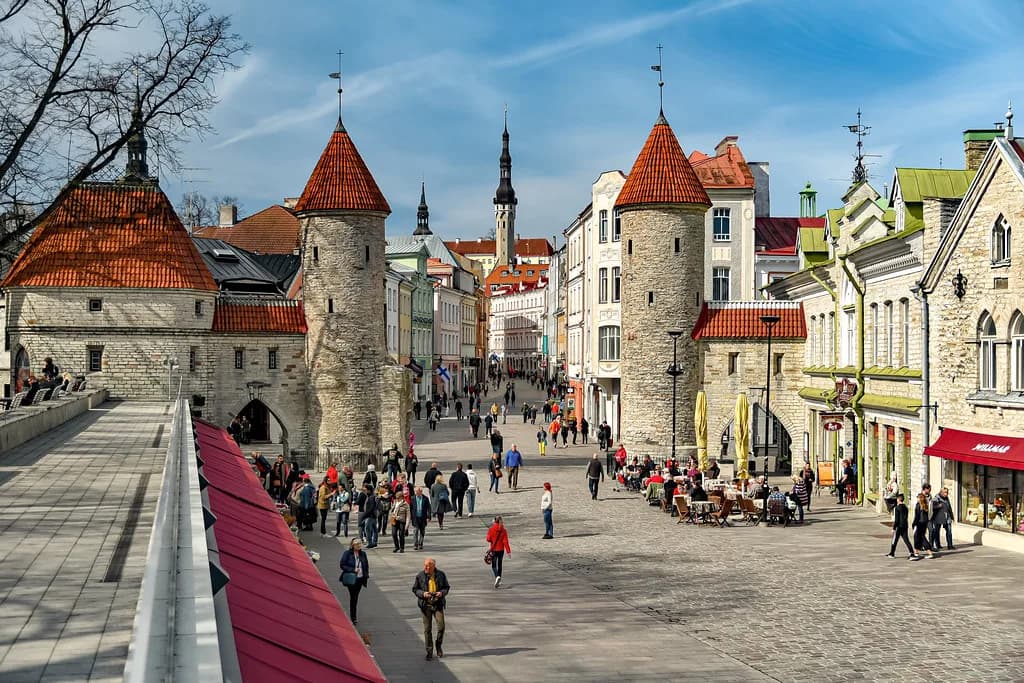
Kalma Saun stands at Vana-Kalamaja 9a in Kalamaja, the low-rise wooden-house district between the old town and the Telliskivi creative quarter. The sauna's own contact details place it on that street, with a car park alongside the building.
From the outside it reads as a dignified public building rather than a shopfront: grand enough that the sauna's own description points to the architecture before you reach the lobby. That scale is useful in practice, because it means space for separate sides, private rooms and a pool under one roof.
Kalamaja is a neighbourhood you can cross on foot, and the walk from the old town through the railway station area or along the streets of Kalamaja is straightforward. Allow enough time for the walk back afterwards, when you are warm and the Baltic air is doing its work.
The bathing layout: two public sides and two private saunas
The men's public sauna and the women's public sauna are open every day, and they are not identical. The men's side runs a wood stove sauna and a steam sauna, while the women's sauna room is heated by electric heaters, according to the city tourist board's summary of the venue.
That difference is the single most useful thing to know before you go. If a wood-fired Löyly is the point of your visit, the men's side is the one that offers it; if you are bringing a mixed group or want your own party, the private saunas are the practical answer.
Beyond the public sides, Kalma Saun offers a small private sauna and a large private sauna, both rented by the hour, and the large one adds a pool to the usual equipment. Soft drinks and the necessary sauna accessories are on sale on site, so a forgotten towel or whisk is not a trip-ending problem.
The overall set-up mirrors the standard northern European bathhouse rather than the Finnish sauna in its purest form, and that Finnish sauna tradition is the reference point most first-timers will recognise: hot room, cool-down, rest, repeat.
The cooling pool and the hot-cold rhythm
Kalma's cold option is a small pool in the public area, where bathers cool off between rounds; the large private sauna has its own pool. There is no sea or lake swim built into a visit here, so the pool is the plunge.
The rhythm is the familiar one: sit in the heat until you have had enough, step out, cool down, rest, then go back in. Estonian bathers are relaxed about the order and the timing, and the city's guidance notes there is no fixed rule about how often you go back and forth.
Practical caution beats bravado: drink water, skip alcohol before bathing, leave the room if you feel unwell, and ask a doctor first if you have a heart condition or are pregnant. A small pool in a busy public sauna also means sharing, so keep cool-downs short when others are waiting.
How a session works step by step
Leave your things in the changing room, shower before you enter the hot room, and bring something to sit on — a towel or seat cover rather than bare boards. This is exactly the sequence the Tallinn tourist board sets out for first-time bathers.
Inside, the room is calm by convention: sit or lie on the benches, talk quietly or not at all, and do not stare at other people. If you want to throw water on the stones, ask the room first, and avoid opening the door straight after a fresh ladling of Löyly.
Whisks are part of the local habit rather than a performance. Birch, eucalyptus and red oak whisks are sold at Tallinn's public saunas, and at Kalma the necessary accessories are available on site, so you can try whisking without hunting down a supplier first.
After your last round, wash, dry off and dress with enough layers for the walk home. Estonian sauna culture treats the whole visit as a slow arc — heat, cool, rest, food — rather than a quick dip, and the city's guide specifically suggests eating properly afterwards rather than before.
Nude or swimwear: single-sex sides and private rooms
On the single-sex public sides, the Estonian custom is to bathe naked, especially among people of the same sex. In mixed settings, follow the room: swimwear or a towel wrapped around the body is an acceptable way to cover up, and some pools forbid swimwear in saunas to keep chlorine out of the air, so read the signs.
Kalma's private saunas change the calculation for groups, couples and families: you book the room, so the dress code is the one your group agrees on. That makes the hourly private saunas the easier entry point if mixed-group nudity is not what anyone wants.
One rule travels everywhere: a sauna is not a sexual space, and looking at, commenting on or touching other bodies is out of place. Loud behaviour is equally unwelcome; quiet conversation and silence are both fine, and everyone is there for the same heat.
Private saunas for groups
Kalma Saun rents two private saunas by the hour, a small one and a large one, and the large room comes with a pool as well as the sauna itself. Groups use them for ordinary sauna evenings as well as birthdays and other celebrations, according to the city's guide.
The private rooms are a different product from the public sides, and worth treating as such: you get your own space and timetable rather than the shared rhythm of a public sauna, and the pool in the large room makes it the better fit for a group that wants to alternate heat and cold without leaving the room.
Book ahead for weekend evenings and for anything involving a group, since a private room is a single unit that only one party can hold at a time. The sauna's own site is the place to arrange a private booking.
Prices and booking
Kalma Saun does not publish a fee schedule, so the honest approach is to budget for a mid-range public bathhouse and confirm the current ticket and private-room rates with the sauna when you book. Expect to pay separately for the public sides and for hourly private rooms, and to settle any extras on site.
Extras are part of the visit rather than an afterthought: soft drinks and sauna accessories are sold at the venue, so a whisk, a drink or a forgotten item can be picked up inside. Bring a card and a little cash, as small old bathhouses vary in how they take payment.
If you are comparing entry-level options across the city, the wider set of saunas in Tallinn includes both old public bathhouses and newer private-cabin rentals, each with its own pricing model. Read the fee structure before you commit to a private room, since hourly private saunas and per-visit public tickets are not comparable line by line.
Opening pattern and the best time to go
Both the men's and women's public saunas are open every day, which is unusual among Tallinn's older bathhouses and makes Kalma easy to fit into a short trip. The one thing to line up in advance is your side: the men's wood stove and steam rooms and the women's electrically heated room are separate facilities.
Public saunas in Tallinn fill up after working hours and at weekends, and the calmest sessions tend to be earlier in the day. If you want the room quiet, go early; if you want the atmosphere of a busy neighbourhood sauna, go in the evening and accept the noise.
Private rooms need more forward planning than the public sides, especially for Friday and Saturday evenings. Booking your slot before you arrive is the difference between a guaranteed room and a wasted trip across Kalamaja.
Getting there from the old town and around Tallinn
Vana-Kalamaja 9a is a walkable address from the old town and from the Telliskivi quarter, and the sauna lists a parking area by the building. For a city break, walking is the simplest option and lets you see the wooden streets of Kalamaja on the way.
Tallinn's trams and buses serve Kalamaja and the nearby Baltic station area, and the sauna's location makes it easy to combine with the shops and food spots of Telliskivi. Check the city's public transport planner for the current route and stop before you set out.
The walk back matters too. A post-sauna stroll across Kalamaja in cool air is part of the pleasure, but bring a proper coat and shoes rather than stepping out in a towel-warm haze.
What to bring and what to leave behind
Bring a towel, something to sit on, flip-flops, a water bottle and a change of clothes. A plastic bottle is the safer choice for drinks inside the hot room, and a sauna cap or towel over your head is a common local habit.
Leave valuables in the changing room and keep the hot room clear of anything you would not want steamed. If you plan to use oils, honey or other products, ask first and keep them off the benches and floor.
Buy or borrow a whisk on site if you want to try one, and pick up a soft drink for after your last round. It is a small thing, but arriving with a towel and leaving with a whisk is the usual order of events at Kalma.
Nearby alternatives: Tallinn Sauna, Raua Saun and Iglupark
Kalma is not the only old bathhouse in town. Tallinn Sauna, also known as the Tartu Road Sauna, dates to 1882 and is the oldest active public sauna in the city, with separate men's and women's days, brick vaults and chandeliers; Raua Saun on Raua Street has run since 1936 and sells flavoured whisks alongside a shared steam sauna.
Raua Saun, Tallinn, is the closest comparison to Kalma in age and character, and its café and hourly group sauna make it a good second stop on a sauna weekend.
For something completely different, the Iglupark saunas in Noblessner are bookable private igloo cabins by the sea, sleeping up to ten, with a terrace and a swim in summer or winter. They are the harbour-side answer to Kalma's tiled interior, and a good pairing if you want both a historic bathhouse and a modern cabin in one trip.
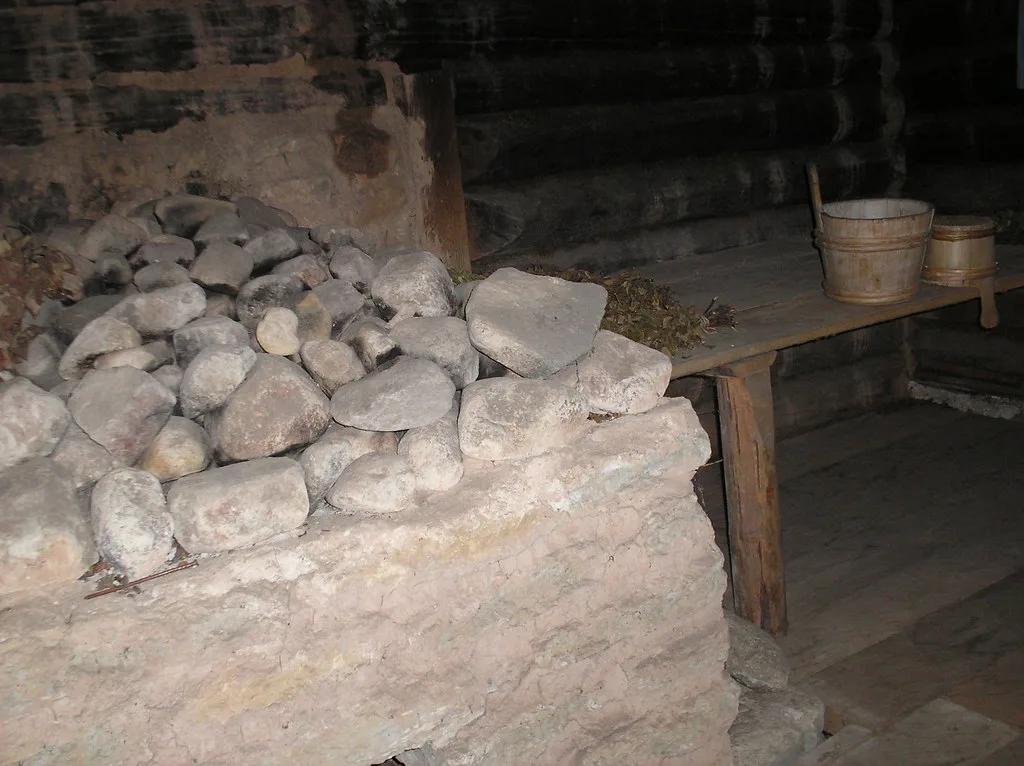
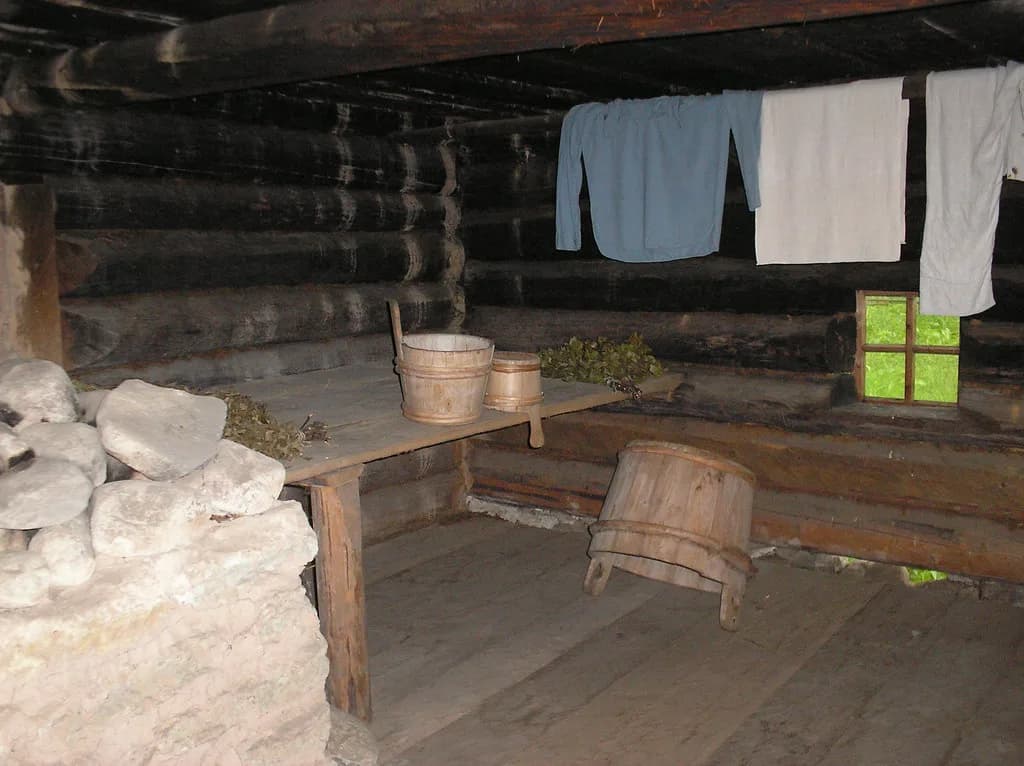
If you want to go deeper into the country's bathing culture, saunas in Estonia range from city bathhouses to farm smoke saunas, and the Võromaa smoke sauna tradition in the south is the classic expression of the Estonian smoke sauna.
The Estonian Open Air Museum demonstrates the heating of a smoke sauna on the third Thursday of each summer month, roughly midday to late afternoon, which is a useful complement to a city sauna visit if your dates line up.
Estonian sauna culture in brief
Estonia is a sauna country by any measure: the tourist board counts over 100,000 saunas nationwide and notes that many apartment buildings and summer houses have one. That density explains why public saunas here feel like ordinary civic infrastructure rather than a novelty.
For a first-timer, the local habits are simple: shower before entering, sit on something, keep the volume low, ask before ladling water, and cool off when your body tells you to. Estonians are generally happy to explain their sauna culture to visitors, so asking a neighbour in the changing room is a reasonable move.
The Finnish sauna remains the closest reference point for most travellers, and the underlying logic is the same on both sides of the gulf: heat, cold, rest, repeat, and a calm room shared with strangers. Once you have the rhythm, Kalma's 1928 rooms make sense immediately.
Plan Your Visit
Kalma Saun is the pick in Tallinn when you want an old public bathhouse with real texture: a 1928 building in Kalamaja, a wood-fired men's side, an electrically heated women's side, a small cooling pool and hourly private rooms with a pool in the large one. Choose your side, bring a towel and a seat cover, and leave time for the walk back through the wooden streets.
Book a private room ahead for weekends and groups, arrive early if you want a quiet public session, and keep the visit simple: shower, sweat, cool, rest, eat. The sauna's own website is the place to arrange private bookings.
Explore more Tallinn sauna guides
Frequently Asked Questions
What is Kalma Saun in Tallinn?
Kalma Saun is a public sauna at Vana-Kalamaja 9a in the Kalamaja district of Tallinn, built in 1928 and one of the oldest public saunas still operating in the city. It has separate men's and women's public sides, small and large private saunas and a small cooling pool.
Is Kalma Saun mixed or single-sex?
The public saunas are single-sex: a men's public sauna and a women's public sauna, both open every day. Mixed groups can book one of the private saunas by the hour instead, which gives you your own room and your own rules.
Do you wear swimwear at Kalma Saun?
On the single-sex public sides, the Estonian custom is to bathe naked. In private rooms and any mixed setting, follow the room and the posted instructions; swimwear or a towel wrapped around the body is an acceptable way to cover up.
Can you book a private sauna at Kalma Saun?
Yes. The venue rents a small and a large private sauna by the hour, and the large one includes a pool as well as the sauna itself. Groups use them for ordinary sauna evenings and for celebrations, and bookings are arranged through the sauna's own site.
How much does Kalma Saun cost?
The sauna does not publish its fee schedule on its history page, so ask for the current public-side ticket and private-room rates when you book. Plan for separate charges for the public saunas and for hourly private rooms, plus any drinks or accessories bought on site.
Is Kalma Saun open every day?
Both the men's and women's public saunas are open every day. Private saunas are booked by the hour, so availability depends on what is already reserved, especially on weekend evenings.
What is the difference between the men's and women's saunas at Kalma Saun?
The men's side has a wood stove sauna and a steam sauna, while the women's sauna room is heated by electric heaters. If a wood-fired sauna is what you are after, that difference should guide which day and which side you plan around.
Is there cold water at Kalma Saun?
The cold option is a small cooling pool in the public area, and the large private sauna has its own pool. There is no sea or lake swim as part of a visit, so the pool is where you cool down between rounds.
Sources
Sauna notes for your next trip
Optional updates to our sauna guides.
You might also like
Continue reading
More guides you'll find useful