Dantebad Munich: Sauna, Pools and How a Visit Works
Dantebad in Munich pairs a heated 50-metre outdoor pool with a sauna landscape of Finnish sauna, blockhouse sauna, steam bath and cold plunge.
On this page
Dantebad is the Munich answer to a sauna afternoon that comes with a proper outdoor swim: an open-air pool complex in Neuhausen-Nymphenburg with a sauna landscape built into it. For sauna travellers the heated rooms and cold plunge are the reason to come, while the 50-metre pool and the surrounding park make it a full day rather than a quick round.
The address is Postillonstraße 17, and the whole site belongs to Stadtwerke München, the city utility that runs Munich's public baths. That matters practically: the sauna landscape needs a higher admission than a plain swim entry, so decide before you arrive whether you are coming for the pools or for the sweat rounds.
What Dantebad is and who it suits
Dantebad sits in Munich's Neuhausen-Nymphenburg district, close to the Westfriedhof U-Bahn station, and combines an open-air swimming complex with a wellness and sauna area. It is a Stadtwerke München bath, so the operation follows the city's public-pool model rather than a private spa's. That keeps it unpretentious and busy with locals rather than styled as a luxury retreat.
It suits two kinds of visitor. Swimmers get a heated 50-metre stadium pool that runs year-round outdoors, plus summer pools and a separate FKK section with its own 25-metre basin. Sauna visitors get Finnish sauna, a blockhouse sauna, a sanarium, a stone steam bath, a cold plunge, a Kneipp area and a whirlpool. If you want a dedicated city sauna house with late-night Aufguss theatre, Munich's historic baths are a better match; if you want heat, cold water and a long outdoor day, Dantebad works.
The sauna landscape: what you actually sit in
The sauna area is the part to plan around. A Finnish sauna is the hot, dry anchor, a blockhouse sauna gives the log-cabin version of the same idea, and the sanarium runs at a gentler temperature with higher humidity for anyone who finds the main room too fierce. A stone steam bath covers the damp, heavy end of the spectrum. Where the Finnish tradition is the reference point, the hot room, the cold plunge and the rest period in between follow the same rhythm described in our guide to the Finnish sauna.
The cold side is built in rather than improvised: a cold plunge sits within the sauna landscape, and a Kneipp area offers the walking-through-cold-water alternative. A whirlpool gives a warm, non-sauna option between rounds. Reviewers single out the Stollensauna as a highlight and mention hourly Aufguss rounds in the evening, alongside the steam bath and a generous rest area — but treat the Aufguss times as something to read off the board on arrival rather than a fixed appointment.
The pools: stadium pool, summer pools and the FKK basin
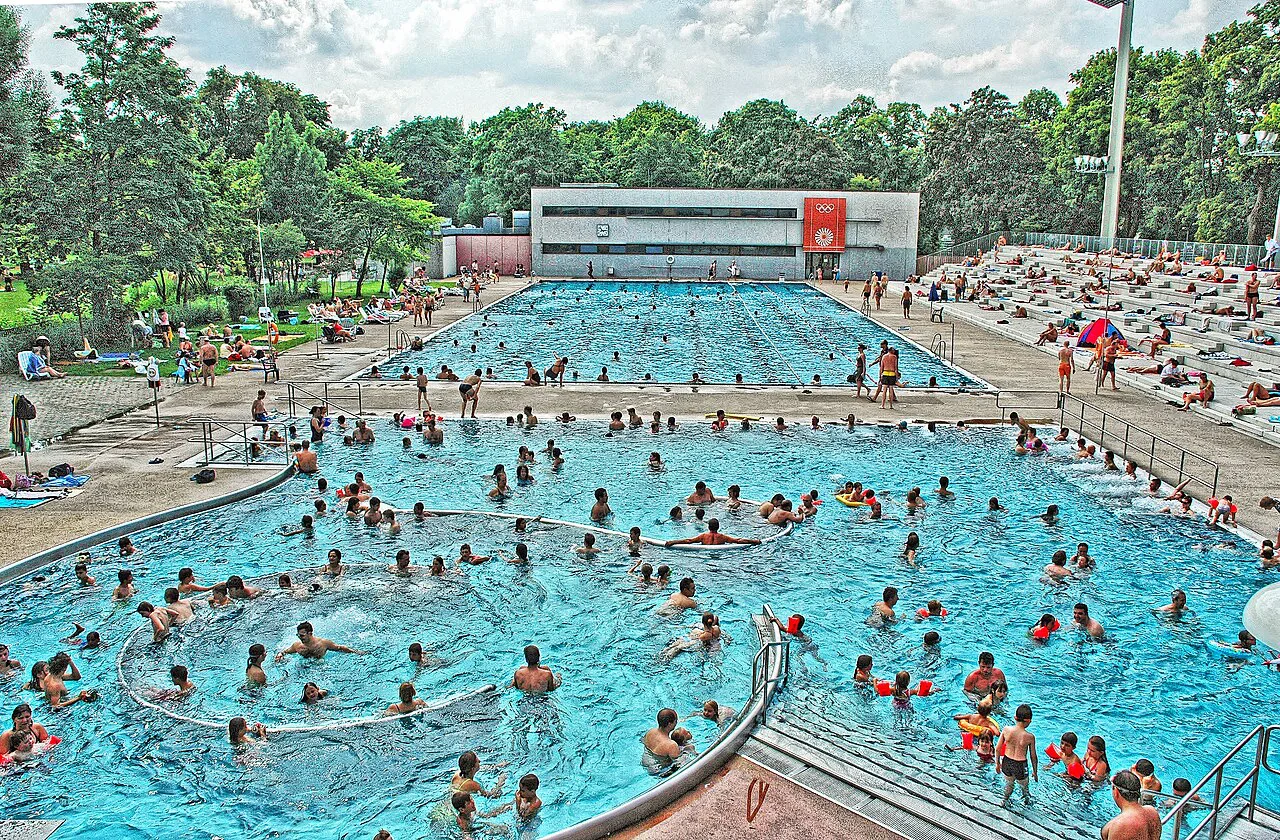
The centrepiece is a heated 50-metre stadium pool that is kept heated year-round under the open sky, which is unusual for an outdoor site and gives swimmers a reason to come in cold months. Alongside it are a 50-metre summer pool, an adventure pool and a 30-metre non-swimmers' pool, so lane swimming and family splashing are separated. A separate FKK area has its own 25-metre pool.
The grounds include an old tree stock and a listed Lichttribüne grandstand that seats up to a thousand spectators, a reminder that this is a historic Munich bathing site rather than a new-build spa. Showers before entering the pools are compulsory, which is enforced as a water-quality measure rather than as etiquette advice.
How a visit works step by step
Arrive, buy the ticket that covers the sauna landscape rather than a plain swim, and change in the communal changing rooms. Lockers take a 1- or 2-euro coin as a deposit, so have one ready before you reach the barrier. Shower before the pools; the same shower is the sensible start to a sauna round.
Inside the sauna area, undress, take a large towel to sit on and keep the room quiet. A round is typically short, followed by cold water and a rest, then another round. Note that bath operations end fifteen minutes before closing, so the last hour is for winding down rather than starting a fresh hot round.
Sauna etiquette: textile-free, towel underneath
The sauna is a textile-free zone, so swimwear stays in the changing room and a large towel serves as a seat cover on the bench. That seat towel is the detail first-timers most often forget: a small hand towel is not enough, and bare skin on the wood is not the convention here. Bring something bigger than you think you need.
Customs are the standard central European ones: shower before entering, keep conversation low, and give the rest area the quiet it is meant for. Aufguss rounds, where water is poured on the stones and air is moved around the room, run in the evening according to visitor reports and draw the fullest benches. Go to the early round if you want space, or accept standing room for the popular one.
Prices, tickets and how admission works
Admission is sold through Stadtwerke München, and the sauna landscape sits behind a higher ticket than a straightforward swim. Expect public-bath pricing rather than spa pricing, but budget for the sauna tier specifically, since a standard pool entry does not buy you the heated rooms. The current tariff is on the Stadtwerke München site, and that is the figure to work from.
If you hold a fitness-club membership that includes Dantebad, note that the sauna generally requires a higher membership tier than the pools, and that some check-in arrangements add a supplement paid at the venue. Treat those club conditions as separate from Dantebad's own prices; a small amount of cash is worth carrying for extras.
Opening pattern and seasons at an open-air site
This is an outdoor complex, so the season shapes the visit. The heated stadium pool makes winter swimming possible, and a cold-weather sauna round followed by the open air is the version regulars come for. In summer the full outdoor offering opens up and the site becomes a park day with a sauna attached. Outdoor areas can be restricted in extreme weather.
Daily opening times shift through the year, so read the schedule on the Stadtwerke München site the day you plan to go. A December visit and a July visit are genuinely different trips: one is a quick hot-and-cold circuit with a towel over your shoulders between buildings, the other a slow afternoon in the grounds.
How busy it gets
Evenings and weekends are the pinch points, driven by the Aufguss rounds and by swimmers finishing work. The rest area fills, the popular sauna gets crowded, and the cold plunge can queue. A weekday afternoon is a calmer bet if your schedule allows it.
Noise levels vary with the crowd: the pools are family territory, while the sauna and rest areas are quiet zones by convention. If you want silence, aim for off-peak slots and avoid the headline evening round. If you want atmosphere, that round is exactly the point.
What to bring
Two towels are the practical minimum: one large towel as a sauna seat cover, one for drying after showers. Add a bathrobe or something warm for the walk between heated rooms and cold water, which is outdoors and not always pleasant in winter. Swimwear is needed for the pools; toiletries and flip-flops cover the changing rooms.
Bring the 1- or 2-euro coin for the locker, a water bottle, and cash for the kiosk if you plan to eat on site. Leave valuables at home rather than relying on the changing rooms, and pack a plastic bag for wet kit on the way home.
Food and drink on site
The site has a restaurant, Hechtsprung, plus a kiosk with a beer garden, so you can eat without leaving the grounds. That makes a full-day rhythm easy: swim, sauna, eat, swim again. Check the kiosk's seasonal opening, as beer-garden service is a fair-weather affair.
Keep the classic rule in mind: stay hydrated, skip alcohol before bathing, and leave the heat if you feel unwell. Anyone with a heart condition or who is pregnant should ask a doctor before using saunas or cold plunges.
Getting there
Dantebad is at Postillonstraße 17 in Neuhausen-Nymphenburg, right by the Westfriedhof station on U1 and U7. That puts it a short ride from central Munich and makes the trip car-free. The U-Bahn exit practically faces the bath, so you are not hauling a towel bag across the city.
Honest trade-offs
The open-air layout means real cold walks between the sauna and the pool in winter, so a robe is not a luxury. Weather can restrict the outdoor areas, and the locker deposit needs a coin. Sauna admission is a higher ticket than a swim, so if you only want a dip, Dantebad is an expensive way to do it.
The changing rooms and sauna area can feel busy at peak times, and the evening Aufguss rounds are popular enough to require patience. This is a public bath, not a hushed spa, and it rewards visitors who embrace that.
Nearby alternatives for a Munich sauna session
If you want a historic indoor setting, Müller'sches Volksbad near Rosenheimer Straße is Munich's Art Nouveau bathhouse and a different experience altogether: architecture, a pool hall and a proper city-sauna feel. It pairs well with a walk along the Isar afterwards.
For a modern, family-friendly pool with sauna facilities, Michaelibad and Cosimawellenbad are the other Stadtwerke options worth knowing, and both sit on the same public-bath ticketing model as Dantebad. Our guide to saunas in Munich sets them out side by side.
Plan Your Sauna Visit
Dantebad works best as a half-day that mixes heat, cold water and a swim rather than a dedicated sauna house. Bring two towels, a coin for the locker and something warm for the walk outside, and buy the sauna-level ticket. Wednesday afternoons beat Friday evenings if you want the benches to yourself.
The current Stadtwerke München schedule and tariff live on the swm.de baeder site, and Dantebad's own page is the place to book ahead and confirm times.
Frequently Asked Questions
What saunas are at Dantebad in Munich?
Dantebad has a Finnish sauna, a blockhouse sauna, a sanarium and a stone steam bath, plus a cold plunge, a Kneipp area and a whirlpool. Reviewers also highlight a Stollensauna, and Aufguss rounds are reported in the evening. Times and the exact current setup are posted on site.
Do you wear swimwear in the Dantebad sauna?
No. The sauna is a textile-free zone. Swimwear is for the pools, while in the sauna you sit on a large towel used as a seat cover, so bring one that is big enough for the bench.
Is the Dantebad sauna mixed or single-sex?
The sauna is textile-free, but the published visitor information does not split sessions by sex. Expect ordinary mixed public-bath use rather than separate women's and men's hours.
How do you get to Dantebad by public transport?
Take U1 or U7 to Westfriedhof. The bath is at Postillonstraße 17 in Neuhausen-Nymphenburg, and the station is right by the entrance.
Is Dantebad open in winter?
Yes — the 50-metre stadium pool is heated and runs year-round under the sky, and the sauna landscape is the winter draw. Outdoor areas can be restricted in extreme weather, and opening times shift through the year.
What should you bring to Dantebad?
Two towels (one as a sauna seat cover), swimwear, flip-flops, toiletries, a 1- or 2-euro coin for the locker, a water bottle and something warm for the outdoor walk between sauna and water.
Sources
Sauna notes for your next trip
Optional updates to our sauna guides.
You might also like

Continue reading
More guides you'll find useful