Müller'sches Volksbad, Munich: Sauna and Swim Guide
How a visit to Munich's Müller'sches Volksbad works: the Art Nouveau swimming hall, the sauna area, nude and towel rules, cold water and getting there.
On this page
The Müller'sches Volksbad is a municipal bathhouse on the Isar in Munich, opened in 1901 and still operating as a public swimming hall with a sauna area, so a visit is two experiences under one roof: laps under a barrel-vaulted ceiling, and a German-style sauna round. It suits travellers who want architecture and a proper bathe in the same ninety minutes, not a resort day.
The building is the reason most people go first and the sauna the reason many return. Opened as the city's first indoor swimming bath, it was designed with stucco, wrought iron and a Roman-Irish steam bath, and it remains an ordinary pool anyone can walk into rather than a ticketed attraction.
Where the Volksbad sits and why that matters
The address is Rosenheimer Straße 1 in Au-Haidhausen, on the Isar opposite the Deutsches Museum. That puts it within a short walk of the museum island and the river paths, so it slots into a city day rather than requiring a separate excursion.
Practically, this is the sauna stop to choose when you have an afternoon rather than a day. Therme Erding, 30 km north-east, is a six-to-seven-hour round trip; the Volksbad is central and takes around ninety minutes.
The building: swimming hall and steam bath
The core of the Volksbad is a tall swimming hall with a barrel-vaulted ceiling, galleries and decorative detail that most municipal pools in Europe cannot match. It also holds a Roman-Irish steam bath, a sequence of heated rooms in the old European style rather than a single hot cabin.
Treat the architecture as a bonus rather than a museum visit: this is a working bath, and swimmers, lane ropes and pool noise share the space with the plasterwork. The reward is swimming lengths under a ceiling that would be worth seeing even without water beneath it.
The swimming: lanes and the warmer pool
The hall serves two kinds of session. Serious swimmers take the lanes for steady lengths, while a smaller, warmer pool suits people who want to move slowly, float and stay in longer. Decide which you are before you queue, because the lane pool rewards a pace and the warm pool rewards patience.
Weekday mornings are the version worth arranging your day around: light through the high windows, fewer people in the water and space to actually swim. A Saturday afternoon is a busy public pool with excellent plasterwork, and the lanes slow to a shuffle.
The sauna area and the textile-free rule
The Volksbad has a sauna area alongside the pools, and the German convention applies: no swimwear inside the cabin, a towel under and around you, and mixed sessions as the default. This is custom rather than a request, and it is the detail that trips up first-timers arriving from countries where costumes stay on.
If you want the tradition behind the cabin, the Finnish sauna is the reference point: a hot, dry room, short rounds of five to fifteen minutes, and cold water or a shower between them. Knowing that rhythm makes the Volksbad's sauna legible rather than puzzling.
Bring two towels, one to sit on and one to dry with, and wear flip-flops everywhere except inside the cabin itself. Wet skin on bare wood is the mistake people most often make, and a towel solves it.
The building's bathing culture
A German sauna area is a sequence rather than a single room, and this one fits the wider Bavarian pattern of a hot cabin, a steam room, showers and a quiet rest area. Signs are usually in German, so learn three words before you go: Sauna, Dampfbad for the steam room, and Ruheraum for the rest room.
The rest room is not an afterthought. The pattern is heat, cold, then a period lying down, and skipping the rest is why some visitors leave flat rather than restored; the same convention runs through the saunas in Munich and across the German-speaking countries.
How a sauna session actually runs
Shower first and dry off, then take a towel into the cabin and sit or lie on it so no part of you touches the wood, feet included. Rounds are short, conversation stays quiet, and the cold step afterwards is a shower or a plunge rather than an optional extra.
Three rounds is the usual shape of a visit, with cold water and rest between each. Plan roughly an hour and a half if you want the swim as well, and leave more time than you think for the rest area, which is where most of the visit is actually spent.
Aufguss: what it is and how to time it
An Aufguss is the ritual where an attendant pours water, and sometimes essential oils, onto the hot stones and moves the heat around the room with a towel. It lasts around ten to fifteen minutes, and the door stays shut for its duration; walking in halfway through is the cardinal sin of the German sauna.
Sessions follow a posted timetable, and they are the busiest and best part of the day. Arrive at the cabin about five minutes before the listed time, and if you have never done one, start with a milder session rather than the hottest on the board.
Prices and tickets
The Volksbad charges municipal bath pricing rather than spa pricing, which is the whole point: a swim here costs a fraction of a hotel day pass or a thermal complex ticket. The sauna is priced as part of the bath operation, with entry handled at the counter rather than through a resort booking system.
Current entry prices, sauna supplements and any concession rates are listed by Stadtwerke München on the bath's own page, which is the page to read before you travel. Bring a padlock for the lockers or expect to pay a deposit for one at a municipal pool. If you plan to use the pools across the city, the wider network of saunas in Munich runs on the same municipal logic.
Opening hours and when it is quiet
The Volksbad is a public bath on a municipal schedule, so opening patterns follow Stadtwerke München's own timetable and can shift for maintenance or holidays. Look up the Stadtwerke München page for the day you intend to go, and note that German spas and pools are busiest on rain-soaked weekends and quietest on weekday mornings.
The swim and the sauna also peak at different times. Swimmers fill the hall early and after work, while the sauna area stays calmer even when the pool is heaving, because of the quiet convention and the minimum age that many German sauna areas apply.
Sunday is not a shopping day in Germany, which pushes the crowds towards baths and pools; a spare Monday, when museums close, is often the emptier choice.
Getting there
The Volksbad sits on Rosenheimer Straße in Au-Haidhausen, a short walk from the Isar and the Deutsches Museum, and is served by tram and S-Bahn lines from the centre. Use the Munich transport operator's journey planner for the day you travel, since tram routes and stop names around the Isar change with construction work.
Walking from Marienplatz or the museum island takes around twenty to thirty minutes along the river, which is a pleasant approach in good weather and a cold one in January. Arriving on foot also puts you on the right side of the Isar for the entrance.
The honest trade-offs
This is a working municipal bath, not a spa. Changing areas get cramped at peak times, the pool hall carries noise, and there is none of the thermal-resort scale or candlelit calm of a large complex. What you get instead is architecture, a proper swim and a genuine local sauna for the price of a public ticket.
Old civic baths need maintenance, and closures happen: the Cosimawellenbad, another municipal bath in Bogenhausen, had to shut for repairs after a leak in its wave pool in late 2025. Check the Stadtwerke München page before you travel, in case your chosen bath is having one of those weeks.
What to bring
Pack two towels, one for the sauna bench and one to dry with, plus flip-flops and a refillable bottle; three rounds dehydrate people more than they expect. A padlock for the lockers is useful at public baths, and a packable robe makes the walk between cabin, shower and rest area far more comfortable.
Most baths run a wristband or card system for lockers and on-site purchases, so a card is more useful than cash inside. Leave jewellery and anything you would not want to lose in the locker rather than at the poolside.
Cold water: showers, plunge and the Isar
The cold option inside the Volksbad is the shower, and the contrast between a hot cabin and cold water is the point of the round rather than an endurance test. The Isar runs past the door, but river swimming there demands care: the water is cold even in August, the current is stronger than it looks, and the days after heavy rain are not the days to try it.
If cold water is the main draw, the Dantebad Munich keeps an outdoor pool heated through winter, which gives you open-air swimming without an unsupervised river.
For scale, Therme Erding offers a large sauna world with a cold plunge and a 16+ minimum age in the sauna area, and it is the choice when you want a full thermal day rather than ninety minutes.
Other baths worth pairing with it
The Cosimawellenbad, Munich, in Bogenhausen has a wave pool and an outdoor pool heated to 34 degrees, and after its 2014 to 2017 renovation it counts among the city's most modern indoor baths. Its waves run for fifteen minutes each hour, which shapes how you plan a visit.
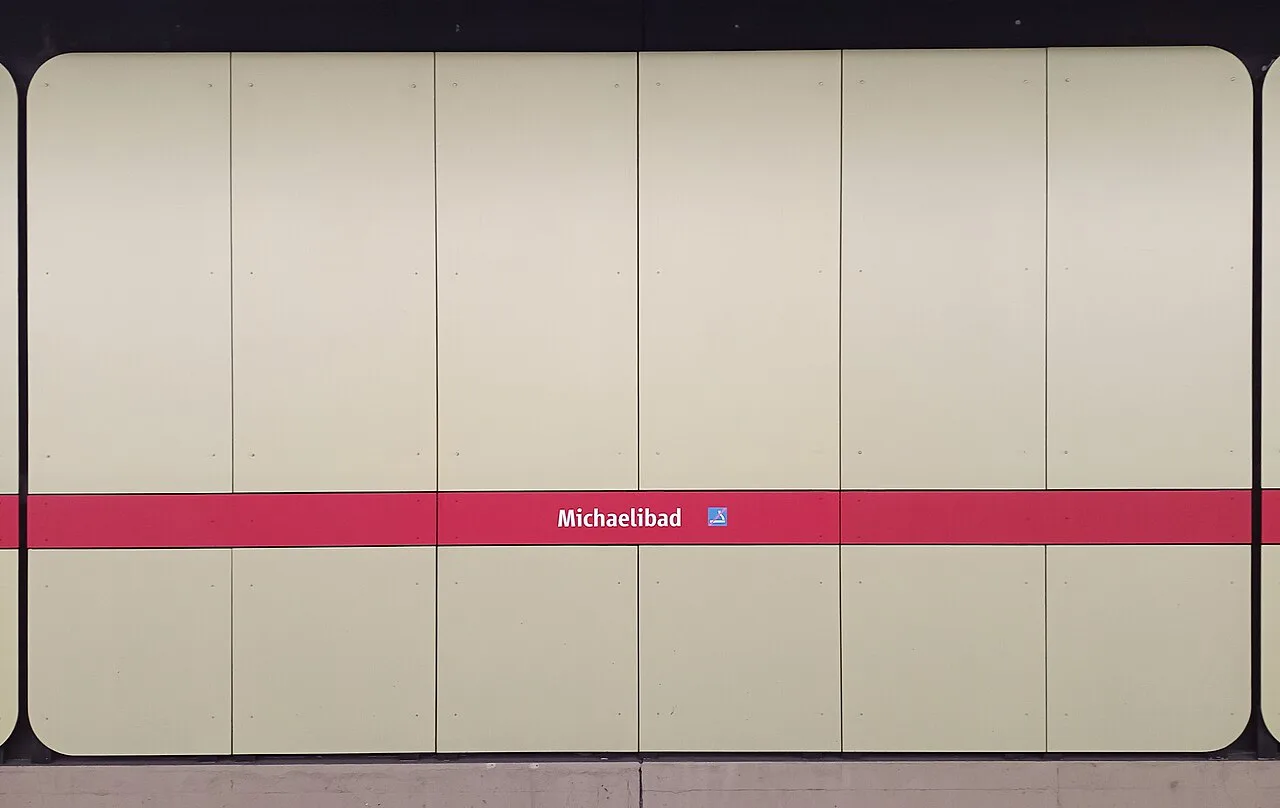
The Michaelibad, Munich, is another municipal option in the east of the city, reachable from Michaelibad station, and useful when you want a pool-and-sauna session without crossing the centre.
Beyond the city, Alpine lakes such as the Starnberger See, about 40 minutes on the S6, and the Ammersee, about 50 on the S8, offer lidos, changing facilities and cold open water in summer.
A safety note
Stay hydrated, skip alcohol before bathing, and leave the cabin if you feel unwell. If you have a heart condition or are pregnant, ask a doctor before using hot saunas or cold plunges.
Plan Your Visit
The Müller'sches Volksbad is the rare city bath that gives you a landmark interior, a real swim and a German sauna session in one stop, and it is the best-value bathe in central Munich. Book nothing: walk in on a weekday morning, take two towels, and build the visit around the posted Aufguss times.
For a longer sauna day, pair it with Therme Erding midweek or with outdoor winter swimming at the Dantebad, and read the Finnish sauna guide before your first round if the naked, quiet, cold-then-hot rhythm is new to you.
Explore more Munich sauna guides
Frequently Asked Questions
Does the Müller'sches Volksbad have a sauna?
Yes. The Volksbad is a municipal swimming bath with a sauna area attached to the pools, operating on German lines: textile-free cabins, mixed sessions, a towel under you and a shower before you go in. Swimwear belongs in the pool hall, not the sauna.
Do you have to be naked in the sauna at the Volksbad?
In the sauna itself, yes. German sauna custom is textile-free, so you undress, sit or lie on a towel and cover yourself with it, and the cabins are mixed by default. Many German sauna areas run separate women's times or areas, so ask at the counter if that matters to you.
How much does the Müller'sches Volksbad cost?
Entry follows municipal bath pricing rather than spa pricing, which keeps it well below a hotel day pass or a thermal complex ticket. Stadtwerke München lists the current entry prices and any sauna supplement on the bath's own page.
How do I get to the Müller'sches Volksbad by public transport?
The bath is at Rosenheimer Straße 1 in Au-Haidhausen, on the Isar opposite the Deutsches Museum. Tram and S-Bahn lines run there from the centre, and the walk from Marienplatz or the museum island takes around twenty to thirty minutes along the river; use the Munich transport operator's journey planner for the day you travel.
When is the Müller'sches Volksbad quietest?
Weekday mornings are the quietest window for both the pool and the sauna, with light through the high windows and space in the water. Saturday afternoons are the busiest, and rainy weekends push crowds towards baths across the city; a spare Monday is often calmer still.
What should I bring to the Müller'sches Volksbad?
Two towels, one to sit on in the sauna and one to dry with, plus flip-flops, a padlock for the locker, a refillable bottle and a card for on-site purchases. A packable robe makes the walk between cabin, shower and rest area more comfortable.
Sources
Sauna notes for your next trip
Optional updates to our sauna guides.
You might also like
Continue reading
More guides you'll find useful