Michaelibad, Munich: Sauna, Pools and How a Visit Works
Michaelibad is Munich's municipal pool and sauna complex in Ramersdorf-Perlach, with indoor and outdoor pools. Here is how a visit works and how to arrive.
On this page
Michaelibad is Munich's east-side answer to a sauna afternoon: a Stadtwerke München bath complex in Ramersdorf-Perlach with indoor pools, an outdoor pool and a sauna under the same ticket roof. It suits travellers staying in the east of the city, families who want water and a slide, and anyone who wants a proper German sauna round without a train ride to a thermal resort. Treat it as a well-run neighbourhood bath with a sauna attached rather than a spa destination, and you will plan the day correctly.
The setting keeps the day simple: the U-Bahn station named after the bath sits at Heinrich-Wieland-Straße, so you arrive on foot with a towel bag and no parking hunt. Inside, the rhythm is the standard German one — undress, towel down, heat, cold, rest — while the pools outside the sauna area follow ordinary swimming-bath rules. Read this before you go and you will not be the person who opens the cabin door mid-Aufguss.
What Michaelibad is and who it suits
Michaelibad is one of the municipal baths run by Stadtwerke München, and SWM publishes two separate worlds under one address: the Hallenbad with its sauna, and the summer outdoor pool. That combination is what makes it useful. A rainy October afternoon and a hot July Saturday both have an answer here, which is not true of every bath in the city.
It suits three kinds of visitor well. First, travellers based in Bogenhausen, Perlach or anywhere along the U5 who want a two-hour sauna without crossing town. Second, families who need a children's basin and a slide alongside a pool where adults can swim. Third, first-timers in Germany who want a municipal sauna at municipal prices rather than a hotel wellness floor, where the day-pass arithmetic runs much higher.
It suits less well anyone chasing architecture. The historic bath in this city is the art nouveau Müller'sches Volksbad on the Isar, a 1901 municipal pool that is still an ordinary swimming bath anyone can walk into, and it is worth ninety minutes of any Munich trip on its own. Michaelibad is the practical, roomy, slightly plain alternative — and sometimes plain and roomy is exactly what you want.
Where Michaelibad sits in Munich
The complex stands at Heinrich-Wieland-Straße 24 in Ramersdorf-Perlach, in the south-east of Munich. The neighbourhood is residential rather than touristic, which shapes the atmosphere: you are bathing with locals on their lunch break and after work, not with a coach party.
Expect a conventional municipal layout: entrance hall and ticket desk, changing cabins and lockers, showers, then the pools and the sauna area off the same circulation. The details that matter on the day are the ones every Munich bath shares — bring a padlock or a coin for the locker, keep shoes off the sauna cabin floor, and carry your own towel to sit on.
The sauna area: what to expect inside the cabin
The sauna here belongs to the German-speaking tradition rather than the Finnish one, which means textiles come off, a towel goes down on the bench, and the room is mixed by default. The Finnish sauna is the reference point most regulars carry in their heads: a hot, dry cabin, short rounds, then cold and rest. Here you will usually also find a gentler sanarium-type room at a lower temperature, the standard choice for a first round or for anyone who finds the main cabin too fierce.
Plan your visit around the Aufguss. An attendant pours water, sometimes with oils, onto the hot stones and moves the heat around with a towel; the session lasts roughly a quarter of an hour and the door stays shut for its duration. Arrive a few minutes before the posted time, take a seat low down if it is your first one, and never walk in halfway through — that is the mistake locals notice immediately.
The sauna is one part of a complex, so the cold-water option is a shower or plunge rather than a lake or sea. The sequence matters more than the facilities: heat, cold, then a proper rest of fifteen to twenty minutes before the next round. Most people manage three rounds rather than five, and two well-rested rounds beat four rushed ones.
The pools: indoor basins, the slide and the outdoor pool
Outside the sauna area, Michaelibad works like any German swimming bath, and swimwear is the normal dress. The indoor pool is for lanes and casual swimming, and the children's basin and slide are what pull families here at weekends and through the Bavarian school holidays. If you want a serious lane session, go early; if you want the children to burn energy, the middle of the day is fine and loud.
In the summer season the outdoor pool adds the thing Munich does unusually well: swimming in the open air with a lawn to lie on. It is a municipal Freibad, not a lido with a view, so the pleasure is space and sun rather than scenery. Water temperatures in lakes and rivers around the city are cold even in August and currents are stronger than they look, so keep open-water swimming to lifeguarded spots.
How a German sauna session works: undress, towel, Aufguss, cold, rest
First-timers should learn four rules before stepping into the cabin. Swimwear comes off inside the sauna; a large towel goes under you so no skin touches the wood, feet included; you shower before your first round; and conversation stays at a murmur. Outside, in the pools and on the decks, normal swimming-bath behaviour and swimwear apply, so the transition between the two zones is a change of etiquette, not just of room.
The round itself is short. Five to fifteen minutes in the heat is the usual custom, then a cold shower or plunge, then a rest lying down. Skipping the rest is why people come out feeling flattened rather than refreshed; the Ruheraum or daybed is part of the routine, not an optional extra. Three rounds with rests in between fills a comfortable two hours.
Keep the safety side simple: drink water through the visit, skip alcohol beforehand, and leave the cabin if you feel unwell. Anyone with a heart condition or who is pregnant should ask a doctor before using a hot sauna or cold plunge. That is ordinary prudence, not a medical programme — the bathing here is a custom and a pleasure, not a treatment.
Swimwear and mixed-gender rules inside the sauna versus the pools
The most common confusion at a place like Michaelibad is which rule applies where. In the pools and on the outdoor lawn, wear swimwear and behave as you would at any public pool. In the sauna cabin, textiles are considered unhygienic and come off; men and women share the room unless a women-only session is scheduled.
If mixed nudity is not for you, the practical options are a women-only slot where the operator lists one, or the gentler sanarium room where the atmosphere is calmer and the temperature lower. Municipal baths in Munich generally publish which days or hours differ, so the board at the ticket desk is the place to look on arrival rather than in advance.
Tickets and prices at Michaelibad
Stadtwerke München publishes the tariff for the indoor pool and sauna, including a standard adult rate, a reduced category and a family ticket. Check the current figures on the SWM page before you travel, because the published tariff is the only reliable number and municipal fees are revised from time to time.
The useful way to think about the cost is comparatively: this is municipal-bath pricing, several steps below what a hotel wellness floor charges for a day pass. Cashless payment is standard at the Munich baths, and if you plan several visits the multi-visit or season products sold by Stadtwerke München are worth pricing against single tickets. Sauna access may be included in the indoor-pool ticket or priced as an add-on on certain days, and the SWM tariff page sets out which.
Book nothing in advance for a normal visit; you turn up, pay at the desk and go in. The exception is anything scheduled, such as a course or a reserved session, which is booked through Stadtwerke München. For comparison, Therme Erding publishes its own tiered pricing and runs a sauna world with a minimum age of sixteen, but that is a half-day excursion rather than a neighbourhood swim.
Opening patterns, seasons and how busy it gets
The indoor pool and sauna run through the year, and the outdoor pool opens for the summer season. Confirm the current timetable on the operator's page, since municipal baths adjust hours by season and around public holidays. A phone number on the official listing is the fastest route if you are deciding on the day.
Timing decides the experience more than anything else. Weekday mornings are quiet in every Munich bath, and the sauna is at its calmest then. Saturday afternoons and rainy Sundays fill the pools with families, and Bavarian school holidays transform the children's area. If you want a serene sauna round, go on a weekday before the after-work rush.
One local pattern to know: Sunday is not a shopping day in Germany, which pushes people towards baths and pools, and Mondays are often quieter because museums close. The sauna area itself tends to stay calmer than the pools even when the building is busy, because of the quiet convention and the age rules that apply in many German sauna areas.
What to bring and what to leave in the locker
Pack two towels: one to sit on in the sauna, one to dry with. Add flip-flops for the shower and poolside, a refillable water bottle, and a padlock if the lockers take one. A bathrobe earns its space if you plan several rounds, because you will spend more time resting than in the heat.
Leave valuables at home rather than in the changing room, and keep jewellery off before the sauna: metal gets uncomfortably hot. A small bag for wet kit saves the rest of your luggage on the tram back. Most municipal baths also hire or sell the items people forget, but the queue at the desk is a poor start to a two-hour visit.
Getting there on the U-Bahn and by car
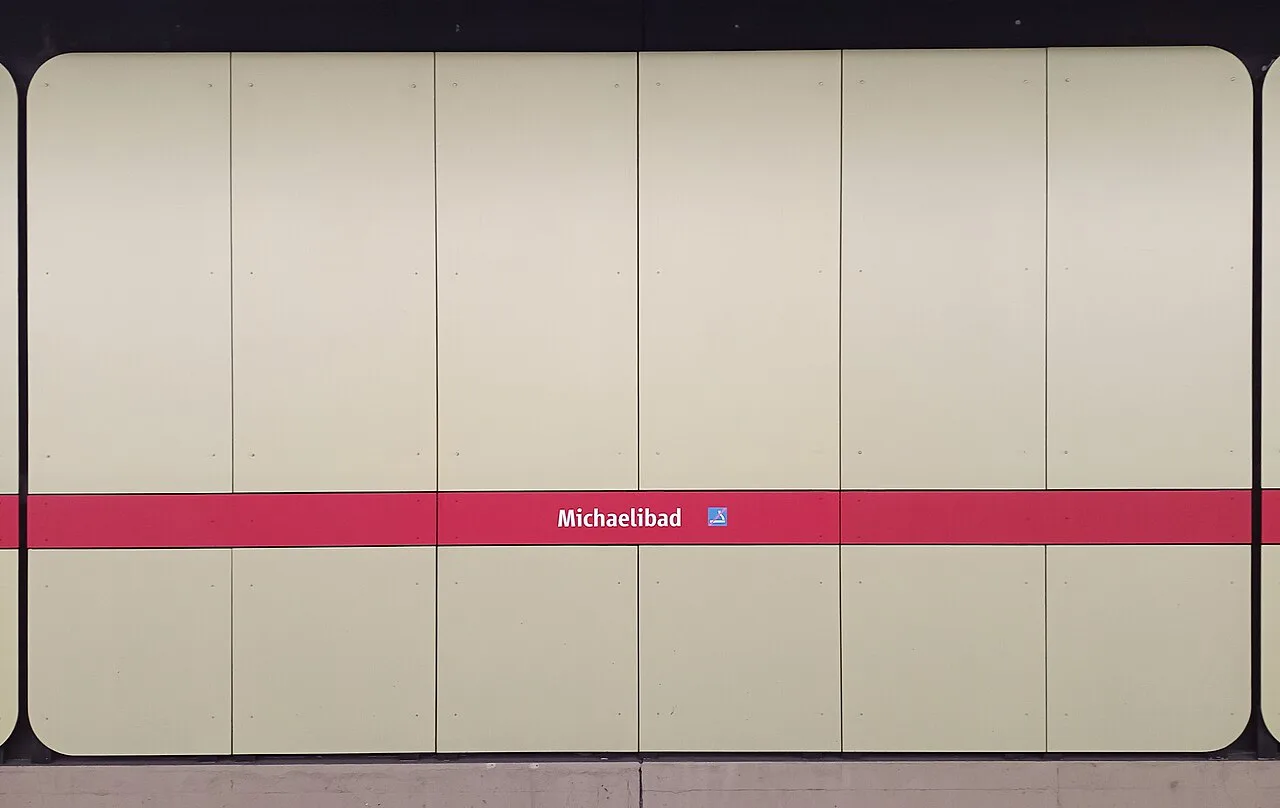
Michaelibad has its own U-Bahn station, also called Michaelibad, on the line that runs through the east of the city; the entrance sits at Heinrich-Wieland-Straße, a short walk from the bath. That makes the trip from the centre straightforward and removes any need to think about parking.
Check the route on the Munich transport operator's planner for the day you travel, since engineering works and timetable changes are routine on the U-Bahn network. Allow a few minutes on foot at each end; the walk between platform and changing room is short but not zero, and in winter it is the coldest part of the day.
By car you are in a residential quarter of Ramersdorf-Perlach where street parking is limited and the bath's own spaces fill quickly at weekends. For a two-hour sauna, the U-Bahn is almost always the better trade: no circling, no meter, and you leave with your towel still dry.
Honest trade-offs: family noise, changing rooms and peak times
Michaelibad is a neighbourhood bath, and that is both the charm and the catch. Weekends bring children, the slide queue and echoing pool halls, which is a poor match for anyone seeking silence. The changing rooms are municipal-sized rather than generous, so peak arrival times mean waiting for a cabin.
There is no lake or sea at the door, so the cold half of a sauna round is a shower or plunge rather than a jump into open water. If that matters to you, Munich's other options cover it: the Dantebad is an outdoor pool heated through the winter, and the Isar at the Flaucher is where the city swims for free in summer, with the caution that river currents are stronger than they look.
Repairs and technical problems happen at any municipal pool, and this is not the venue to plan a whole day around if a particular pool or cabin matters. The Cosimawellenbad in Bogenhausen, the wave pool used by many of the same swimmers, closed from late November for repairs to a leak in its wave basin and to its Finnish sauna, and reopened on 20 December — a reminder to treat any single facility as one option among several.
Nearby alternatives: Müller'sches Volksbad, Dantebad, Cosimawellenbad
Choose the bath by the day you have. For architecture and a memorable swim, take the Müller'sches Volksbad on Rosenheimer Straße, opposite the Deutsches Museum: an art nouveau interior, a Roman-Irish steam bath and ordinary municipal pricing, ninety minutes from the centre. Go on a weekday morning for the light and the empty lanes.
For winter open air, the Dantebad keeps its outdoor pool heated through the season, and swimming outside at dusk with snow on the deck is the appeal. That is a different pleasure from a sauna cabin, and the two combine well on a cold day: sauna first, then the outdoor basin.
If you specifically want the wave machine and a big family pool, the Cosimawellenbad in Bogenhausen is the one to look at, with the caveat that its recent repair history makes a same-day check sensible. For a plain, reliable, east-side municipal sauna with a U-Bahn station named after it, Michaelibad remains the low-effort pick.
Where Michaelibad fits in a Munich sauna trip
On a short trip, do not build the city break around one municipal bath. Use Michaelibad as the wet-weather answer or the recovery afternoon: an easy two hours on your own side of town, at a price that leaves the rest of the budget for dinner. Give the architecture and the big thermal complexes their own slots if they matter to you.
For a longer stay, it works as the local, repeated visit that shows you how German sauna culture actually runs — the same faces, the same posted Aufguss times, the same quiet. Pair it with one grand venue, and you will have both the spectacle and the ordinary ritual.
Two practical notes close the loop: carry cash or a card that works at German terminals, and keep the sauna session short enough that you leave wanting another. The bathing here rewards routine, not endurance.
Plan Your Visit
Michaelibad is the sensible east-Munich answer to a sauna afternoon: indoor pools, a summer outdoor basin, a proper German sauna with mixed rooms and Aufguss sessions, and a U-Bahn station at the door. Confirm the current tariff and timetable on the Stadtwerke München page before you set out, then pack two towels and a padlock.
Go on a weekday morning if you want calm, at the weekend if you have children with you, and treat the Aufguss as the event to plan around. If you want the wider map of the city's baths before deciding, the sauna guide to Munich lays out the options by role and neighbourhood.
Frequently Asked Questions
Does Michaelibad have a sauna?
Yes. Michaelibad is a Stadtwerke München bath complex with an indoor pool, a sauna area and a separate outdoor pool for the summer season, all at one address in Ramersdorf-Perlach. The sauna follows the German convention: textiles come off inside the cabin, a towel goes down on the bench, and rounds are mixed unless a women-only slot is posted. The Stadwerke München page sets out what is running on the day you plan to visit.
What does entry to Michaelibad cost?
Stadtwerke München publishes the indoor-pool and sauna tariff, including a standard adult rate, a reduced category and a family ticket, and those published figures are the number to plan with. Fees for municipal baths are revised from time to time, so take the current amount from the Stadwerke München page when you are fixing your budget.
Is Michaelibad indoor or outdoor?
Both. The Hallenbad with the sauna operates through the year, and a summer outdoor pool opens for the warm season, so a rainy October afternoon and a hot July Saturday are both covered. The outdoor basin is a municipal Freibad with a lawn rather than a lido with a view, and the seasonal timetable is published by the operator.
Do you have to be naked in the Michaelibad sauna?
In the sauna cabin, yes: swimwear is considered unhygienic there and comes off, with a towel between you and the wood. In the pools and on the outdoor lawn, ordinary swimming-bath rules apply and swimwear is normal. If mixed nudity does not suit you, look for a women-only slot or use the gentler sanarium-type room at a lower temperature.
How do I get to Michaelibad by public transport?
Take the U-Bahn to Michaelibad station, which sits at Heinrich-Wieland-Straße and is a short walk from the bath entrance, so no parking or transfer is needed. Check the Munich transport operator's planner on the day, because engineering works and timetable changes are routine on the network, and allow a few minutes on foot at each end of the journey.
When is Michaelibad quietest?
Weekday mornings are the calmest window in every Munich bath, and the sauna is at its most peaceful then. Saturday afternoons and rainy Sundays fill the pools with families, and Bavarian school holidays transform the children's area. If silence in the cabin matters more than convenience, go on a weekday before the after-work rush rather than at the weekend.
Sources
Sauna notes for your next trip
Optional updates to our sauna guides.
You might also like
Continue reading
More guides you'll find useful