Saunas in Munich: Bathhouses, Thermal Spas and City Pools
Saunas in Munich range from the art nouveau Müller'sches Volksbad to Therme Erding's sauna world. Here is how each one works, how sessions run and what to expect.
On this page
The best sauna in Munich for a first visit is the Müller'sches Volksbad, a 1901 art nouveau bathhouse on the Isar where a swim and a steam bath cost little more than a municipal pool ticket. For a bigger, hotter, all-day sauna experience, Therme Erding about 30 km north-east of the city runs a large adults-only sauna world. Between those two poles sit the city's municipal pools, and they are where most Munich residents actually bathe.
What makes Munich unusually good for this is the mix: the architecture of the Volksbad, the Dantebad's heated outdoor pool that stays open all winter, and the sheer scale of the thermal complex at Erding. The German sauna conventions are strict and consistent wherever you go, so learn them once and every venue in the city becomes easy.
Why Munich is a strong sauna city
Munich's sauna scene rests on public infrastructure rather than private clubs. The city's municipal pools include historic bathhouses, a winter-heated outdoor pool and modern swimming halls with sauna areas attached, so a sauna session can be tacked onto an ordinary swim rather than treated as an expensive occasion. That keeps the entry level low and the atmosphere local.
Then there is the thermal scale. Therme Erding, roughly 30 km north-east of the city, combines a vast pool complex with a separate sauna area for adults aged 16 and over, which is where the serious sweating happens. If you want the Finnish tradition done properly with a proper Aufguss, this is the closest thing to a full sauna landscape within day-trip range.
How a German sauna session works
In a German sauna you do not wear a swimming costume inside the cabin. You undress, sit or lie on a towel so no skin touches the wood, and shower before you go in. Most cabins are mixed-gender, though some spas run women-only days or a separate women's area, so the posted timetable matters if that is a consideration for you.
Silence is the norm inside the cabin, and conversation stays at a murmur. The ritual to plan around is the Aufguss: an attendant pours water and oils onto the stones and circulates the heat with a towel, usually for ten to fifteen minutes. The door stays shut for the duration, so arrive a few minutes before the listed time rather than walking in halfway through.
The standard pattern is heat, cold, then rest, repeated about three times. That rest is not filler: the Ruheraum, a silent room-temperature rest area, is where most of the session's pleasure actually lands, and skipping it leaves people flat. Cold options vary from a plunge pool or cold shower at the bigger spas to the Isar and the city's lakes in summer.
One plain safety line covers the rest: drink water, skip alcohol before bathing, leave the cabin if you feel unwell, and ask a doctor first if you have a heart condition or are pregnant. Customs are customs, not medicine, and no sauna fixes anything.
The best saunas and baths in Munich
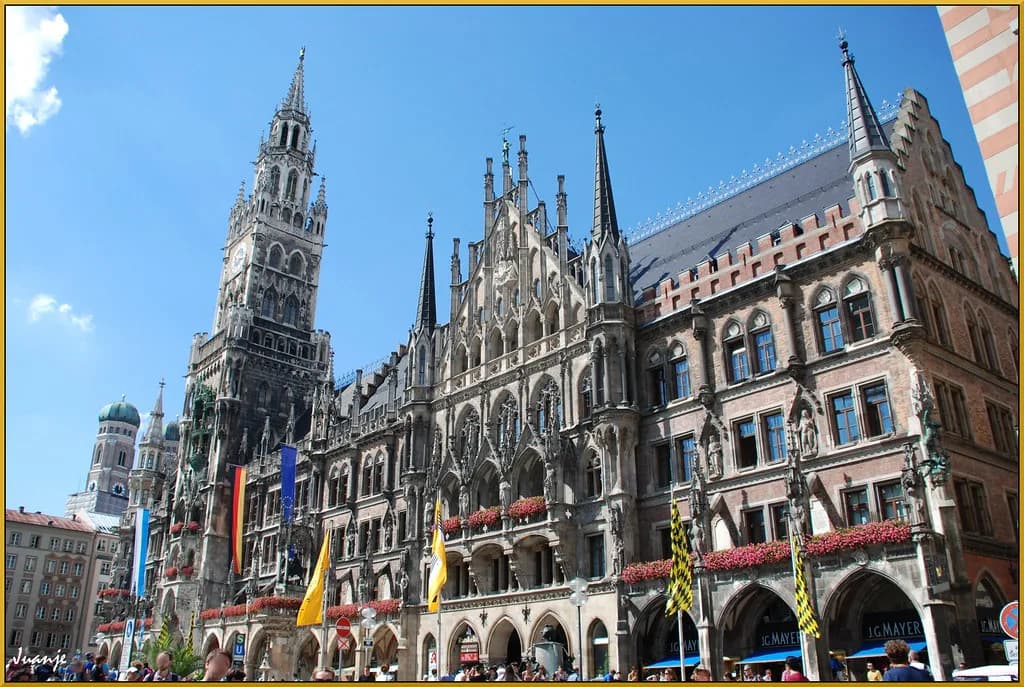
The Müller'sches Volksbad, on the Rosenheimer Straße side of the Isar opposite the Deutsches Museum, is the pick for anyone with limited time. Opened in 1901, it has a barrel-vaulted swimming hall, stucco, wrought iron and a Roman-Irish steam bath, and it still operates as an ordinary municipal pool anyone can walk into. It is central, inexpensive, and a ninety-minute visit covers it comfortably. Bring a padlock for the lockers.
The Dantebad is Munich's oddity: an outdoor pool heated through the entire winter, so you swim outside in warm water with cold air, and sometimes snow, on your face. It belongs to the municipal network and costs public-baths money rather than spa money. Go at dusk for the steam rising off the water, which is the whole point of the place.
The Cosimawellenbad in Bogenhausen and the Nordbad in Schwabing-West are the modern municipal options, both listed with sauna facilities and both run by the city's bath operator. They suit a straightforward swim-and-sweat afternoon without the tourist crush, and they are the sort of place where locals turn up after work rather than plan a day around.
The Olympia-Schwimmhalle, in the Olympic Park in the north of the city, is another municipal swimming hall with sauna attached, useful if you are already visiting the park or the stadium. Treat the municipal baths as one family with shared pricing logic: cheap, unpretentious, and best on a weekday morning when lanes are quiet and the changing rooms are not heaving.
The Michaelibad in the east of the city rounds out the municipal set, with a large outdoor and indoor spread that makes it a summer family favourite. For a short trip, though, the Volksbad's architecture and the Dantebad's winter swim are the two municipal experiences worth rearranging a day for.
Therme Erding: the scale, the price tiers and the verdict
Therme Erding is about 30 km north-east of Munich and bills itself as the largest thermal spa in the world. The complex splits into a big pool and slide world and a separate Vital & Sauna area for guests aged 16 and over, which is quieter, hotter and the reason sauna travellers make the trip. Entrance pricing is tiered by day of week and by duration, with early-morning tickets at the cheap end and full weekend sauna days at the top.
The honest verdict: weekends are loud, full of families, and the slide queues eat the afternoon. A weekday morning is a different building in atmosphere, and the discounted early ticket is the cheapest way in by a wide margin. The four-hour ticket is the honest length of the experience; a full day is usually more than anyone actually uses.
Getting there by car takes roughly 30 minutes on the A92 with a large car park on site. Public transport takes considerably longer and involves a change to a bus at the Erding end, so budget an hour each way and note the return bus times before you go in, because the spa closes far later than the connecting services run.
Hotel and day-spa saunas in the centre
If you want a sauna without leaving the city centre and without a swim, Marias Platzl runs a fifth-floor Schwitzstube with a Finnish sauna at 90°C, a sanarium at 65°C, rain showers, day beds and a view over the City Hall and the old town rooftops. Sauna hours run daily from 10:00 to 23:00, with the cabins closing at 22:00, and the gym on the same floor opens from 7:00 to 22:00.
The Schwitzstube is also open to non-residents as a day spa: pick up a bathrobe and slippers at reception and use the sauna area for the day at a published flat rate, which the hotel lists at €25. Members of partner fitness apps can add sauna access to a booked massage for a €10 surcharge. That makes it a workable option for a two- or three-hour slot when you are staying nearby and do not want to travel.
What you are buying here is proximity, quiet and a robe rather than scale — a hotel sauna is a single cabin and a rest area, not a thermal landscape. What you are not buying is the Aufguss theatre or the cold plunge ritual of a big spa. For a rainy afternoon before a flight, that trade is often the right one.
The sauna types you will meet
A German sauna area is rarely one room, and the signs are usually in German only. The Finnische Sauna runs around 80–100°C and very dry, and it is where the Aufguss happens. The Biosauna or Sanarium sits around 50–60°C with some humidity and coloured light, and it is the sensible starting point if you are new to this.
Beyond those come the Dampfbad, a saturated steam room around 45°C, the kelo or earth saunas built from logs or partly underground for the connoisseurs, and the Ruheraum where everyone lies down afterwards. Temperatures are typical rather than fixed and are posted at each door, so read before you open.
Cold water in and around Munich
The free half of Munich's bathing culture is the water itself. The Isar around the Flaucher, south of the centre, is where the city swims without leaving town, and the current is stronger than it looks: stay near the bank, avoid the days after heavy rain and keep well clear of weirs.
For a proper lake day, the Starnberger See is about 40 minutes on the S6 and the Ammersee about 50 minutes on the S8, both with lidos, changing facilities and lakeside cafés. On a hot Saturday the trains out are full of people carrying towels, so go early. In winter, use a spa's cold plunge rather than an unsupervised lake.
What to bring and what to leave in the locker
Two towels are the minimum: one to sit on in the cabin, one to dry with, and most spas hire them at a price that will irritate you. Flip-flops are worn everywhere except inside the sauna itself, and a refillable bottle matters more than people expect across three rounds.
Bring a padlock for municipal lockers and a card, since the bigger spas run wristband systems where you charge extras and settle on the way out. Leave the swimming costume in the locker for the sauna cabin — it is not a saving to bring it in, and you will be asked to take it off.
Costs at a glance
Therme Erding prices by day and duration, running from an early two-hour ticket at €22 on weekday mornings to a full weekend sauna day at €69, with a €10 supplement for the Vital Oasis and €8 for sauna access, and each extra half hour charged at €3. The hotel day spa at Marias Platzl is a flat €25 for the day, with a €10 surcharge for partner-app massage guests.
The municipal baths — Volksbad, Dantebad, Cosimawellenbad, Nordbad, Olympia-Schwimmhalle, Michaelibad — sit at public-baths pricing, a fraction of a thermal spa or hotel day pass, and they are the cheapest real sauna experience in the city. Lake swimming on the S-Bahn costs only the train fare, and a group day ticket barely exceeds two singles.
How to choose
For a first visit or a short trip, take the Volksbad for ninety minutes: central, architecturally remarkable and cheap. For a cold clear winter evening, the Dantebad's heated outdoor pool is the memory you will keep. For a full sauna day with Aufguss and a proper sauna landscape, budget half a day plus travel and go to Therme Erding on a weekday.
Groups and families should read the age rules before booking: the Therme Erding sauna area admits guests aged 16 and over, and many hotel spa floors are adults-only, so a mixed-age group often splits between the pools and the sauna. Budget travellers should stay with the municipal baths, which deliver the actual German sauna experience without the spa markup.
Etiquette in brief and timing your visit
The rules are short: no costume in the cabin, towel under you including your feet, shower before and dry off, keep quiet, do not enter during an Aufguss, and cool down between rounds. Breaking these gets you a polite but immediate correction, and the towel rule in particular is the one people care most about.
Timing changes the experience more than venue choice does. Weekday mornings are the quietest window everywhere, all year, and the discounted early tickets exist to fill them. Rain fills the thermal spas within hours, so on a wet Sunday go early or expect the crowd; in winter the spas are at their best, while in July the lakes are the obvious competition.
If you like the sound of the Munich approach, the same German-language sauna culture travels well: the saunas in Cologne and the saunas in Hamburg follow the same towel, silence and Aufguss conventions with their own local quirks, and our Vienna sauna guide shows how the same towel-and-Aufguss etiquette applies in Austria's bathhouses. The same municipal-bath-and-thermal mix shapes the best saunas in Zurich, so the etiquette you learn here carries straight over.
Plan Your Visit
Munich rewards a sauna traveller who picks one register and commits: the Volksbad for architecture and a quick central session, the Dantebad for a winter swim outdoors, Therme Erding for the full sauna landscape on a weekday, or the Platzl's Schwitzstube for a short, quiet city-centre slot. Learn the towel rule and the Aufguss timetable once and every one of them works the same way.
Check the venue's own site for current hours and session times before you go, particularly at the municipal baths where schedules shift with the season. Then pack two towels, a padlock, flip-flops and a bottle, and leave the swimming costume in the locker where the sauna cabin is concerned.
Explore more Munich sauna guides
Frequently Asked Questions
Do you wear swimwear in a Munich sauna?
No. Inside a German sauna cabin you undress and sit or lie on a towel so that no skin touches the wood, and swimwear is considered unhygienic because it holds moisture. Costumes are normal in the pools outside the sauna area, so pack both a swimsuit for the water and a towel for the cabin.
Which Munich sauna is best for a first visit?
The Müller'sches Volksbad suits a first session: it is central, inexpensive, architecturally striking and takes about ninety minutes. The sauna and steam rooms sit inside an ordinary municipal bathhouse, so the stakes are low and you can work out the towel and Aufguss conventions without committing a whole day.
Is Therme Erding worth it for the sauna alone?
Yes, if you go on a weekday and buy access to the adults-only Vital and Sauna area rather than the family pools. The sauna side is quieter and older guests only, aged 16 and over, and the Aufguss sessions there are the main event. Weekends are loud and the slide queues are long, which changes the day entirely.
What is an Aufguss and when does it happen?
An Aufguss is the ritual in which an attendant pours water and essential oils onto the hot stones and circulates the heat with a towel, usually over ten to fifteen minutes. Sessions run to a posted timetable, they are the busiest part of the sauna day, and the door stays shut for the duration, so arrive a few minutes before the listed time.
Where can you swim outdoors in Munich in winter?
The Dantebad keeps its outdoor pool heated right through the winter, so you swim outside in warm water with cold air, and sometimes snow, around you. It is part of the municipal pool network, which puts it at public-baths pricing rather than spa pricing.
Sources
Sauna notes for your next trip
Optional updates to our sauna guides.
You might also like
Continue reading
More guides you'll find useful