Oslo Badstuforening: The Fjord's Community Floating Saunas
Oslo Badstuforening runs a floating sauna village at Sukkerbiten beside the Opera House. Here is how a session works, what it costs and how to get there.
On this page
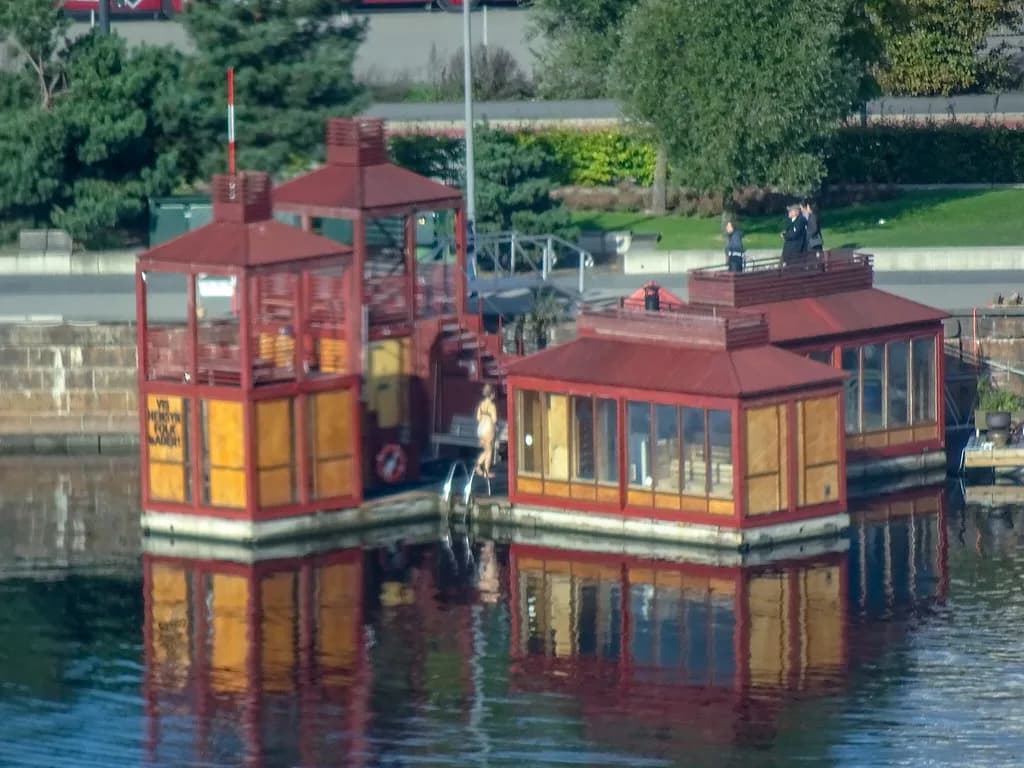
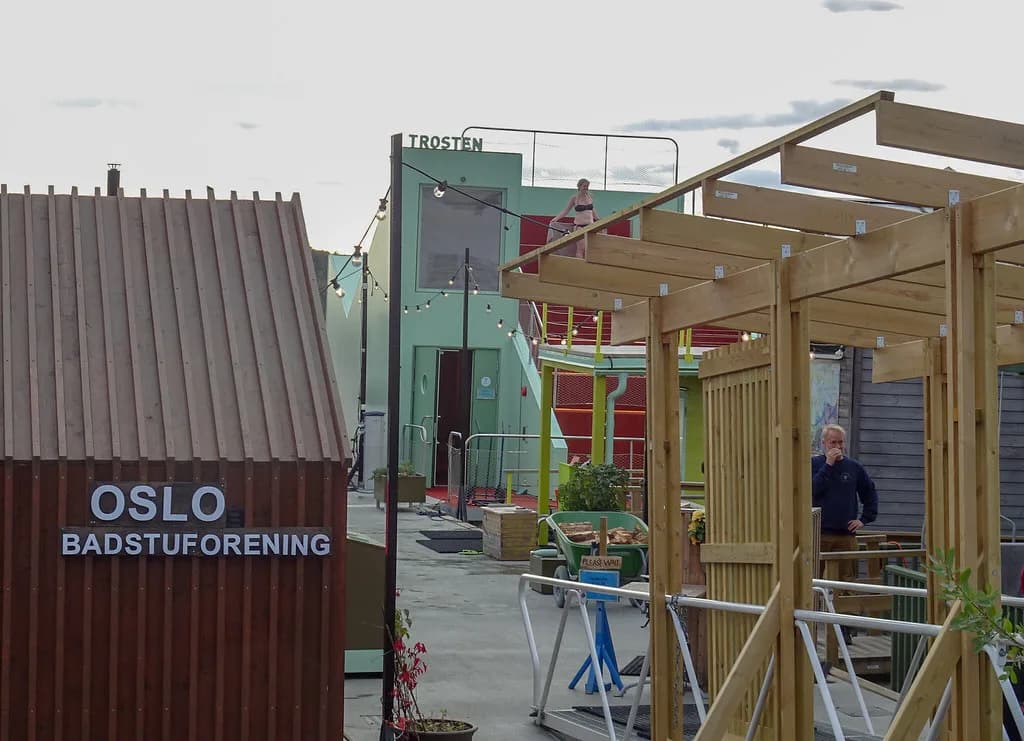
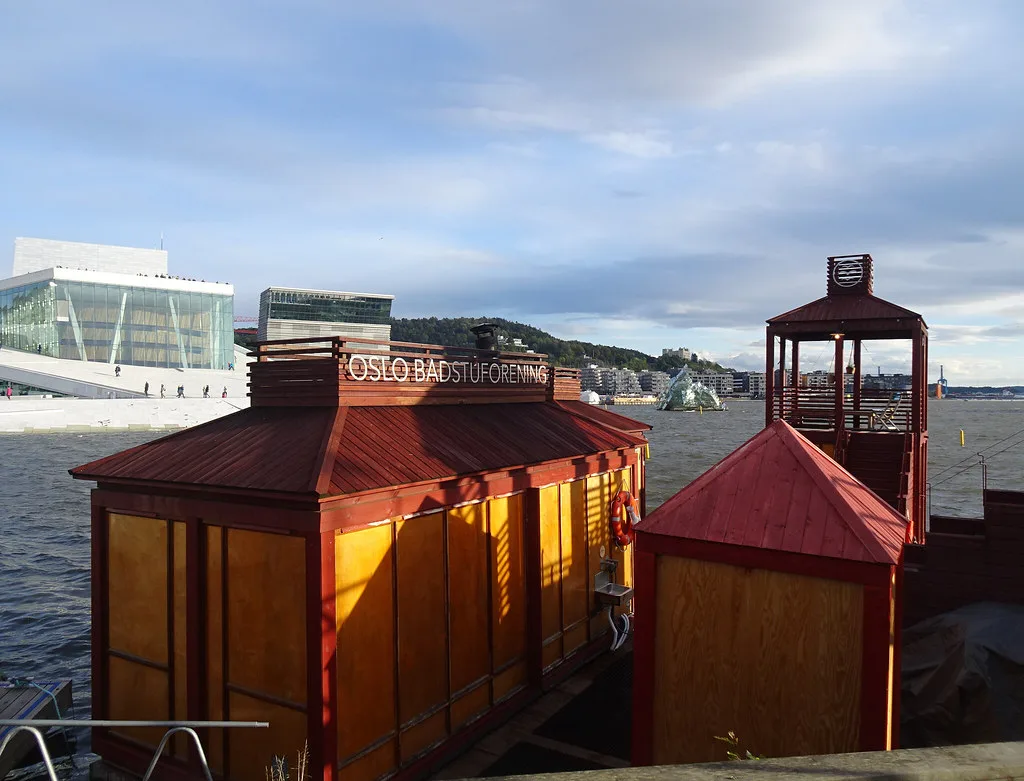
Oslo Badstuforening is a member-run sauna association whose floating saunas sit on the Oslofjord in central Oslo, with a thirteen-boat village at Sukkerbiten beside the Opera House and the Munch Museum. You can buy a shared ticket, join a ritual, or reserve a whole boat for your group. Most visitors walk in from Oslo Central Station in under ten minutes, change on board, and alternate between a hot wooden room and a ladder down into the fjord.
The set-up is consciously Norwegian rather than imported: mixed shared sessions in swimwear, a member rate that rewards locals, and cold water taken directly from the sea rather than a plunge barrel. If you have only done the Finnish version, where the sauna is often a private room at home or a lakeside cabin, the floating model will feel more social and more public. The Finnish sauna remains the reference point for the heat itself: hot stones, steam, and short rounds rather than one long bake.
Where the saunas are
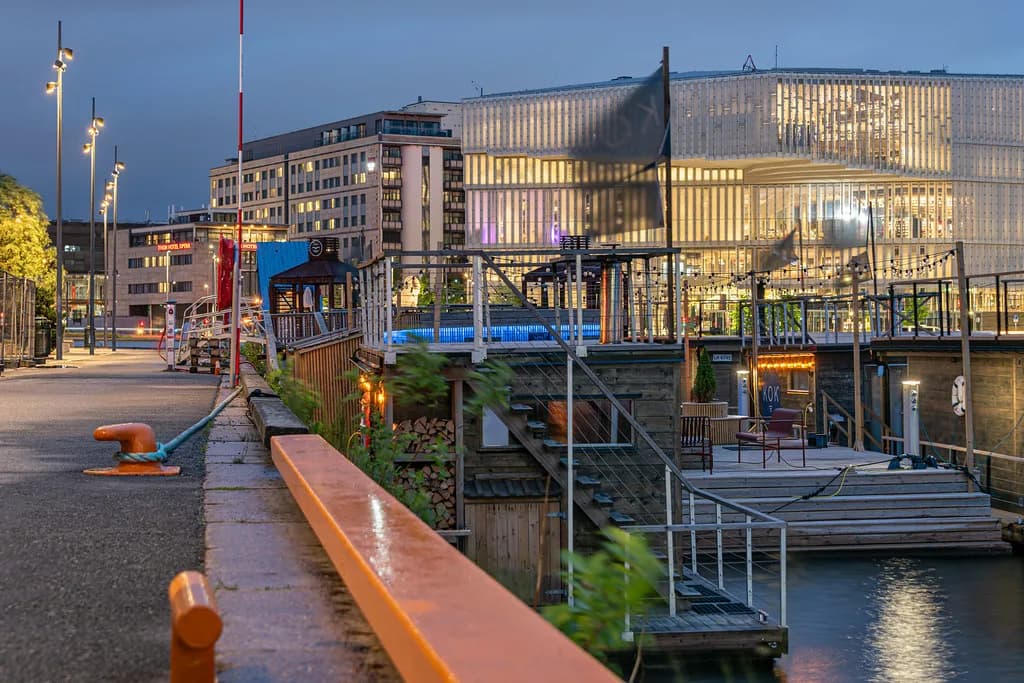
Sukkerbiten is the main site, a pier on the Oslofjord between the Opera House and the Munch Museum. From Oslo Central Station the walk is a short one along the waterfront, and the boats are visible from the harbour path. The association also runs saunas at Langkaia, further along the same waterfront, which appear as a separate bookable product.
The Sukkerbiten village is listed as open every day from 7:00 AM to 10:00 PM, which makes it usable before a day of sightseeing or after dinner. Langkaia is sold as a bookable session through the city's tourism booking service, with availability that starts in October. Treat the two as one habit with two addresses: Sukkerbiten for the big village and drop-in feel, Langkaia when you want a session tied to a reservation.
The fleet at Sukkerbiten
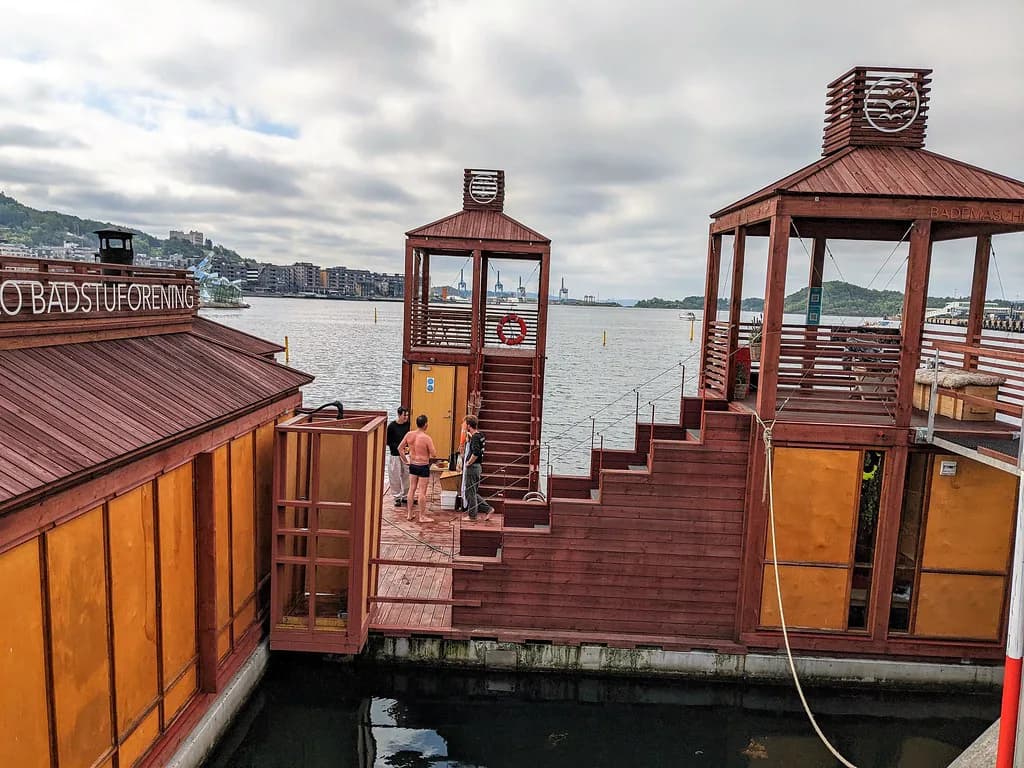
Thirteen saunas line the Sukkerbiten pier, ranging from the four-person Tang to the 25-person Albatrossen, whose climbing wall drops straight into the fjord. Sizes in between let you match the boat to your group: a handful of friends can take a small hull and stay among themselves, while solo bathers join a shared boat and meet whoever turns up. The variety is the point. You are choosing a room, a view and a level of company rather than a single generic sauna.
Each sauna has its own ladder into the sea, so the cold-water part of the session is a step outside the door rather than a walk across a car park. In summer the site adds cold plunge pools. Boats differ in character: some are purpose-built and sleek, others are converted hulls with more history than polish.
Shared versus private saunas
A shared ticket puts you on a boat with strangers of both sexes, which is how most locals use the place and the cheapest way in. Reserving an entire sauna costs considerably more but buys privacy for a group, your own timing around the ladder and no negotiation over steam or music. Both options exist at the same pier, so the decision is simply how much you value company.
Shared works well for couples, solo travellers and anyone who wants the Norwegian social version of a sauna evening. Private suits families, groups with mixed confidence about cold water, or anyone who wants to talk shop without an audience. If you are unsure, book shared once: the boats are small enough that the atmosphere stays calm even when full.
How a shared session runs
You arrive at the pier, show your reservation or buy entry from the attendant, then step aboard into a shared changing area. Showers are expected before you enter the hot room, and the site provides an outdoor shower for the purpose. Bring a towel to sit on inside the sauna and a second to dry off after the water.
One bather's account of the Rådhuset boat describes a two-hour format: the group settles on the wooden benches, someone takes on the sauna master role and ladles water onto the stones, and bathers step out to the ladder at their own pace, with a nudge roughly every quarter of an hour. That rhythm is a visitor's experience rather than a published rule for every boat, but it is a fair guide to how these sessions tend to run. The final quarter hour is the wind-down before you change and leave.
Expect a mixed, sociable room in swimwear, with several levels of bench so you can pick your heat: higher and closer to the stove is hotter, lower is gentler. Outside, the sauna door opens onto a deck and a ladder. In late winter the fjord can still carry ice, with a patch cleared around the ladder; in summer the same ladder is simply a refreshing step off the pontoon.
Cold water: the fjord ladder and summer pools
The cold-water option is the Oslofjord itself, entered from each boat's own ladder. That is the defining pleasure of the site: no queue for a plunge barrel, no indoor pool smell, just sea air and a quick descent. In winter the water is bracing and bathers tend to stay in briefly; in summer the same ladder invites a longer swim.
If you are new to cold water, go in after your second or third round rather than your first, when the heat has soaked in and the shock is easier to manage. Sit on the edge, take your time and climb out when you have had enough. Skip alcohol beforehand, drink water through the session and leave the sauna if you feel unwell; anyone with a heart condition or who is pregnant should speak to a doctor before bathing.
What to wear and what to bring
Wear a swimsuit in the sauna and sit on a towel, as bathers do on the shared boats here. Pack two towels, a water bottle and sandals for the deck, which can be slippery underfoot. Valuables are best left behind: the changing area is shared and not set up with lockers.
A dry bag or a small rucksack keeps a phone and a jumper out of the wet, and a warm hat earns its place between the sauna and the ladder in winter. On the older converted boats the deck is uneven and rubber mats cover the worst of it, so flat shoes beat anything with a heel.
Mixed sessions and the Wednesday nude session
Most shared sessions are mixed and in swimwear, which is the default for visitors. The schedule also includes a Wednesday naked session for those who prefer the traditional bathing style, and ritual sessions with a sauna master tending the stones. Choose by comfort: swimwear for a first visit, the nude session if you want the older Norwegian convention, rituals if you want steam, aromatics and a bit of theatre.
The nude session is a sauna session, not a social experiment, and the same rules apply: towel under you, shower before, calm behaviour. If you are bringing friends who are unsure, the mixed swimwear boats at Sukkerbiten are the easy entry point and the private option removes the question altogether.
Rituals and the sauna master
In a shared session one bather often takes the ladle and keeps the stones steaming, sometimes with herbs or eucalyptus oil added halfway through so the scent does not overwhelm the room. Ritual sessions formalise this with an attendant in the sauna master role, which is closer to the structured Aufguss style found across central Europe. If you have your own oils, ask the room before using them.
Do not expect a performance: the Norwegian version tends to be low-key, with conversation and a shared sense of timing rather than choreography. That makes it a forgiving place for first-timers, and a relaxed one for anyone who finds the theatrical end of the Aufguss circuit too much.
Prices
A shared ticket at Sukkerbiten is NOK 150 for members and NOK 260 for everyone else, which puts a two-hour session in the price band of a mid-range restaurant main course. Reserving a whole sauna costs considerably more and is priced per boat rather than per head. Langkaia sessions through the city booking service start from NOK 260.
Membership is worth considering if you are in Oslo for more than a few weeks, since the member rate undercuts the visitor rate substantially on every visit. Groups should price a private boat against the per-person cost of shared tickets before deciding, because the arithmetic flips once you are six or more.
Opening hours and booking
Sukkerbiten is listed as open daily from 7:00 AM to 10:00 PM, so an early morning session before the museums open is realistic. Book a shared slot or a private boat through Oslo Badstuforening's own site, and a Langkaia session through the city's booking service if you want a fixed time there. Walk-ins work when boats have space, but a reserved slot removes the risk on a busy weekend.
For a single fixed plan, reserve one session online, then decide on the day whether to add another. Spaces on the smaller boats go first, so a group of four or more should book ahead rather than turn up at the pier.
How busy it gets and the best time to go
Floating saunas are popular with locals in Oslo, and the winter crowd is noticeably more Norwegian than tourist-heavy because the cold water deters casual visitors. Evenings and weekends fill first, and the smaller boats sell out sooner. An early morning slot or a weekday afternoon is the calmest choice if you want space on the benches.
Season changes the experience more than the crowd does. Winter means ice around the ladder, a short plunge and a fast retreat to the heat, and a properly Nordic afternoon. Summer means longer swims, plunge pools and a pier that works as a place to linger.
Getting there
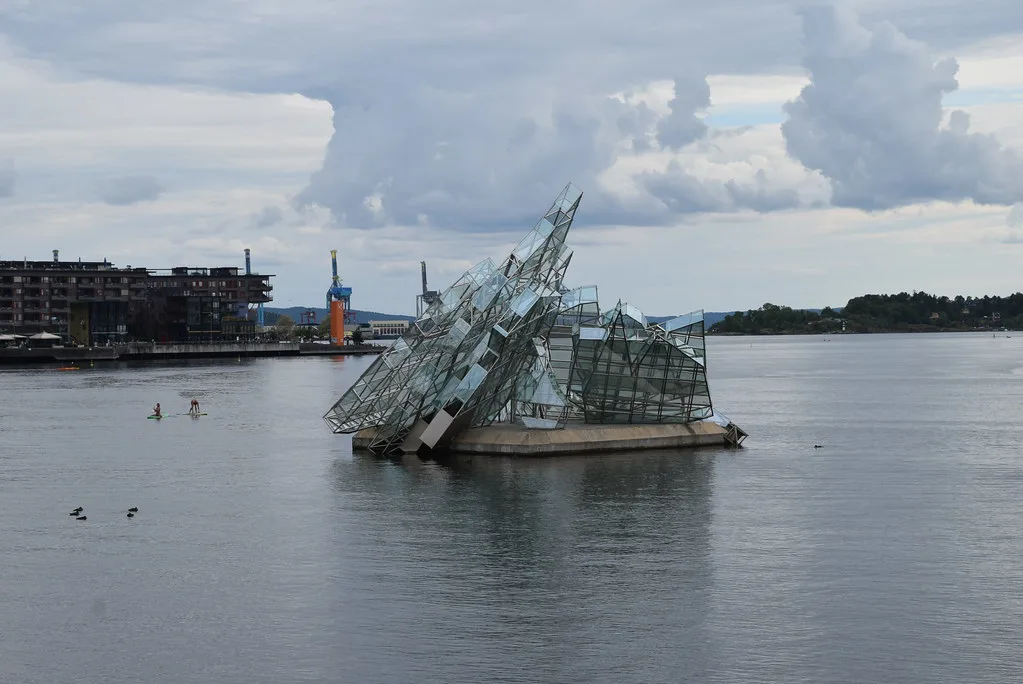
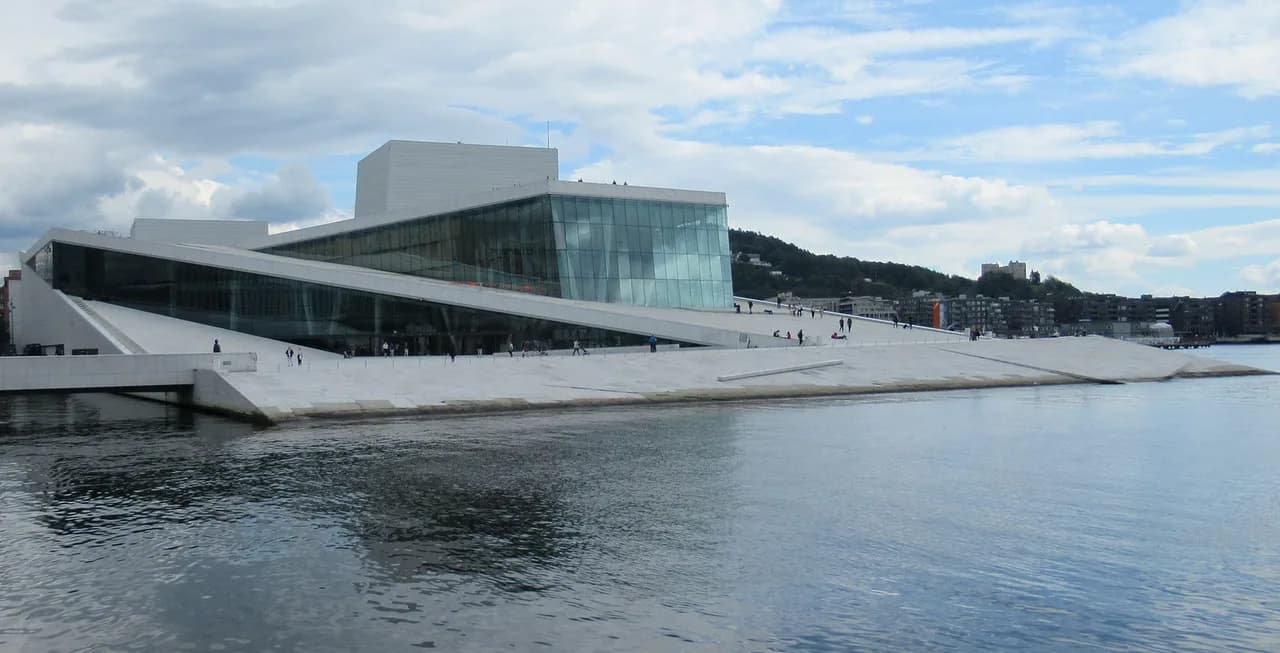
Sukkerbiten is a seven to eight minute walk from Oslo Central Station, along the waterfront past the Opera House. Arrive on foot: parking near the pier is not convenient, and public transport drops you closer than any car park. That makes the sauna easy to combine with a Munch Museum visit or an evening at the Opera House.
Coming from Aker Brygge or the city centre, the harbour path is flat and signed, and the boats are visible from a distance. Allow a few extra minutes in winter for a slippery waterfront and for changing out of boots at the pier.
Honest trade-offs
The charm of the converted boats comes with rough edges: one visitor noted rust around the hull and a deck that needed careful walking on rubber mats, though the sauna room itself was clean and the attendant helpful. Changing areas are small and shared, and there are no lockers, so travel light and leave valuables at your accommodation. Expect to negotiate space on a busy boat.
In winter the walk between the hot room and the ladder is short but sharp, and wet feet on a cold deck are the least pleasant minute of the session. Bring sandals with grip and a towel within reach. If you want newer fittings, book one of the more recently built boats rather than the oldest hulls.
Where to sauna next in Oslo
Oslo Badstuforening is one option in a city with a serious sauna habit. KOK Langkaia nearby offers a design-led floating sauna, SALT sits on the fjord with food and a terrace, and Operastranda puts a sauna on the Opera House waterfront. Each has a different atmosphere and booking pattern, and the wider list of the best saunas in Oslo makes the comparison easier.
Beyond the capital, Norway has saunas in coastal towns and mountain lodges, most of them Finnish-style hot rooms with cold water on the doorstep. If your trip continues elsewhere in the country, the broader guide to saunas in Norway covers the pattern.
Etiquette and safety in one paragraph
Shower before you enter, sit on a towel, keep conversation low and let others choose their own time at the ladder. Take your water bottle in, skip alcohol before bathing and step out if you feel dizzy. Pool-style rules do not apply to the sea: swim within sight of the boat, hold the ladder if the current is moving you, and use the cleared area around the ladder in icy conditions.
Plan Your Sauna Evening
Decide first between shared and private, because that choice sets your price, your company and your timing. A shared Sukkerbiten ticket in swimwear is the straightforward introduction, a private boat suits groups, and Langkaia works well if you want a session booked into the city's reservation system.
Then pick a slot: early morning for quiet benches, evening for atmosphere, winter for the ice and summer for the swim. Bring two towels, sandals and no valuables, and walk in from Oslo Central Station rather than driving. Confirm your session and any ritual on the Oslo Badstuforening website before you set out.
Explore more Oslo sauna guides
Frequently Asked Questions
What is Oslo Badstuforening?
Oslo Badstuforening is a member-run sauna association that floats saunas on the Oslofjord in central Oslo. Its main village is at Sukkerbiten, between the Opera House and the Munch Museum, and it also runs saunas at Langkaia.
How much does Oslo Badstuforening cost?
A shared ticket at Sukkerbiten is NOK 150 for members and NOK 260 for non-members. Reserving a whole sauna costs considerably more per boat, and Langkaia sessions start from NOK 260.
Do you wear swimwear at Oslo Badstuforening?
Yes, in shared sessions bathers wear swimwear and sit on a towel. A Wednesday naked session also runs for those who prefer the traditional bathing style.
How long is a session at Oslo Badstuforening?
One visitor describes a two-hour shared format on the Rådhuset boat, with a nudge to change water roughly every quarter of an hour. Sukkerbiten's published hours run from 7:00 AM to 10:00 PM daily.
Where are the Oslo Badstuforening saunas?
The village is at Sukkerbiten on the Oslofjord, a seven to eight minute walk from Oslo Central Station, and there are also saunas at Langkaia along the same waterfront.
Can you book a private sauna at Oslo Badstuforening?
Yes. Whole boats can be reserved for private use, including the 25-person Albatrossen with its climbing wall, which is priced per boat rather than per person.
Is there a nude session at Oslo Badstuforening?
Yes, a Wednesday naked session appears on the Sukkerbiten schedule alongside ritual sessions and the standard mixed swimwear bookings.
Sources
Sauna notes for your next trip
Optional updates to our sauna guides.
You might also like
Continue reading
More guides you'll find useful