Floating Saunas in Oslo: Fjord Sauna Guide for Travellers
Floating saunas in Oslo put the heat on the Oslofjord, with cold fjord dips between rounds. Here is how a session works, what it costs and what to bring.
On this page
A floating sauna in Oslo is exactly what it sounds like: a hot room built onto a raft on the Oslofjord, with a ladder or steps at the edge so you can step out of the heat and straight into cold salt water. That structure shapes the session. You warm up, you sit, you step outside, you go in the fjord, and you come back up to do it again.
Most of what you pay for is location and access rather than spa polish. Changing rooms are compact, the platform is open to the weather, and the fjord itself is the cold plunge.
Why the fjord replaces the plunge pool
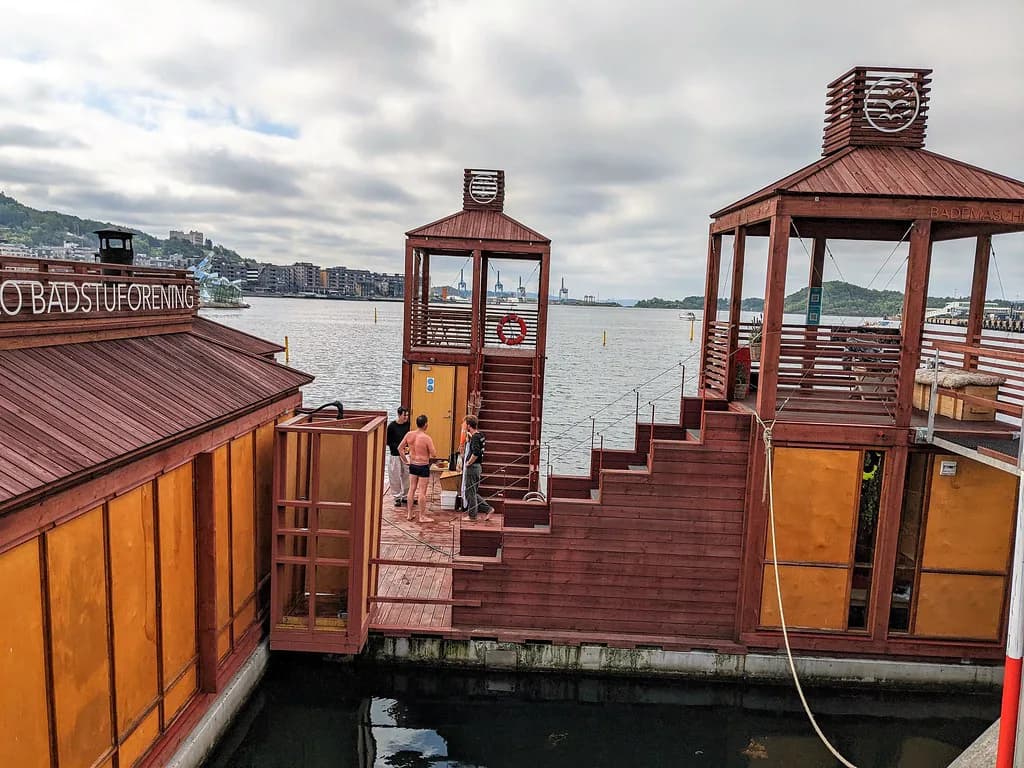
In a fixed bathhouse, the contrast between heat and cold is a managed one: a plunge tub of known depth, a shower to rinse off, a door keeping the wind out. A floating sauna on the Oslofjord works the other way round, using open water as the cold side of the round. That is the appeal and the trade-off in one: you get a proper sea dip and a view, but you also accept a walk on an exposed deck and water that is much colder than a tub.
The habit of moving between heat and cold in short rounds is borrowed from the Finnish tradition, and the Oslofjord rafts follow it loosely rather than formally. If you want the deeper background on Löyly, vihta and how rounds are usually paced, the Finnish sauna is the natural reference point.
Where the floating saunas sit on the Oslofjord
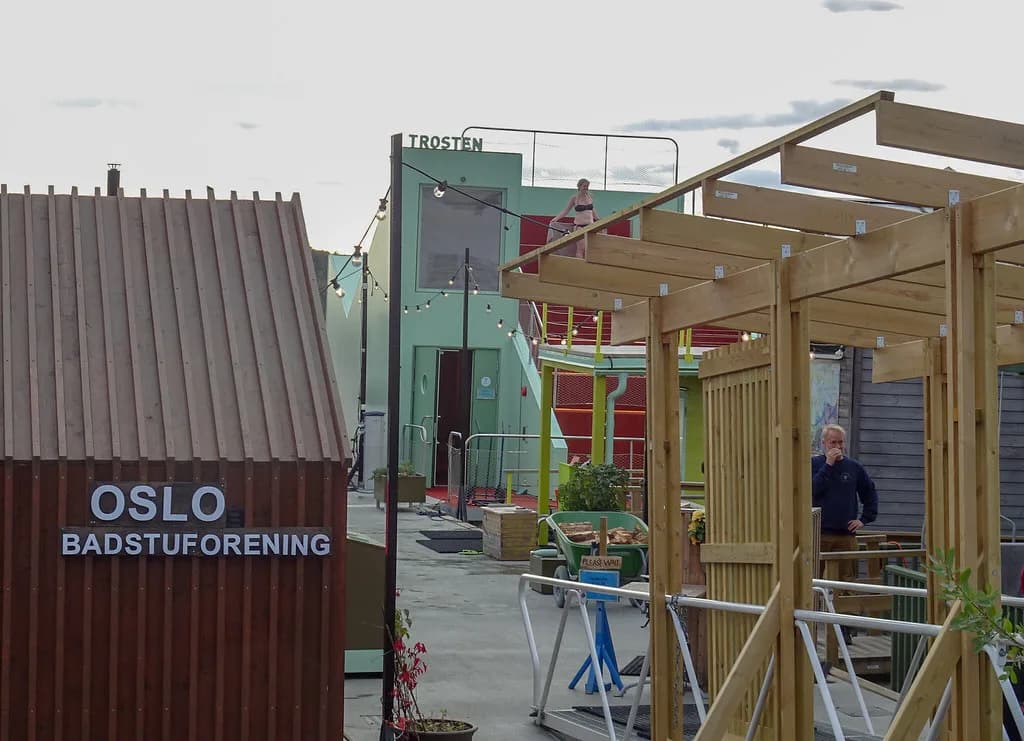
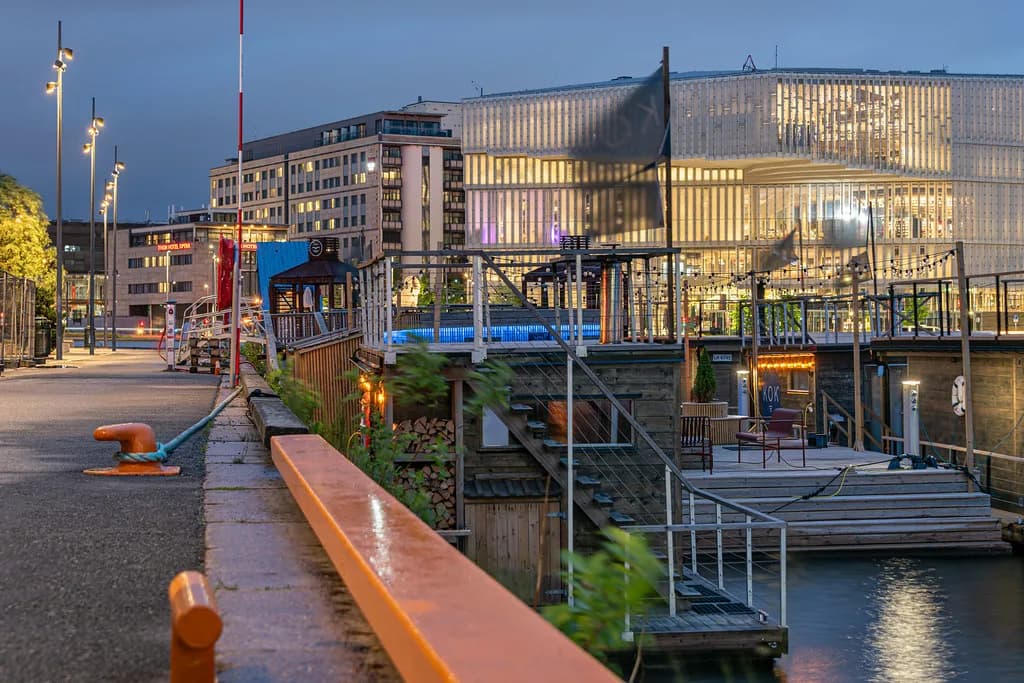
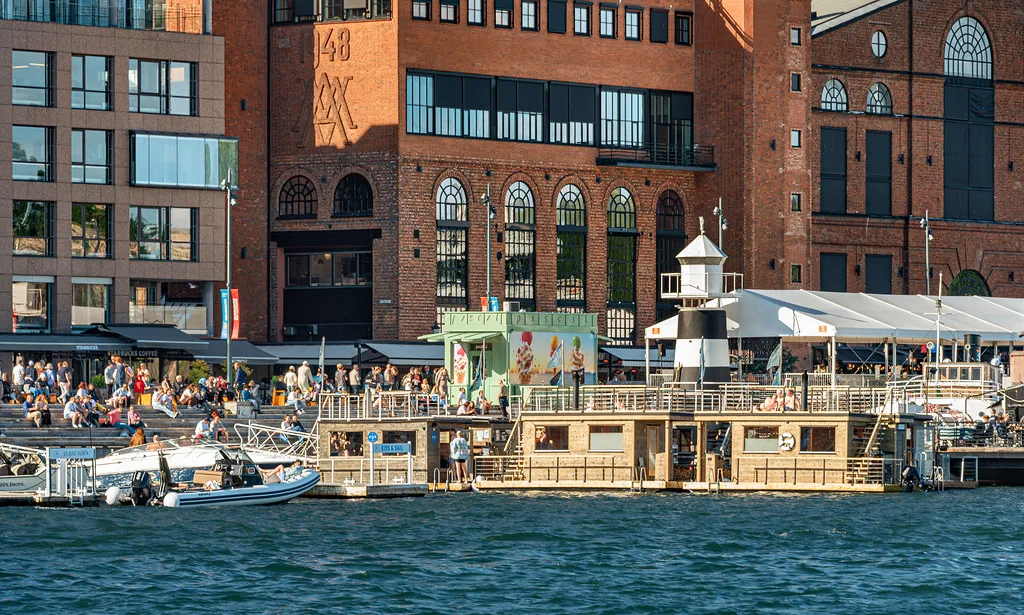
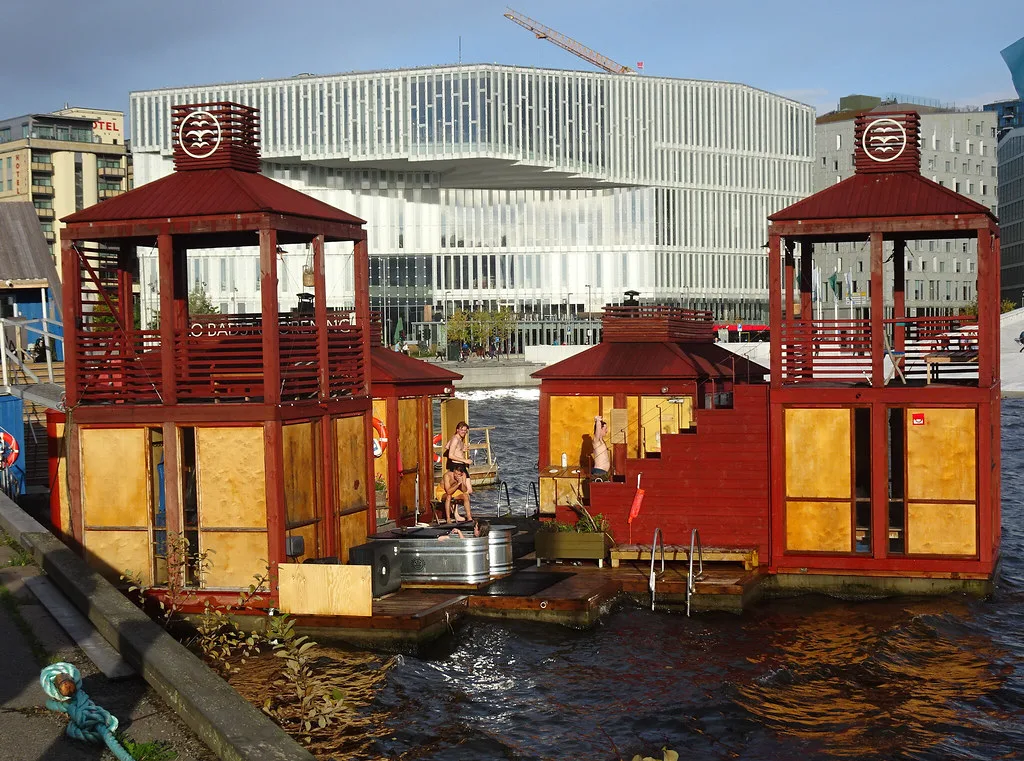
Floating saunas are moored along the central harbour and fjord waterfront, close to the Opera House, Sørenga and the Aker Brygge side of the city, which makes them walkable from the centre rather than a day trip. Oslo Badstuforening's rafts are reached on foot from the harbourfront, and KOK runs its own floating sauna experiences on the fjord.
If you are building a broader sauna day around that, the best saunas in Oslo cover harbour rafts alongside older bathhouses and neighbourhood sauna clubs, which is useful when the waterfront is crowded or the weather turns.
Oslo Badstuforening: shared floating saunas with fjord access
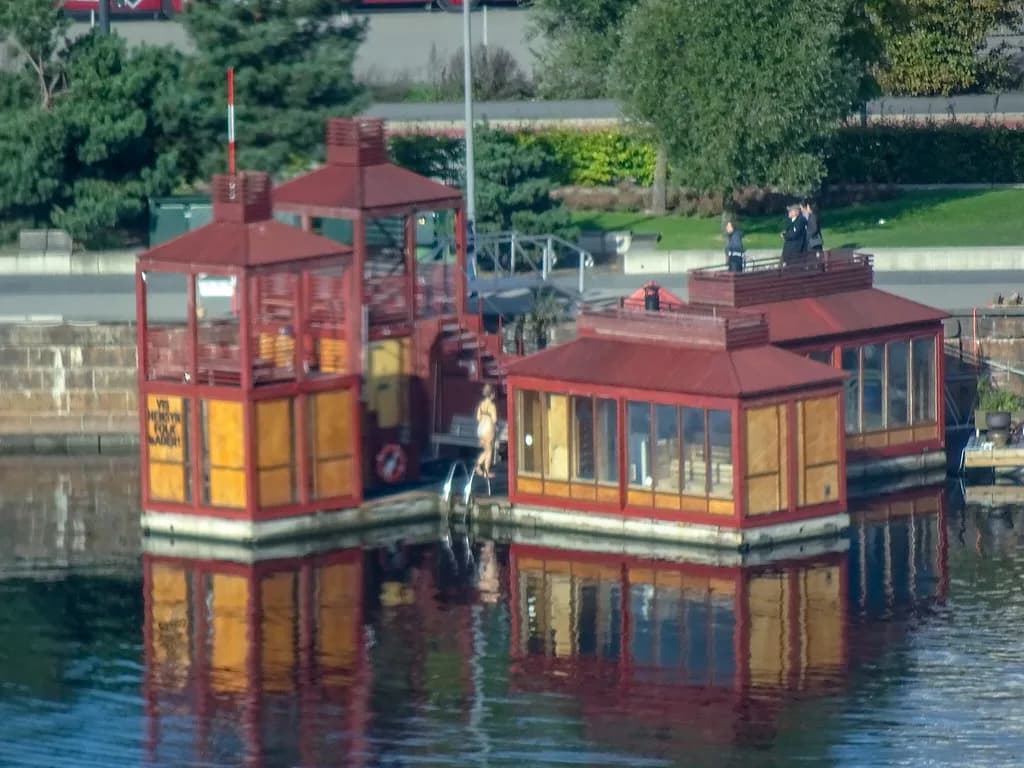
Oslo Badstuforening, also listed for visitors as Oslo Fjord Sauna, is the best-known operator of floating saunas in Oslo and the most straightforward option for a first session. Its different rafts have different characters, from small, intimate cabins to larger communal rooms where conversation runs alongside the heat. You buy a time slot rather than a whole sauna, so benches are shared with locals and other travellers.
A drop-in ticket runs 90 minutes and, according to a write-up of the experience from 2023, was priced at 195 Norwegian krone for access to the saunas; the same account describes annual memberships and a one-month drop-in membership for regulars. Treat the figure as a guide and check the current rate with Oslo Badstuforening.
Drop-in is advertised daily for these floating saunas, which makes them viable for a spontaneous afternoon rather than a booked-in-advance set piece.
KOK: shared, private and sauna boat options
KOK is the other name that comes up for floating saunas in Oslo, and its model is more varied: you can take a shared session, book a private sauna, or go out on a sauna boat. That flexibility matters if you are a group wanting the heat room to yourselves, or a couple who would rather not share benches. The trade-off is that private and boat sessions cost more than a single bench on a shared raft.
For shared sessions, expect the same rhythm as the Badstuforening rafts: changing in a small room, keeping a towel on the bench, and using the fjord between rounds.
How a session actually works: booking, walk-in, session length
For the shared floating rafts, the simplest path is a 90-minute slot, which is enough for three or four rounds with a cool-down and a rest in between. Walk-in works when there is space, but the waterfront gets busy on warm weekends and around public holidays, so a booked slot removes the queue risk.
Private bookings through KOK are arranged ahead rather than walked into, because the unit is reserved for your group. Seat covers or towels, showers and changing space are provided in some form at every operator, but the arrangements differ enough that it is worth knowing before you arrive whether you need to bring your own towel.
Heat and cold: jumping from the sauna into the Oslofjord
The fjord dip is the point of the whole thing. Summer gives you water that is bracing but manageable, and winter gives you the full contrast: a short, sharp immersion between rounds, followed by a fast return to the heat. An account of the Badstuforening rafts describes the fjord freezing over in winter, with the ice broken through so bathers can still get in. That is weather-dependent and changes with the season, so treat it as a possibility rather than a fixture of every winter visit.
Cold water is not a treatment and does not need to be endured for minutes. A dip of a few seconds is enough for the contrast, and getting out when you feel the cold bite is the sensible move. Keep the session plain: drink water, skip alcohol before bathing, leave the heat if you feel unwell, and ask a doctor first if you have a heart condition or are pregnant.
Prices and memberships
Floating saunas in Oslo sit at the affordable end of the city's bathing options. A 2023 write-up lists 195 Norwegian krone for 90 minutes at Oslo Badstuforening, and a membership structure exists for people who plan to go often; seasonal pricing and slot types vary, so see Oslo Badstuforening's own booking page for what a session costs on your dates.
KOK lists shared sessions, private saunas and sauna boats, and the price level rises with each step up in privacy and space.
Swimwear, towels and what to bring
Pack for an outdoor platform rather than a spa. A swimsuit, a towel, water shoes or flip-flops for the deck, a water bottle, toiletries and a waterproof bag for your things cover the basics. Add a warm robe or jacket for the walk between sauna and water, especially outside high summer, and sunscreen if you plan to sit out on the deck.
What you wear follows local practice: swimwear is the norm at the Oslo floating saunas, and a towel on the bench is standard. Losing the swimsuit is a Finnish habit rather than a Norwegian one.
Winter on the fjord: wind, ice and the case for a warm robe
Winter sessions are the reason many people seek out a floating sauna in the first place: steam, snow on the deck and a plunge into near-freezing water. The cost is comfort. You will cross an exposed platform in wet skin and sub-zero air, so a robe, warm shoes and a dry towel within reach change the experience completely.
Seasonal conditions vary, and ice on the fjord around the rafts changes what access to the water looks like from week to week. A winter session is worth planning around the weather rather than booking blindly.
Choosing between a shared sauna and a private one
Choose the shared rafts for the sociable version: a 90-minute slot, a mixed group on the benches, low cost and no minimum numbers. Choose a private sauna or a KOK sauna boat when you want the heat room to yourselves, a longer booking, or a group event where the shared bench feels like a compromise.
For a first visit, the shared raft is the better test of whether you enjoy the fjord dip at all, and it is also the cheapest way to find out.
Fjord saunas when you are visiting Oslo with a dog
Travellers who bring a dog to Oslo have one practical question about the floating saunas that the rest of this guide leaves open: what happens to the dog while you are inside? The published material on the fjord saunas does not describe any dog-friendly arrangement. Neither the accounts of Oslo Badstuforening's floating saunas nor the listings for the sauna operators set out rules for bringing a dog onto a sauna raft, a shared sauna cabin, a private sauna or a sauna boat. Nothing in the sources says dogs are welcome, and nothing says they are refused.
What the sources do make clear is how a sauna visit is structured, and that structure is what a dog owner has to plan around. A ticket at Oslo Badstuforening covers 90 minutes of access to the saunas, and entry is drop-in, every day from 7 to 19, across 4 floating saunas on the Oslofjord. During those 90 minutes you are on and in the water, moving between the hot cabin and the fjord; in winter the fjord will often freeze up and the operators crack through the ice so you can still jump in. A dog cannot share that. If you are travelling with one, the sensible reading of the sources is that the sauna session is time your dog spends elsewhere, with someone else.
The good news for anyone planning around a dog is that the visit is short and cheap enough to slot into a day. A 90-minute ticket at Oslo Badstuforening costs 195 Norwegian Krone, roughly $18 USD, with a yearly membership at 300 Norwegian Krone a year and a one month drop-in membership for 450 NOK. That is a single block of time rather than a whole day out, which makes it easier to arrange care for a dog before and after. KOK also runs sauna experiences in Oslo, with shared, private and sauna boat options, so a group with a dog in tow can at least weigh which format fits the day best.
For the sauna itself, the packing list in the sources is the usual one, and it is worth treating your dog's needs the same way: bring a swimsuit, a towel, flip flops or water shoes, a water bottle, a warm robe or jacket, toiletries and a waterproof bag to hold everything. The floating saunas are open all year, so the same kit serves a summer session of sunbathing and fjord dips and a winter session with ice cracked open for the cold plunge. Plan the dog's part of the day around that 90-minute window and the sauna half of the trip stays simple.
Plan Your Fjord Sauna
Oslo's floating saunas distil the city's sauna culture into one afternoon: a hot cabin, a cold fjord, and the harbour skyline between the two. Book a shared slot if you want the social version, or a private unit if you want the benches to yourselves.
Bring a towel, water shoes, a robe for winter and a bag that keeps your clothes dry, and confirm the session time and rate on Oslo Badstuforening's own site before you go.
Explore more Oslo sauna guides
Frequently Asked Questions
How much does a floating sauna in Oslo cost?
Oslo Badstuforening prices a 90-minute session in Norwegian krone, with a membership option for regulars, and private sessions cost more. The exact rate depends on slot type and season; check current details when booking.
Do you need to book Oslo's floating saunas or can you walk in?
The shared Oslo Badstuforening rafts accept drop-in, so you can turn up and buy a session on the day when there is space. Private saunas and sauna boats are booked ahead because the whole unit is reserved for your group.
Can you swim in the fjord from the floating sauna in winter?
Yes, in the sense that the fjord is the cold plunge year-round, and the rafts give you steps or a ladder into open water. In cold spells ice can form around the rafts.
What should you bring to a floating sauna in Oslo?
A swimsuit, a towel, water shoes or flip-flops, a water bottle and a waterproof bag for your clothes cover the basics. Add a warm robe or jacket for the walk between sauna and water, particularly outside summer.
What is the difference between Oslo Badstuforening and KOK?
Oslo Badstuforening runs shared floating rafts with drop-in 90-minute sessions and memberships, while KOK offers shared, private and sauna boat options. Choose the shared rafts for sociable, low-cost sessions and a private unit for your own group.
Sources
Sauna notes for your next trip
Optional updates to our sauna guides.
You might also like
Continue reading
More guides you'll find useful