Outdoor Saunas in the UK: Seaside, Lakeside and Wood-Fired Picks
Outdoor saunas in the UK range from floating wood-fired cabins to seaside set-ups. Here is how a session works, what to wear and what to bring.
On this page
Outdoor saunas in the UK now span two very different things: public, bookable cabins beside sea, river or lake, and garden kits you buy and heat yourself. The public ones have rewritten the British sauna habit fast, with Gardens Illustrated noting the first public floating sauna on the River Mersey at the end of 2024 and the UK's largest, seating 65, opening at Arc in Canary Wharf, described there as the UK's first contrast therapy club.
For a traveller, the useful question is not which sauna is biggest but what cold water sits outside the door and how a session is run. That decides whether you get the full sweat-then-plunge rhythm or a warm room with a shower at the end of it.
The reference point throughout is the Finnish sauna, where the round of heat, cooling and rest is the point rather than an add-on. If you are new to that rhythm, read our Finnish sauna guide before you book, because UK venues borrow the format but rarely the silence.
Why outdoor saunas in the UK are booming
The boom is recent and visible. Gardens Illustrated reports wild or mobile wood-fired Finnish-style saunas appearing at the seaside, on campsites, in public parks and on the festival circuit, and the British Sauna Society hosted the first UK Sauna Summit in 2024. That is a strong signal that the scene is being organised rather than just improvised.
Temperatures at UK public saunas are commonly reported in the 70–90°C band, which is hot enough that a first-timer should plan short rounds rather than one long sit. Treat any single figure as one operator's setting, not a national standard.
The bigger change is that sauna has become a social outing rather than a gym afterthought, with shared benches, timed slots and a cold dip as the centrepiece. For a wider map of venues across the country, from city baths to coastal cabins, start with our guide to saunas in the UK and then narrow by region.
How a UK outdoor sauna session actually works
A public outdoor sauna runs on turns, not on one continuous hour. You book a slot, share the benches with strangers or your own group, and leave when the slot ends so the next group can come in; that turnover is the single biggest difference from a sauna at home. A typical rhythm is two or three rounds of roughly ten to fifteen minutes with a cool-down between each.
Changing space is usually compact, and at coastal or pop-up sites it can be little more than a bench and a hook. Arriving already in your swimming things under your clothes saves time and queueing, and a towel plus something to sit on covers the basics.
Operators set their own rules on mixed and single-sex slots, and many reserve certain hours for women only or for quieter bathing. The venue's own booking page is where those allocations sit, and capacity is small enough that popular evening and weekend slots go first.
Floating and waterside saunas: the cold-water payoff
Floating and waterside saunas are where the UK scene earns its reputation, because the cold water is directly outside the door. The River Mersey floating sauna reported at the end of 2024 is the clearest example of the model: heat in a cabin, then a plunge into open water rather than a shower.
This is the model to choose if the cold shock is what you came for. It is also the model with the least comfort: a short outdoor walk, often barefoot on cold boards, between the heat and the water, and no guarantee of a warm indoor changing room at every site.
Sea, river and lake access varies enormously between venues, so match the site to your confidence in open water rather than to the sauna's looks. Tidal and river sites can have currents and changing depth, and a swim at a supervised coastal spot is a different proposition from a city river.
Wood-fired vs electric outdoors: the real trade-offs
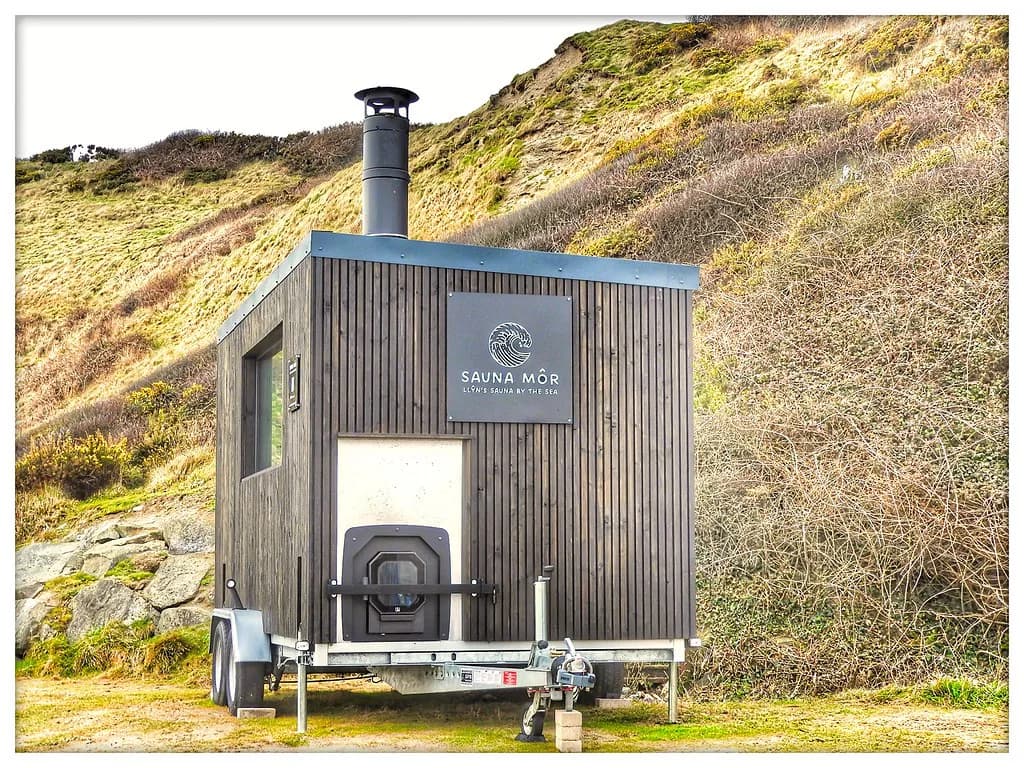
Wood-fired stoves are what most waterside and pop-up saunas use, partly because they need no mains supply and partly because the smell and the visible fire are half the appeal. The cost is heat-up time and attention: someone has to feed the stove, and the temperature moves around more than on a dial. Gardens Illustrated notes that wood-fired choices bring ventilation and flue practicalities that electric heaters avoid.
Electric heaters give predictable heat and suit sites with a proper supply, but they need a qualified electrician to install and a dedicated circuit. For a garden build that is the hidden line in the budget.
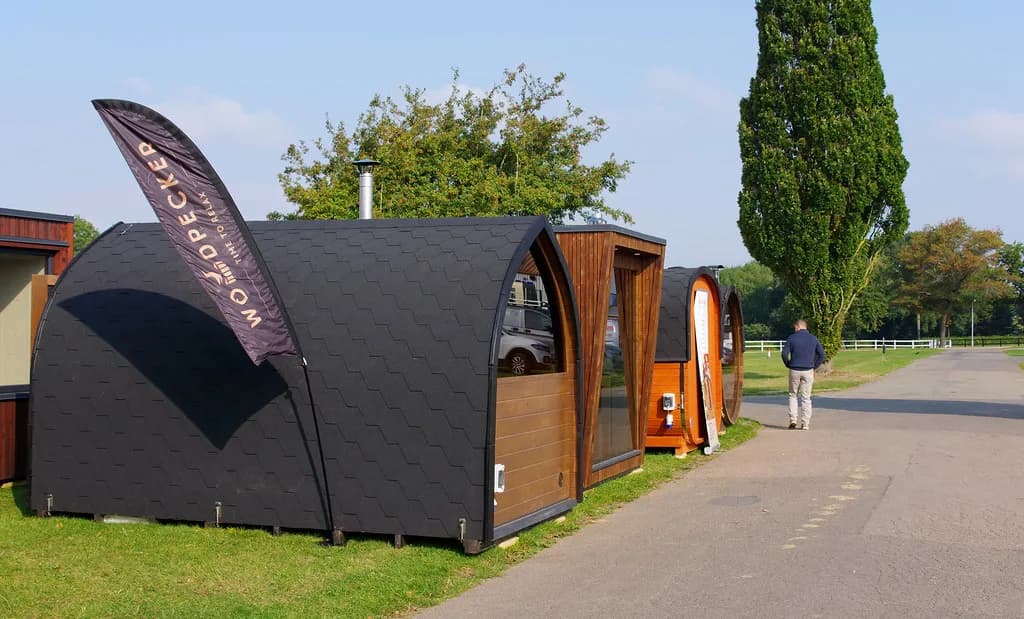
If you are shopping for a private kit rather than a session, the garden range at Palmako shows the shape of the market: many models use slow-grown Nordic spruce walls in 44mm or 56mm, with aspen benches because the wood stays cooler to the touch, and heaters are optional extras on some designs rather than standard.
Booking, walk-in and how sessions are timed
Assume you need to book. Small outdoor saunas hold a handful of people, and the ones on a pier, a pontoon or a beach have no room for a walk-up queue, so online slots are the norm for the popular sites.
Off-peak weekday daytime is where you find space and a calmer bench, and it is also when you are most likely to share with regulars rather than a party. If you want the whole cabin to yourself, some operators sell private slots at a higher rate.
Timed sessions mean you should arrive early enough to change and shower without eating into your sauna time. Late arrival usually costs you minutes from your own slot rather than extending it.
Swimwear, towels and seat covers: UK norms vs the Finnish sauna
In UK public outdoor saunas, swimwear is the norm, and Gardens Illustrated is blunt about it: unlike the Scandinavians, the British are keeping some clothes on. Wear a swimsuit unless a venue's own rules say otherwise, and do not import the fully nude Finnish habit into a mixed public session here.
Sit on a towel, not the bare bench or a borrowed seat cover, and shower before you go in. Those two habits are copied straight from Finland and are what the people sharing the bench will notice.
If you want the wider picture of how British sessions are run, including the quieter community-run baths where the culture is closer to a neighbourhood institution than a spa, our guide to sauna etiquette in the UK takes it step by step.
A sauna hat is optional but useful when the ceiling heat is fierce, and a second towel for the cold walk back is worth more than an extra drink. Leave anything metal, and leave the phone outside the hot room.
What to bring and what to leave at home
Bring a towel for sitting on, a second for drying, water, flip-flops for cold or shared floors, and a bag that keeps wet kit away from the rest. That is the entire list for most UK outdoor sessions.
Leave alcohol and heavy meals for afterwards; skip the drink before you go in. Most sites ask you to keep noise down, and a floating cabin carries sound straight across the water.
In winter the return walk matters, so add a warm hat and a dry robe or coat to your bag. The heat stays with you for a few minutes only, and the last hundred metres to the car is where people get cold.
Prices: what an outdoor sauna session costs in the UK
Session prices are set venue by venue and sit on each operator's own booking page, so there is no single UK figure to quote. Expect city-centre contrast therapy clubs to charge more than a community-run or coastal site, with private slots above shared ones.
Garden kits are a separate market with prices you can compare directly. In the Palmako range, listed models include a compact 44mm sauna from £3,990 and a modern sauna with dressing room from £5,490, with optional extras such as heaters priced separately.
As a sense of the wider retail spread, Gardens Illustrated puts garden saunas at roughly £4,000 to £40,000 depending on the build, from small kits to bespoke custom cabins; one listed two-person model is priced in US dollars. Treat all of these as purchase prices, not the cost of a session.

Seasons, weather and the cold walk between sauna and water
Outdoor saunas in the UK run year-round, and the cooler months are the ones operators and owners tend to prefer because the contrast is sharper. That also means wind, rain and dark afternoons, so a towel you can wrap around and a dry layer at the door are practical kit rather than luxury.
The cold walk is the part new visitors underestimate. It is short, often barefoot, and if the site has no heated changing area you will feel it most after the final round, so plan your exit rather than lingering in the cabin.
Garden kits come with a different seasonal trade-off: uninsulated or partially insulated timber sheds heat faster in a British winter, and the exterior needs treating against the weather. That makes insulation, roof protection and timber treatment the specifications worth reading before you buy.
A plain safety line
Stay hydrated, skip alcohol before bathing, leave immediately if you feel unwell, and keep sessions short in very hot cabins. Check with a doctor first if you are pregnant or have a heart condition, and shower and change with care on wet boards.
Local bathhouses worth pairing with a sauna day
Some UK cities already had a heat tradition long before the outdoor boom. The Harrogate Turkish Baths in North Yorkshire are an obvious half-day pairing with a Yorkshire sauna trip, and the Victorian Turkish baths in the UK tradition more broadly gives context for what a British hot room used to be.
Community-run baths are the other end of the scale: cheap, sociable, run by people who genuinely want you to sit for three rounds. Community saunas in the UK, from London to smaller cities, are the most affordable way to try the whole rhythm before you commit to a coastal slot.
If the sea is the draw, treat the sauna as one part of a coastal walk rather than the whole outing. Beach saunas in the UK are tied to tide, weather and season, so build the day around the swim window and let the sauna slot fit around it.
Plan Your Visit
Decide first what cold water you want and how warm you want the changing room, then pick the venue that matches. A floating or beach cabin gives the best plunge and the least comfort; a city contrast therapy club gives heat, structure and a short walk to a shower.
For a first session, book an off-peak slot, wear a swimsuit, take two towels and stop at three rounds. If you want the same rhythm at home, compare garden kits on insulation, wall thickness and whether a heater is included, because those three details drive both cost and use in a British winter.
Explore more United Kingdom sauna guides
Frequently Asked Questions
Do you wear swimwear in a UK outdoor sauna?
Yes, swimwear is the norm at UK public outdoor saunas, in line with how the British have taken to the practice rather than the fully nude Finnish habit. Wear a swimsuit and sit on your own towel, and follow any single-sex or women-only slot rules an operator sets.
How long is a sauna session in the UK?
Public outdoor saunas usually run on booked slots made up of two or three short rounds with cool-downs between them. A common round is around ten to fifteen minutes; the whole slot, including changing, is what you reserve.
What is the difference between a sauna and a Finnish sauna?
A Finnish sauna is the tradition itself: a hot timber room, at least one cool-down in cold water or air, and a rest afterwards as an equal part of the session. UK outdoor saunas borrow that format but usually with swimwear, shared public benches and shorter overall visits.
What should I bring to an outdoor sauna?
A towel to sit on, a second to dry off, water, flip-flops for cold or shared floors, and a dry warm layer for the walk back outside. Leave alcohol for after the session and keep the phone out of the hot room.
Is an outdoor sauna a good idea for a garden?
It gives you the round-by-round rhythm whenever you want it rather than a booked slot, but a kit needs a firm base, a proper electrical supply for an electric heater, exterior timber treatment and more heating effort in winter. Read the model's insulation and heater specification before deciding.
Where do garden sauna prices sit in the UK?
Kit prices vary widely across the market, and the Palmako range page lists each model with its own figure so you can compare compact saunas, dressing-room layouts and optional heaters side by side. A published retail overview also puts garden saunas across a spread running up to bespoke builds.
When is the best time to use an outdoor sauna in the UK?
Cooler months suit contrast bathing best, and many sites run through winter. Expect wind, rain and a short cold walk between cabin and water, and plan a dry layer and footwear accordingly rather than treating the weather as a reason to stay home.
Sources
Sauna notes for your next trip
Optional updates to our sauna guides.
You might also like
Continue reading
More guides you'll find useful