Stadtbad Neukölln: Sauna, Pools and How a Visit Works
Stadtbad Neukölln in Berlin pairs a 1914 bathing palace with a Finnish sauna, Aufguss rounds and a cold plunge. Here is how a visit works, step by step.
On this page
Stadtbad Neukölln is the bathhouse to pick in Berlin when you want architecture and a proper sauna round in the same visit. Opened in 1914 and modelled on an ancient Roman thermal complex, it holds a grand 25-metre pool hall, a smaller 19-metre hall and a sauna wing with a Finnish sauna, a herb sauna, a caldarium, a steam bath and a cold plunge. The building sits at Ganghoferstraße 3 in Neukölln, a short walk from the U7.
Treat it as two venues under one roof. Pool tickets and sauna tickets are priced separately, so decide before you arrive whether you are swimming, sweating or doing both across an afternoon. The sauna runs hourly Aufguss rounds in its event sauna, which makes it closer to the German ritual than to a hushed, silent sweat.
What Stadtbad Neukölln is
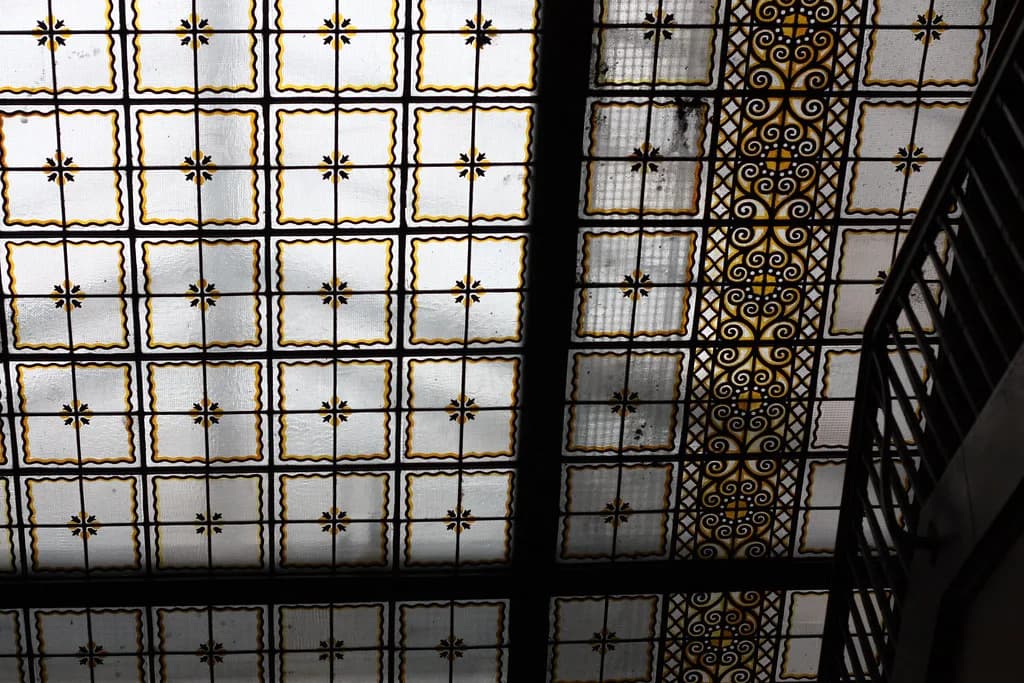
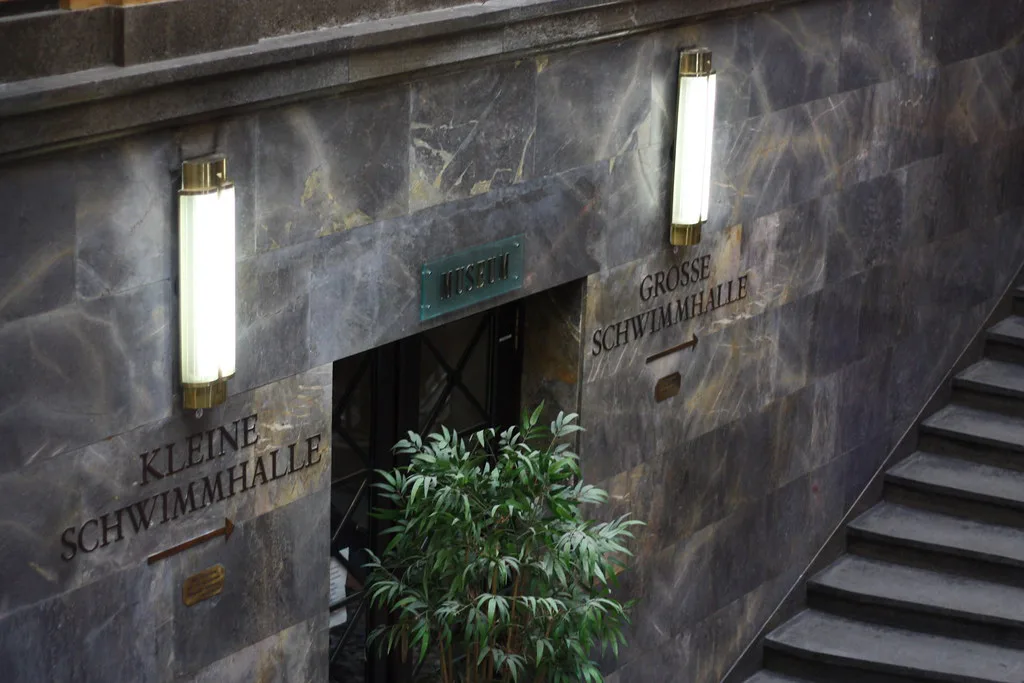
Architect Reinhold Kiehl designed the complex as an ensemble of public bath and people's library, and at its opening it ranked among the most beautiful baths in Europe. The two swimming halls are lined with seven-metre travertine columns, walkways and mosaics, with floor plans that echo Greek temples and basilicas. The larger hall holds the 25-metre pool; the smaller hall holds a 19-metre pool. Both have non-swimmer areas and run from 65 centimetres to 2.40 metres deep.
The historic core included a domed hall with a round cold plunge, and the restored warm-water pool has reopened as part of the sauna wing. That detail matters: you get the bathing-palace picture and a working cold-water station in the same building, rather than a modern spa box with a classical facade bolted on.
The sauna area
The sauna wing lists a Finnish sauna, a Kräutersauna (herb sauna), a caldarium, a steam bath, a Tauchbecken cold plunge, foot baths and an outdoor area, plus rest rooms and a food counter. The centrepiece is the event sauna, a large new Finnish sauna with hourly Aufguss sessions. If you have read about the Finnish sauna and want the German interpretation of it, this is the room to book your afternoon around.
Aufguss here is a scheduled performance: an attendant pours water infused with essential oils onto hot stones and moves the air around the room with a towel. Sit high for the strongest heat, low and near the door if you want an easier round, and leave between rounds rather than toughing out a back-to-back stack. The cold plunge and foot baths sit outside the hot rooms, so the cool-down is a few steps away rather than a walk through a lobby.
How a visit works, step by step
Pay at the desk or buy a ticket in advance, then head for the changing rooms and shower before entering the sauna. Bring a one-euro coin for the lockers in the hall area, since the lock works on a deposit system. Sauna guests also need a ten-euro deposit for the sauna chip that operates the sauna facilities; you get it back when you return the chip.
A sauna visit follows the usual German pattern: undress in the changing room, shower, take a towel to sit or lie on, and keep your spot covered on the wooden benches. Swimwear belongs in the pool halls, not on the sauna benches. Between rounds, cool down in the plunge or a foot bath and sit out in the rest room. If you are new to this, the German sauna rules cover the small unwritten points, from towel placement to how much space to leave around you.
Watch the clock rather than the door. Entry and the ticket desk close 60 minutes before the end of opening time, and bathing stops 30 minutes before closing, which cuts the effective evening short if you arrive late. Aim to be inside at least two hours before the stated close if you want a full cycle of rounds and a rest.
Mixed and single-sex sessions
Monday is the women's day: the sauna opens at 12:00 for women only, and the notice adds that mixed staff may be on duty in the sauna on that day. From Tuesday to Sunday the sauna is mixed and runs from 10:00. If a single-sex session is the reason you are coming, build your trip around Monday; otherwise pick any other day and expect the normal mixed arrangement.
Nudity is standard in German municipal saunas, and this one follows the convention rather than improvising around it. First-timers sometimes assume a swimsuit is acceptable in the sauna cabin; it is not, and wearing one draws looks. The naked saunas in Germany piece explains where textile-free rules apply and where exceptions exist, which is useful if you are planning several stops in the city.
Prices and tickets
Swimming and sauna carry different tariffs. A 90-minute swim ticket costs 6.00 EUR, or 3.70 EUR reduced, and a 150-minute ticket costs 7.00 EUR, or 4.80 EUR reduced; overstaying means paying up to the next tariff. A day ticket for swimming is 11.50 EUR, or 8.50 EUR reduced, and a family-style ticket for three people is 19.00 EUR. Reduced rates cover children, students, trainees and benefit recipients with the relevant proof.
On the sauna side, a day card with no time limit costs 23.00 EUR, or 19.00 EUR reduced, and a three-hour card costs 20.00 EUR, or 16.00 EUR reduced, with a top-up due if you run over. Add the ten-euro chip deposit, which is returned. If you plan a long afternoon of Aufguss rounds, the day card is the simpler choice; for a single cycle, three hours is enough.
Opening hours and seasons
Hours change with the season, so match the date to the published schedule. In the 1 October to 30 April window the sauna opens Monday from 12:00 for women and Tuesday to Sunday from 10:00 for mixed sessions, with the same entry and bathing cut-offs as the pools. The pool halls keep a longer day: the large hall runs to 22:30 on most days in that period.
The pool is not a pure leisure facility, which shapes the timetable. In the winter schedule the large hall is given over to school, club and course use on weekday mornings, and Wednesday and Friday afternoons include stretches of public swimming with a reduced water area. The small hall is closed on Mondays, Saturdays and Sundays in the same period and used by clubs on weekday late afternoons. Read the day's row before promising yourself a lane.
Special events also shift the pattern. The Lange Nacht des Schwimmens on 30 October keeps selected baths open late, with sauna-season openings at some of them, and the Neukölln sauna marks its season start alongside it. If your trip lands on an event date, plan around it instead of assuming the normal evening close.
What to bring
Pack a large towel to sit on and a second to dry with, plus flip-flops for the wet floors. Bring a one-euro coin for the locker and small coins for the hairdryers, which take five-cent pieces. A water bottle matters more than snacks, since the sauna has its own food counter and rest rooms.
Swimwear is for the pools and sauna towels are for the sauna, so pack for both if you intend to split the visit. A light robe or wrap makes the walk between the hot rooms, the showers and the plunge more comfortable, particularly in winter. Leave valuables at home; the lockers are simple coin-operated boxes rather than a staffed cloakroom.
Getting there
The bath is at Ganghoferstraße 3 in 12043 Berlin, a few minutes from the U7 stations Rathaus Neukölln and Karl-Marx-Straße. Bus M41 stops at Erkstraße or Geygerstraße, and buses 166 and M43 stop at Rathaus Neukölln. There are no bicycle racks on site and parking is limited to surrounding streets, so the U-Bahn is the least fussy option.
Neukölln's street layout makes the walk straightforward, and the entrance sits directly on the quiet side street rather than on a main road. Coming from central Berlin, the U7 ride is short enough that a late-evening sauna and a return trip on the same line is realistic.
Trade-offs and best times
The architecture is the draw and also the constraint: this is a busy municipal bath, so the pool halls carry family noise and school groups rather than spa quiet. Weekday late afternoons and evenings are the calmest windows for the pool, while the sauna's hourly Aufguss schedule concentrates people at round times. Arrive between rounds and you will find the rest rooms and plunge far less crowded.
Accessibility is good but not complete. The building has step-free showers, toilets and changing rooms, electrically opening entrance doors, a lift with the key available at the ticket desk and a water lift in the small hall, plus disabled parking spaces. Not every part of the sauna is reachable by wheelchair, which is worth knowing before you plan a full sauna afternoon.
One practical line for any sauna or cold plunge: drink water, skip alcohol beforehand, leave the room if you feel unwell, and take a doctor's advice if you are pregnant or have a heart condition. That is habit and caution, not a promise about what bathing will do for you.
Other sauna moods in Berlin
If you want a resort-scale spa day with a large sauna garden and a pool, Vabali Berlin is the obvious alternative, and it suits anyone who wants to settle in for hours rather than follow a city bath timetable. For a quieter neighbourhood sauna with a local crowd, Kiezsauna Berlin trades grandeur for intimacy. Both are a different proposition from the Neukölln bathhouse, which is as much a heritage building as a sauna.
Liquidrom Berlin offers a sound-and-light bathing hall with a more contemporary feel, useful when you want atmosphere over nineteenth-century mosaic. Saunabad Berlin in Prenzlauer Berg covers the neighbourhood sauna angle, and our wider list of saunas in Berlin helps you weigh the options by district and by the kind of session you want.
Plan Your Visit
Stadtbad Neukölln works best as a half-day: swim first in the columned halls, then move into the sauna wing for an Aufguss round, a cold plunge and a rest. Choose the day card if you want to take your time, or the three-hour card if you are cycling through the city. Bring a one-euro coin and a towel you do not mind putting on hot wood.
Decide Monday versus the rest of the week before you commit, since the women's session changes who is in the room. Then keep your timing realistic around the entry cut-off and the bathing close, and let the Aufguss schedule set the rhythm of the afternoon rather than the other way round.
Frequently Asked Questions
How much does the sauna at Stadtbad Neukölln cost?
Sauna entry is priced separately from swimming on the Berliner Bäder tariff, with a time-limited card and an unlimited day card, plus a reduced rate for children, students, trainees and benefit recipients who show proof. A refundable deposit for the sauna chip is added on top and returned when you hand the chip back. The official price list on the Berliner Bäder site carries the current figures.
Is the sauna at Stadtbad Neukölln mixed or women-only?
Monday is the women's sauna day, opening at 12:00, and the bath notes that mixed staff may be on duty in the sauna that day. Tuesday to Sunday the sauna is mixed and runs from 10:00. The pool hall also has a women's swimming session on Monday afternoons.
Is there a cold plunge at Stadtbad Neukölln?
Yes. The sauna wing lists a Tauchbecken cold plunge alongside foot baths, a Finnish sauna, a herb sauna, a caldarium and a steam bath. The restored historic warm-water pool is part of the sauna area, and there is an outdoor section too.
Do I need to book the sauna at Stadtbad Neukölln in advance?
Tickets can be bought at the desk or through the Berliner Bäder online ticket system, and sauna entry is priced separately from swimming. Sauna cards are time-limited, so choose the three-hour or day card before you go in. The hourly Aufguss rounds draw a crowd at round times, so arriving between them is easier.
How do I get to Stadtbad Neukölln by public transport?
Take the U7 to Rathaus Neukölln or Karl-Marx-Straße, both a short walk from Ganghoferstraße 3. Bus M41 stops at Erkstraße and Geygerstraße, and buses 166 and M43 stop at Rathaus Neukölln. There are no bicycle racks at the bath and parking is on surrounding streets only.
When is the quietest time to visit Stadtbad Neukölln?
Weekday late afternoons and evenings are calmer in the pool halls, since weekday mornings in the winter schedule go to school, club and course groups. In the sauna, the hourly Aufguss schedule concentrates people at round times, so arriving between rounds leaves more space in the rest rooms and at the plunge. Entry closes 60 minutes before the end of opening time and bathing 30 minutes before.
Is Stadtbad Neukölln wheelchair accessible?
Much of the building is step-free, with accessible showers, toilets and changing rooms, electrically opening doors, a lift keyed at the ticket desk and a water lift in the small hall. Not every part of the sauna is reachable by wheelchair. Disabled parking spaces are available.
Sources
Sauna notes for your next trip
Optional updates to our sauna guides.
You might also like
Continue reading
More guides you'll find useful