German Sauna Rules: Etiquette, Aufguss and What to Wear
German sauna rules explained: textilfrei nudity, the mandatory seat towel, silent rooms, showering first and how the Aufguss ritual works.
On this page
German saunas run on a social code rather than a legal one: you go into the hot room without swimwear, you sit or lie on a towel that covers everything that touches the bench, and you keep your voice down. Get those three right and the rest of a German sauna visit, including the Aufguss ceremony, follows naturally. The rules are strictest inside the sauna cabin itself and looser in the pools, changing rooms and rest areas, which is where most first-timers misread the situation.
A social code, not a law
A German sauna is less a type of cabin than a way of using one. The heater is an ordinary Finnish-style stove, but the room is clothing-free, usually mixed, quiet and organised around a repeatable cycle of heat, cooling and rest. Expect to see the word textilfrei on signage; it means textile-free, and it is the single most useful word to recognise on your first visit.
Do you have to be naked in a German sauna? Inside the sauna cabin, yes in most German facilities. Textilfrei means textile-free, and swimwear is treated as unhygienic in a shared hot room.
Can you wear a swimsuit in a German sauna? Not in a textilfrei cabin. Many houses explicitly disallow swimwear inside the sauna room, although pool areas in larger thermes usually expect it.
Are German saunas unisex? Mixed-gender, clothing-free sauna areas are the standard arrangement, and some facilities also run women-only or women-and-gender-diverse sessions at set times. Look at the day's schedule at the entrance if a single-sex slot would suit you better than the usual mixed room.
Nothing here is enforced by fines, and attitudes vary from one house to the next. Posted house rules by the entrance are the final authority, so read the Sauna Regeln before you commit to a room. What follows is the shared convention across most German facilities, not a substitute for the sheet on the wall.
The site's anchor reference for the tradition behind all this is the Finnish sauna, where the Löyly, the steam thrown from the stones, is the whole point of the ritual. German houses borrow the equipment and the vocabulary while adding their own formality and scheduling.
Textilfrei: no swimwear in the sauna room
Leave the swimsuit in the locker for the sauna cabin. Swimwear is treated as unhygienic in a shared hot room because fabric holds sweat against the skin, and at many German facilities it is explicitly not allowed inside. Turning up in trunks or a bikini marks you out immediately and, in some houses, will draw a correction from staff or other bathers.
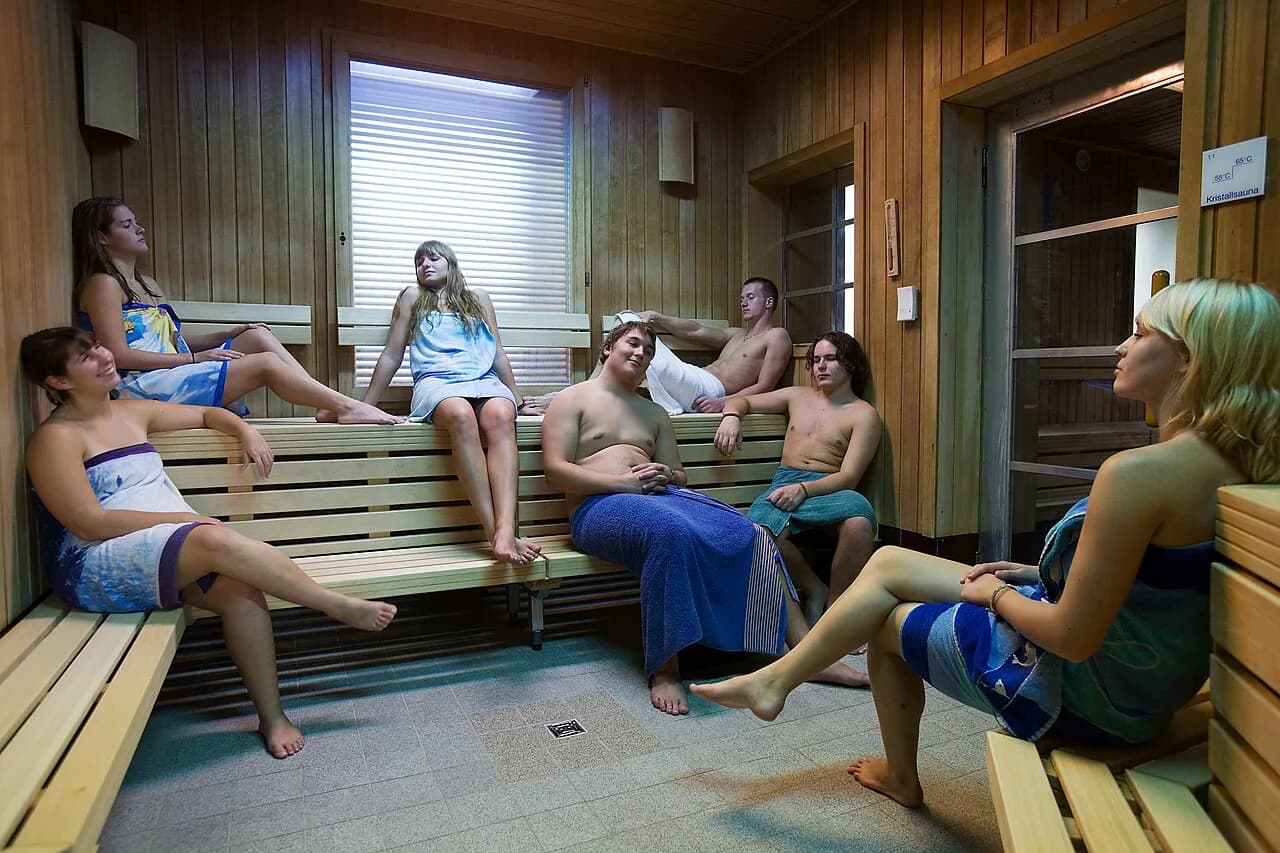
Modesty is handled with a towel rather than clothing. Wrapping a towel around yourself as you walk between rooms is normal and nobody objects; the convention is only that you do not use the towel to cover yourself once you are seated inside the cabin. A robe serves the same purpose in corridors and rest areas and is what regulars tend to wear.
If the idea of a mixed, clothing-free room is too much, some facilities schedule women-only or women-and-gender-diverse sessions, and quieter midweek mornings are easier for a first attempt. What you should not do is keep a swimsuit on inside a textilfrei cabin on the assumption that it will be tolerated.
The seat towel: full contact, no bare skin on the bench
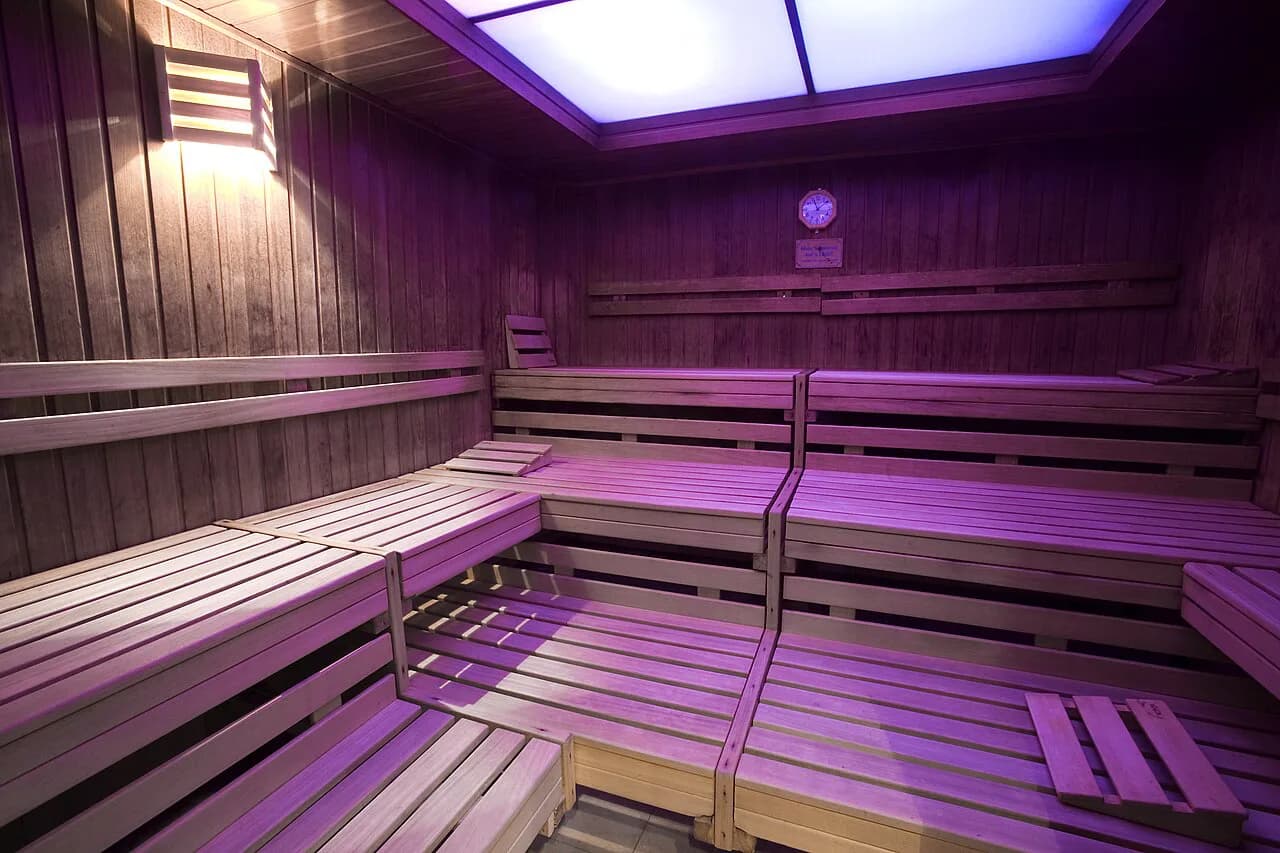
The towel rule is the one visitors most often get wrong, and it is about hygiene rather than modesty. No bare skin should touch the wooden bench: not your back, not your legs, not your feet. Unfold the towel so it covers your whole contact area and readjust it if you slide after sweating heavily.
Bring two large towels if you can. One is the seat towel that goes into every cabin with you; the second is for drying off after showering and for the walk between rooms. A single small travel towel rarely covers enough bench and leaves you repositioning it constantly.
Before you go in: shower, shoes, towel on
Shower thoroughly before your first round, and again between rounds if you have been cooling off in a pool. This is standard hygiene practice at German facilities rather than an optional nicety. Arrive with a towel already with you: you need it from the moment you leave the changing area.
Bring flip-flops or shower shoes and wear them outside the cabin. Walking barefoot around the sauna area is frowned upon, and you will see neat piles of sandals outside cabin doors and at pool steps. Feet go back into them before you cross to the next room.
Many large thermes issue a wristband that doubles as your locker key and, often, as a tab for drinks and food charged at the exit. Keeping a little cash is sensible in Germany even where cards are accepted.
Inside the room: silence, low eyes, no phones
Keep conversation to a minimum inside the cabin. Silence or near-silence is the default, and striking up a chat with strangers is not how the room works. Save the talking for the rest area.
Keep your gaze at eye level or closed. With everyone unclothed, staring is the fastest way to make a room uncomfortable, and the convention is a flat, uninterested gaze rather than a downward one. Phones and cameras generally stay in the locker, and using one in a bathing area is a serious breach.
Jewellery is worth leaving behind: metal heats up against the skin, and rings can become uncomfortable as fingers swell. If you forget, most changing areas have somewhere to store a necklace or watch safely.
How hot and how long a round usually is
German sauna cabins commonly sit somewhere around 80 to 100°C, with a lower-heat, higher-humidity bio-sauna in the region of 50 to 65°C for anyone who wants a gentler start. A heat round typically runs 10 to 15 minutes, and most visitors complete two to four rounds over a visit of a couple of hours. Treat these as reported customs and room ranges rather than targets to chase.
Lower benches are cooler than upper ones, which is a simple way to make a first round more manageable. Longer is not better: leave when you are ready, not when a clock says so.
The Aufguss ritual: what the Saunameister does
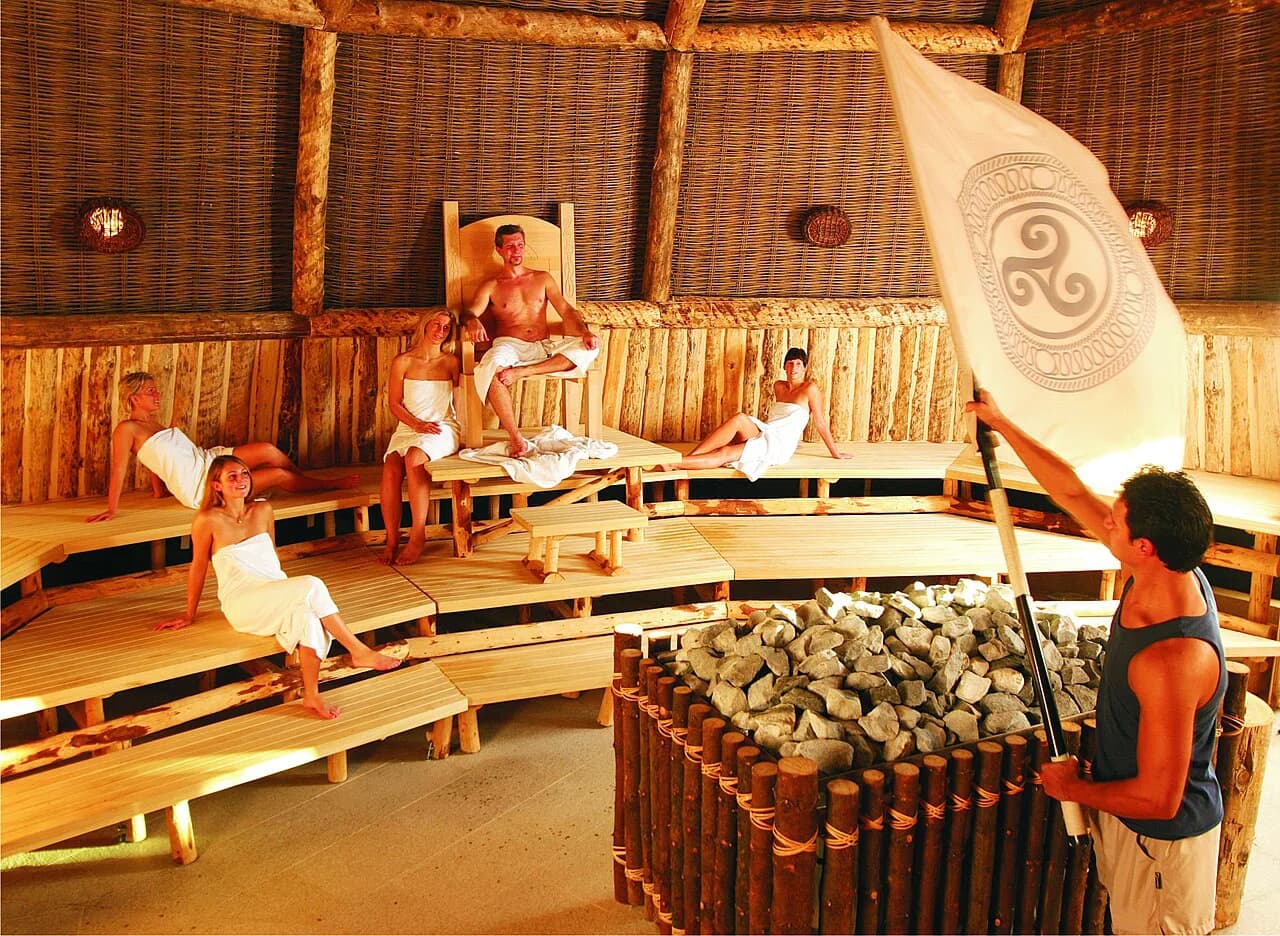
The Aufguss is the scheduled centrepiece of a German sauna visit. A Saunameister enters wrapped in a towel, greets the room, announces the scent of the infusion and the number of rounds, pours the water over the hot stones of the kiuas and then works the room with a towel to push the steam around. Sessions are posted in advance and often fill up.
A session usually runs about 10 to 15 minutes, sometimes as three announced rounds, and guests are expected to stay seated and silent for the duration. Arrive before it starts rather than slipping in mid-ceremony, and if you must leave, do it calmly and quickly so the door does not stand open.
Follow the Saunameister's lead on atmosphere. Some masters run theatrical sessions with audience participation, others are formal and quiet, and clapping or calling out is only appropriate when invited. The ritual is a sensory experience, not a treatment, and nobody should promise you otherwise.
If the scheduled ritual is what you came for, build your visit around the timetable rather than the other way round, and check the board when you arrive so you can plan rounds and rest between the announced slots.
Cooling off: cold showers, plunge pools and outdoor air
Cooling down is a full part of the loop, not a dash to the exit. Bathers leave the cabin in an orderly fashion and head for cold showers, a plunge pool or simply outside air, depending on the venue. Outdoor sauna gardens make the fresh-air option the most pleasant one in winter.
Expect a cold walk between the cabin and the water at venues with outdoor pools, and bring something to stand on or wear on your feet for it. At a large therme the distance can be a good 30 seconds of bare corridor, which is why the robe and the sandals earn their place in your bag.
Mixed sessions, women-only sessions and feeling exposed
Mixed-gender, clothing-free sauna areas are the norm in Germany, and the changing and lounge areas at some facilities are co-ed too. Women-only or women-and-gender-diverse sessions exist at a number of houses, usually at set times, so look at the schedule if that suits you better.
Nudity in this setting is practical rather than provocative, and the general code is to give everyone the same courtesy you would want. Most people are paying attention to their own heat tolerance, not to anyone else's body. If you feel exposed, a robe in the transition areas and a seat near the door help more than a swimsuit ever will.
The Ruhezone: rest between rounds
Between rounds you rest in the Ruhezone, the quiet relaxation area of loungers, blankets and often tea. It is where the cycle is completed, and it is genuinely quiet: no calls, no music on speakers, no catching up on email. A book or an e-reader is the usual companion.
Water is the other essential. Drink before, between and after rounds, and keep a bottle in your bag rather than relying on finding a fountain. Many venues have a cafe for a proper break, and some serve beer, which is better saved for after your last round.
Children and young bathers
Families do use German saunas, but rules on age and on which hours children are welcome differ by venue and by session. Some houses run family times and keep other slots adult-only. Check the house rules or timetable at the entrance before bringing younger bathers into a textilfrei area.
What to bring and what to leave in the locker
Pack light: two towels, flip-flops, a robe if you have one, a water bottle, toiletries and a change of clothes. Leave the swimsuit, the phone and jewellery in the locker, and skip makeup if you plan a full circuit of rounds. Some venues rent towels and robes, so a traveller without luggage space can still manage.
The same packing list travels well to the city saunas, where a small urban house will have the same towel rule but far less space in the changing room. If Berlin is your base, the saunas in Berlin range from municipal swimming halls to purpose-built spa worlds, and the etiquette carries across all of them.
Therme versus a small municipal sauna
At a big therme such as Therme Erding near Munich or Vabali Spa in Berlin, the sauna world sits alongside pools, slides and a full restaurant, and the rules shift by zone: swimwear in the pool area, none in the sauna cabins, a robe in the Ruhezone. Read the signage at each threshold, since each zone is posted with its own dress code and one rule does not cover the whole complex. Check current opening hours and prices before you go.
A small municipal or neighbourhood sauna is a different experience: fewer rooms, a plainer changing area and a much shorter walk to the cold shower. The etiquette is identical, but the atmosphere is quieter and the crowd more local. Budget-wise, the big spa worlds sit at the top of the range and municipal houses well below them, with towel and robe rental usually an extra.
If you only have an evening, a city-centre sauna with a late session and a plunge pool is the efficient choice; if you want the full Aufguss programme and a garden to cool off in, plan on half a day at a larger house.
The mistakes first-timers make
Wearing a swimsuit into a textilfrei cabin, sitting with bare skin on the bench, talking at normal volume and walking in mid-Aufguss cover most of the friction. Each is easy to avoid once you know it is a rule rather than a preference.
The quieter mistake is treating the whole building as one rule zone. Robes and towels are fine in corridors and rest areas, and pool areas often expect swimwear, so the sauna cabin's conventions do not follow you to the loungers.
Plan Your Visit
Read the house rules at the entrance, take two towels and a pair of sandals, shower first and keep your voice down. That is the whole code, and it is what lets a room full of strangers share a 90°C cabin in comfort.
Stay hydrated, skip alcohol before bathing, leave the room if you feel unwell, and ask a doctor first if you have a heart condition or are pregnant. The rest is custom, learned in an afternoon.
Explore more Germany sauna guides
Frequently Asked Questions
Do you have to be naked in a German sauna?
Inside the sauna cabin, yes in most German facilities. Textilfrei means textile-free, and swimwear is treated as unhygienic in a shared hot room. You sit or lie on a towel that covers your whole contact area with the bench, and a towel or robe wrapped around you in corridors and rest areas is completely normal.
Can you wear a swimsuit in a German sauna?
Not in a textilfrei cabin. Many houses explicitly disallow swimwear inside the sauna room, although pool areas in larger thermes usually expect it. Check the posted signage at each threshold, because the rule inside the cabin does not automatically apply to the pools or the rest area.
Are German saunas unisex?
Mixed-gender, clothing-free sauna areas are the standard arrangement, and some facilities also run women-only or women-and-gender-diverse sessions at set times. Look at the day's schedule at the entrance if a single-sex slot would suit you better than the usual mixed room.
How long do you stay in a German sauna?
A heat round typically runs 10 to 15 minutes, and most visitors do two to four rounds over a couple of hours, resting between each one. Lower benches are cooler than upper ones. Leave when you are ready rather than chasing a target time.
What is an Aufguss?
An Aufguss is a scheduled ritual in which a Saunameister pours scented water over the hot stones and fans the steam around the room with a towel. Sessions usually last 10 to 15 minutes, are announced in advance and often fill up, and guests stay seated and quiet for the duration.
What should I bring to a German sauna?
Two large towels, one for sitting on and one for drying, plus flip-flops, a robe if you have one, a water bottle and toiletries. Leave the swimsuit, phone and jewellery in the locker. Some venues rent towels and robes, which helps if you are travelling with hand luggage only.
Sources
Sauna notes for your next trip
Optional updates to our sauna guides.
You might also like

Continue reading
More guides you'll find useful