Aufguss in Germany: How to Join the Sauna Ritual
Aufguss is the German sauna ritual of poured water, scented steam and towel work. Here is how a session runs, the etiquette to follow and where to try it.
On this page
Aufguss is a timed sauna ritual in which a trained host pours water, sometimes mixed with essential oils, onto the hot stones and then fans the rising steam around the room with a towel. It is standard programming in German sauna complexes rather than an optional extra, so a visit to a big German sauna usually means choosing a round from a printed schedule. The word is German for infusion, and the ritual sits on top of the older northern European habit of throwing water on hot stones.
What separates an Aufguss from a plain sauna session is that somebody else controls the heat: the host decides when the pour happens, how the towel is waved and when the door opens. That structure makes the ritual easier for a first-timer than it sounds, because you follow the room instead of guessing. It also means the room's rules matter more than your own habits.
What Aufguss actually is
In practice an Aufguss is three things in sequence: water or ice on the stove, a scent, and a period of deliberate air movement. The host uses rhythmical towel movements to push hot, scented steam towards the bathers, and sessions sometimes run with music in the background, which turns a plain sweat into a multisensory event. The pour restores humidity in a room that has been filled with people, which is where the practice started.
What does Aufguss mean in a sauna? Aufguss is German for infusion, and it describes a hosted sauna ritual in which water, often mixed with essential oils, is poured onto hot stones and the resulting steam is moved around the room with a towel. The term refers to that act, not to the building itself.
What happens during an Aufguss session? You enter and take a seat on your towel, the host introduces the round, pours water or ice onto the stove, and then fans the hot scented air across the benches in set towel movements. The heat builds in waves, the round ends, and bathers leave to cool down, rest and perhaps return for the next slot.
What is the difference between Aufguss and show Aufguss? A classic Aufguss is a quiet, meditative ritual built around moving hot air and the natural sounds of the sauna. A show Aufguss is a performance that adds choreography, lighting, music and a theme, with the host treating the room as a stage.
The scent is usually essential oil, and hosts commonly build it through the session rather than dumping one strong note at the start. Expect a progression from heavier base notes towards lighter citrus or mint, following the rising heat. If you are sensitive to fragrance, ask at reception which rounds are unscented or plain, because a strong pour in a small room is not a neutral experience.
There is no single official duration. A classic round is typically a short, calm session built around the sound of water on stone and the towel working the air, while meditative variants can run far longer with brief introductions of outside air to keep the room usable. Treat any quoted minute count as the venue's own format, not a standard you can count on across Germany.
Where the word comes from and why the ritual grew
Aufguss means infusion, and the term describes the act rather than the building: scented water is infused into the air of a hot room. The practice most likely began as housekeeping. A crowded sauna needed its air refreshed and its humidity restored, so someone poured water on the stones and spun a towel to redistribute the heat.
Over time that practical gesture picked up refined movements, aromatherapy and, later, music, and it hardened into a craft with training schools, competitions and community events. Germany, Austria, Finland and the Netherlands are where sauna-going is most deeply social and where the ritual took root, which is why the German sauna landscape treats it as everyday culture rather than a novelty. In Finland the reference point remains the plain Löyly of a wood-heated room, and the Finnish sauna explains that older, quieter tradition well.
Classic Aufguss versus show Aufguss
The classic version is the quiet one. The host concentrates on moving as much hot air as possible towards the benches and lets the natural sounds of sizzling ice and settling wood carry the experience; purists prefer it, and it is the safer choice for a first round. The standard version adds background music, which many regulars find makes a long, hot session easier to sit through.
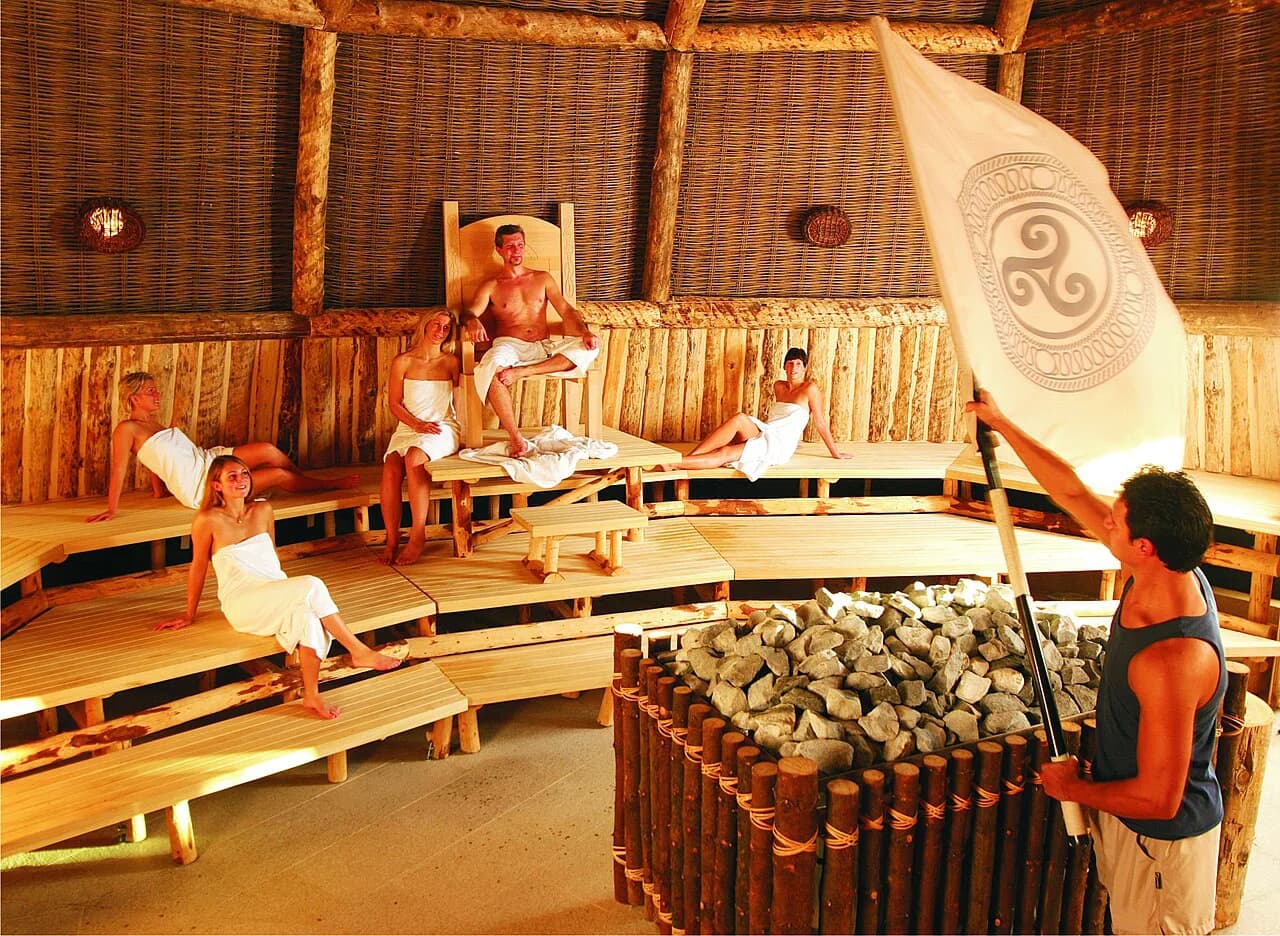
A show Aufguss is theatre. The host builds a theme and coordinates choreography, music, lighting, scents and sometimes costume into a performance, with the sauna treated as a stage; the audience does not just watch but breathes through the crescendo together. It is increasingly programmed at big wellness centres, and it is also the format used in competitions. Anyone who dislikes spectacle in a hot room should read the schedule carefully and pick the plain rounds.
The German sauna evening usually mixes both. A typical programme runs several rounds through the afternoon and evening, alternating calm infusions with louder themed ones, and the board at the entrance lists which is which. Check it before you commit to a slot, because a show round in a packed room is a very different hour from a silent one.
The people who run it: the Aufgussmeister
The host is called an Aufgussmeister, sometimes SaunaMeister or sauna master, and in larger houses the role is a trained one rather than a staff side-duty. Training routes differ by country: in Italy, for example, the recognised path runs through a long practical course, a supervised placement and an examination before a diploma is issued. Do not assume a German house follows the Italian syllabus, but do assume the person waving the towel has done it many times.
The craft has a competitive circuit, which explains why show Aufguss exists at all. Hosts compete on themes, narrative flow, scent and music choices, and stage presence, and workshops now coach newcomers on exactly those skills ahead of national championships. That competitive edge is why some rounds feel like performance and others feel like a quiet favour done for the room.
How a session works, minute by minute
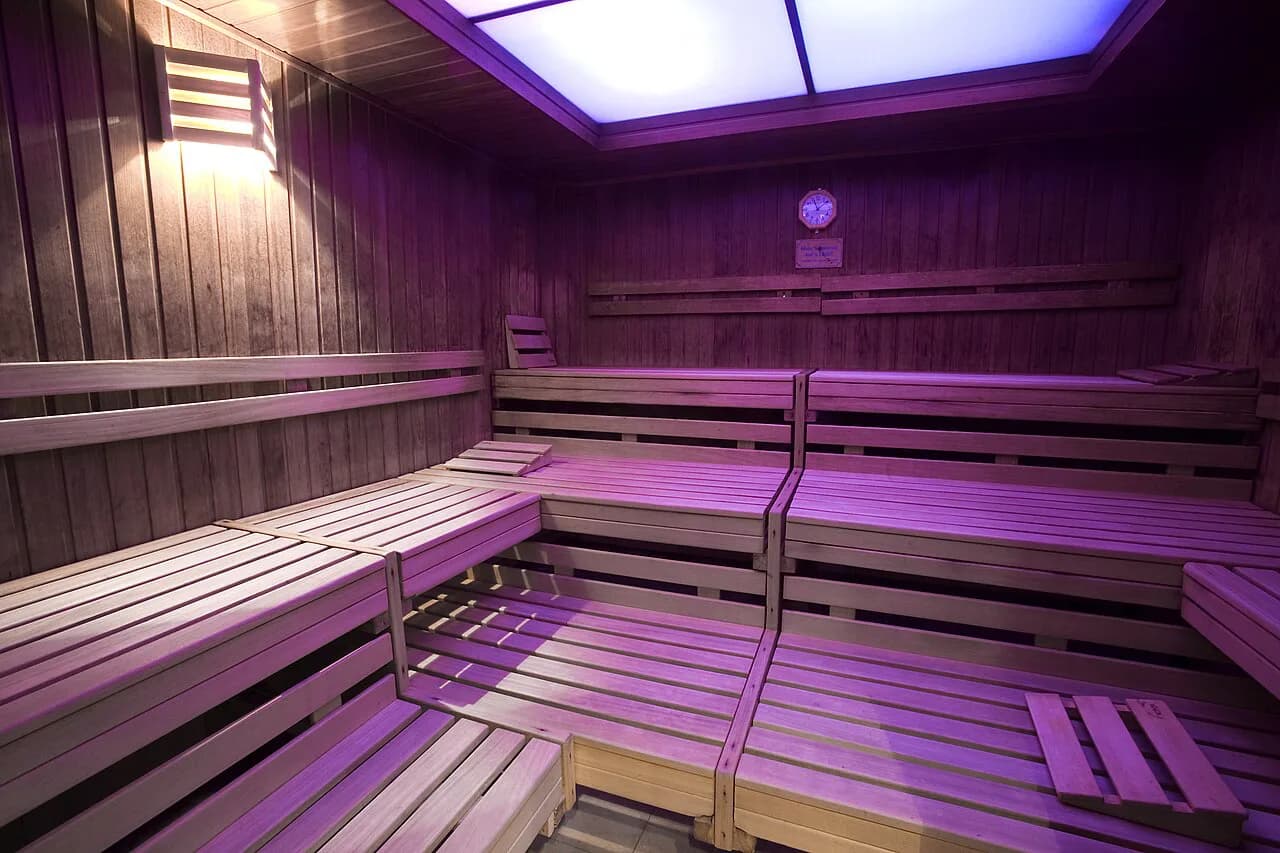
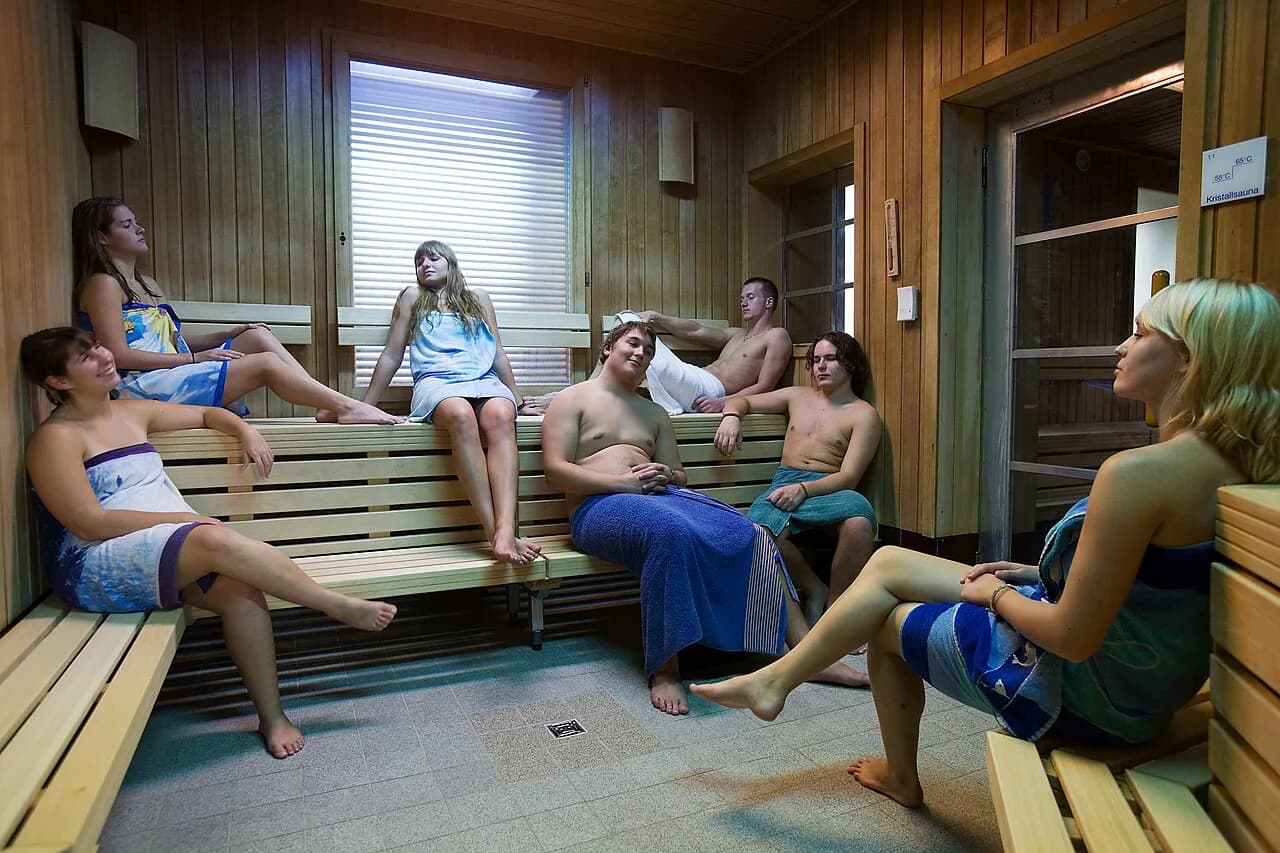
You join the queue outside the sauna door before the round starts, because places are limited by bench space and the room fills in order. Once inside, you take a seat on a towel, sit fairly upright so your back gets the full effect, and stay put while the door is closed and the temperature climbs. The host introduces the round, then makes the pour.
After the pour comes the distribution: the host waves the towel in set patterns, some simple and some elaborate, to move hot air across the benches and down from the ceiling. The heat builds in waves rather than all at once, and the towel work is what makes the difference between a mild round and a serious one. Higher benches catch more heat, so choose your level honestly.
When the round ends, the door opens and everyone leaves, usually without rushing. The standard German sequence is sauna, then cooling, then rest, then a drink, then another round if you have it in you. Cooling can be a cold shower, a plunge pool or a walk outside, and many houses have all three.
Aufguss types you will meet
Beyond classic and standard, two variants are worth knowing. Meditative Aufguss slows everything down, often with repetitive towel movements, mantra-like or instrumental sound, and resins such as frankincense or sandalwood rather than bright citrus; it suits people who want stillness rather than spectacle. Steam-bath Aufguss takes the idea into the humid room and swaps the pour for scrubs, salt or clay treatments and body masks.
In a German house you will also meet rounds organised around ice, snow, or a specific scent theme, and some venues run folk or seasonal programmes. Read the board at the sauna entrance rather than relying on the booking desk's summary, since the scents and the intensity often change between rounds. If a round is labelled as a highlight or show, expect lights and volume.
Rules and etiquette
The single biggest practical rule in a German sauna is that you sit on a towel and you are generally naked, which is normal rather than optional in most houses. Textiles belong in the pool area, not on the benches. If you are uneasy, a women-only session or a smaller neighbourhood sauna is easier than a large mixed programme, and the naked saunas in Germany covers what to expect.
Keep your place quietly and keep conversation low. You do not swap benches mid-round, you do not open the door during the towel work unless you are leaving for good, and you do not put your feet on the bench where the next person sits. Showers before entry are expected, and anything you sweat into gets washed.
Leaving early is allowed and nobody will hold it against you. In a strong round the heat climbs fast, and the correct response if you feel unwell is to get up and walk out, not to endure it politely. Ask the host where to exit if the door is behind other bathers.
What to bring and how to prepare
Bring two towels, one to sit on and one to dry off with, plus flip-flops for the wet floors and a water bottle. Most German sauna complexes rent towels and robes at the desk, but the queues before a popular round are exactly when you do not want to be hunting for a rental. Leave jewellery and watches in the locker; hot metal is unpleasant.
Eat something light beforehand, stay hydrated, and skip alcohol before bathing. If you have a heart condition or are pregnant, ask a doctor before you use intense heat. Beyond that, the preparation is mostly pacing: your first Aufguss should be a calm round on a middle bench, not a show round in the hottest corner.
Aufguss in Germany: the landscape and the sauna evening
Germany takes sauna-going seriously, and the big complexes sell evening tickets that run for hours, with an Aufguss schedule posted at the entrance. That format rewards a slower plan: swim, sauna, cool, eat, sauna again. Reserving the whole evening rather than an hour is the norm, and it is the only way to catch more than one style of round.
Berlin has the widest spread, from large spa complexes with full Aufguss programmes to small neighbourhood saunas where the ritual is more casual. Vabali Spa Berlin runs extensive rounds in a resort-style setting, while Kiezsauna Berlin suits anyone who prefers a compact, local room.
For something less standard, Liquidrom Berlin pairs sauna rounds with a domed pool and underwater sound, a format that draws a mixed crowd. On the calmer end, Saunabad Berlin in Prenzlauer Berg is a small sauna with a garden, and the Olivin Sauna there is the kind of room where the host knows the regulars. Both are good entry points for a first Aufguss.
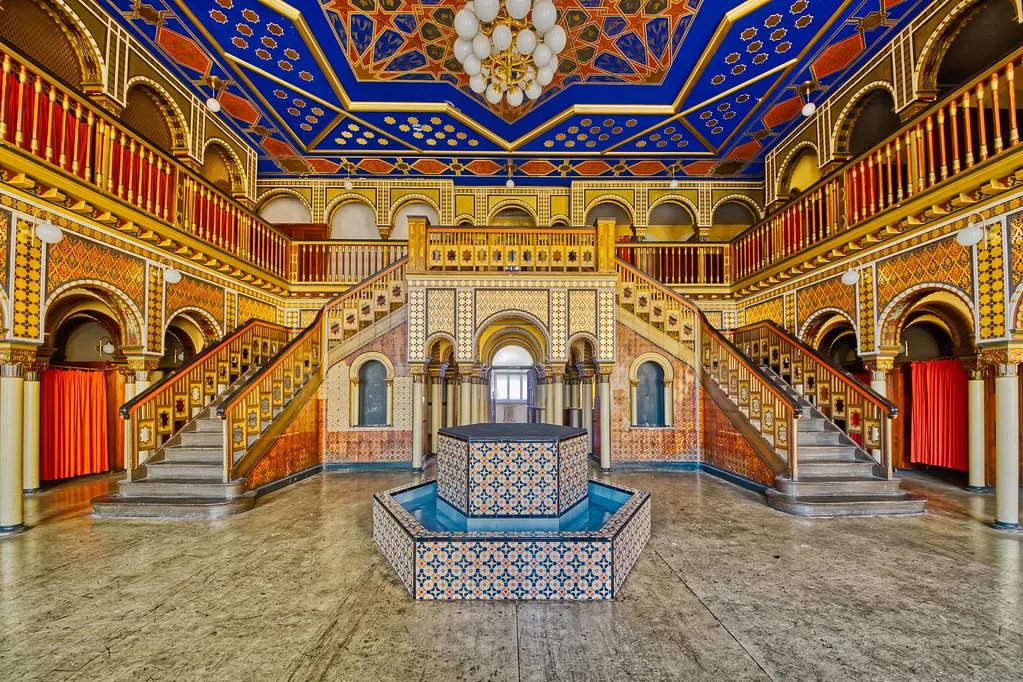
The historic municipal baths are a different pleasure. Stadtbad Neukölln, designed by Reinhold Kiehl, is worth a visit for the building alone, and the Berliner Bäder-Betriebe runs its sauna programme alongside the swimming. Expect a public-bath atmosphere rather than a resort one: fewer frills, more local bathers, and a clear schedule on the wall.
Outside Berlin, the pattern is the same across the country, with sauna villages and large thermal complexes making Aufguss the centrepiece of an evening. Munich's Müller'sches Volksbad shows how far back the bathing-house tradition runs in Germany, though its sauna programme is separate from the ritual itself. Check each venue's own programme for the round times on the day you plan to go.
Come with the schedule in mind and the etiquette sorted, and Germany rewards you with variety: a two-hour evening can take you through a quiet infusion, a musical round and a cold plunge without leaving the building. That range is what makes the ritual worth planning a trip around rather than squeezing in between other sights.
Aufguss beyond Germany: Austria, the Netherlands, Italy and the UK circuit
Austria and the Netherlands share the German obsession, and Italian wellness centres have adopted the ritual enthusiastically, with their own training school and a competitive scene. Finland frames the same act differently, with Löyly as a plain family habit rather than a hosted show; the Finnish sauna explains that tradition, from Allas Sea Pool in Helsinki to Kotiharjun sauna, a wood-heated public sauna. Vienna has its own take on hotel spas and banyas, which our guide to saunas in Vienna sets out.
The UK has built a competition circuit of its own, and the 2026 UK Aufguss Championships are scheduled for 20 to 22 April at Galgorm Resort. Workshops for aspiring competitors ahead of that event cover theme development, narrative flow and matching scents and music with purpose, which is a good window into how seriously hosts take the craft. If you are in Britain during the championships, a spectator ticket is an efficient way to see the show format done properly.
Common mistakes first-timers make
The first is jumping straight into a show round on the top bench. The second is sitting on bare wood, which gets you a sharp word from the room and a wet towel for the rest of the evening. The third is treating the round as a personal endurance test; nobody in a German sauna is impressed by a guest who sits past their limit, and the door is there for a reason.
Two quieter mistakes cost comfort rather than goodwill. Wearing swimwear into a textile-free sauna marks you as a newcomer, and leaving a towel draped over the bench between rounds occupies space that other bathers need. Finally, do not skip the cooling phase to fit in another round; the rhythm of heat, cold and rest is what makes a long evening bearable.
Safety and the cold finish
Intense heat is a physical stress, and the usual sensible precautions apply: drink water, avoid alcohol beforehand, and get out the moment you feel light-headed. If you have a heart condition or are pregnant, ask a doctor first. None of that should put you off a well-run round; it is simply the etiquette of looking after yourself so the room can relax.
The cold finish is a matter of taste rather than rule. Some houses have plunge pools, others a cold shower wall or lake access, and some regulars simply step outside into the night air for a few minutes. Build up gradually and start with the feet and legs if you go into cold water. Then rest before the next round, which is where the evening actually takes its rhythm.
Plan your first Aufguss
Book an evening rather than a single round, look at the posted schedule before you undress, and pick a calm round first. Germany makes the ritual easy to try, with towel rental, cold water and food on site, and a printed programme at the door. The one detail worth confirming on the venue's own site is the round times on your chosen day, since programmes change with season and event.
Explore more Germany sauna guides
Frequently Asked Questions
What does Aufguss mean in a sauna?
Aufguss is German for infusion, and it describes a hosted sauna ritual in which water, often mixed with essential oils, is poured onto hot stones and the resulting steam is moved around the room with a towel. The term refers to that act, not to the building itself.
What happens during an Aufguss session?
You enter and take a seat on your towel, the host introduces the round, pours water or ice onto the stove, and then fans the hot scented air across the benches in set towel movements. The heat builds in waves, the round ends, and bathers leave to cool down, rest and perhaps return for the next slot.
What is the difference between Aufguss and show Aufguss?
A classic Aufguss is a quiet, meditative ritual built around moving hot air and the natural sounds of the sauna. A show Aufguss is a performance that adds choreography, lighting, music and a theme, with the host treating the room as a stage.
Do you have to be naked for Aufguss?
In most German saunas the ritual takes place in a textile-free room, and you sit on a towel. Swimwear belongs in the pool area. Smaller saunas and women-only sessions are easier if you are new to nudity.
How long does an Aufguss last?
Formats vary by venue and style. A classic round is a short, intense stretch inside the room followed by cooling and rest, while meditative variants can be much longer. Follow the schedule posted at the sauna rather than assuming a fixed length.
Is Aufguss the same as Finnish sauna?
No. Aufguss is a hosted ritual that grew out of the older northern European habit of pouring water on hot stones. The Finnish sauna is the source tradition, where Löyly is a plain, social custom rather than a staged performance.
Where can I try Aufguss in Europe?
Germany is the centre of it, with full evening programmes in Berlin and other cities. Austria, the Netherlands and Italy have strong scenes, and the UK now runs national championships, scheduled in 2026 for Galgorm Resort.
What should I bring to my first Aufguss?
Two towels, one to sit on and one to dry with, plus flip-flops and a water bottle. Rentals exist at larger spas, but bringing your own saves time before a popular round.
Sources
Sauna notes for your next trip
Optional updates to our sauna guides.
You might also like

Continue reading
More guides you'll find useful