Sauna Etiquette in Europe: What to Wear, Say and Do
Sauna etiquette in Europe, decoded: swimwear or nude, towel rules, showering, Löyly and Aufguss manners, round length, cooling off and country by country.
On this page
Sauna etiquette in Europe is mostly about one idea: the heat is shared, so the space is shared too. That means showering before you go in, putting a towel between your skin and the bench, closing the door behind you and asking the other bathers before you pour water on the stones. Get those four right and you will fit in almost anywhere, from a Helsinki swimming hall to a German spa town.
What changes as you cross the continent is clothing, session format and the volume of conversation. In Finland nudity is the default and the room is close to silent; in British pools and gyms swimwear is standard; in Germany many cabins are mixed and nude while single-sex and textile areas sit side by side. Knowing which of those rooms you are walking into matters more than memorising a list of rules.
The sections below work through a session in order, from the locker room to the cold water, with the country differences that actually affect what you do. Where the Finnish tradition sets the benchmark, that is said plainly, because most European sauna habits are read against it.
What sauna etiquette is really about
A public sauna is a small hot room with a shared stove, shared benches and a door that loses heat every time it opens. Etiquette exists because every one of those things is communal: the person on the top bench gets the hottest air, the person nearest the door feels the draught, and the person who empties a bucket over the stones changes the room for everybody. Behaving well is mostly a matter of noticing other people.
Do you wear clothes in a sauna in Europe? It depends on the country and the venue. In Finland and in many German bathhouses the custom is nude, with a towel to sit on.
Do you have to shower before entering a sauna? Yes, showering before you enter is the most widely shared rule in European sauna house rules. It rinses off sweat and product and gets your skin used to the heat.
Should you ask before pouring water on the sauna stones? Ask first, then add a modest ladle rather than a bucket. In a choreographed Aufguss or a guided saunagus session, the saunameister controls the stove and sets the pace, so you stay seated and follow their lead instead of adding water yourself.
That is why house rules tend to be short and practical. A typical UK spa rule sheet asks bathers to remove metal jewellery, take a warm shower before entering, sit on a towel for hygiene and warn other users before adding water to the stove, and it is explicit that a sauna runs somewhere around 85–100°C so you need to pick a bench height that suits you.
The same rule sheet also sets a minimum age of 16 for the sauna, which is a useful reminder that age limits are venue policy rather than some pan-European standard. If you are travelling with teenagers, treat the age question as part of choosing where to go rather than something you can assume.
The universal rules: shower before, seat towel under you, shut the door
Shower before you enter. It is the one step that appears in every set of house rules worth reading, and it does real work: it rinses off sweat, deodorant and whatever the city left on you, and it gets your skin used to the heat before you sit down. Most venues have showers right by the cabin, so there is no excuse to skip it.
Bring a towel and sit on it. Bare skin on a hot wooden bench is uncomfortable at best, and the towel is what keeps the bench clean for the next person. If you are new to all this, a short primer on sauna for beginners will save you an awkward first round, and the seat towel is the single most useful habit to take away from it.
Shut the door behind you, quickly. An open door dumps the heat the room has built up, and a cabin can take a long time to come back to temperature once it has been left open. Nobody will say anything, but everybody notices the person who lets the door swing.
Leave metal in the locker. Watches, chains and rings get hot enough to be genuinely unpleasant, and contact lenses dry out in the heat. Most saunas also expect phones and cameras to stay outside the cabin.
What to wear: nude in Finland and Germany, swimwear in the UK and mixed city saunas
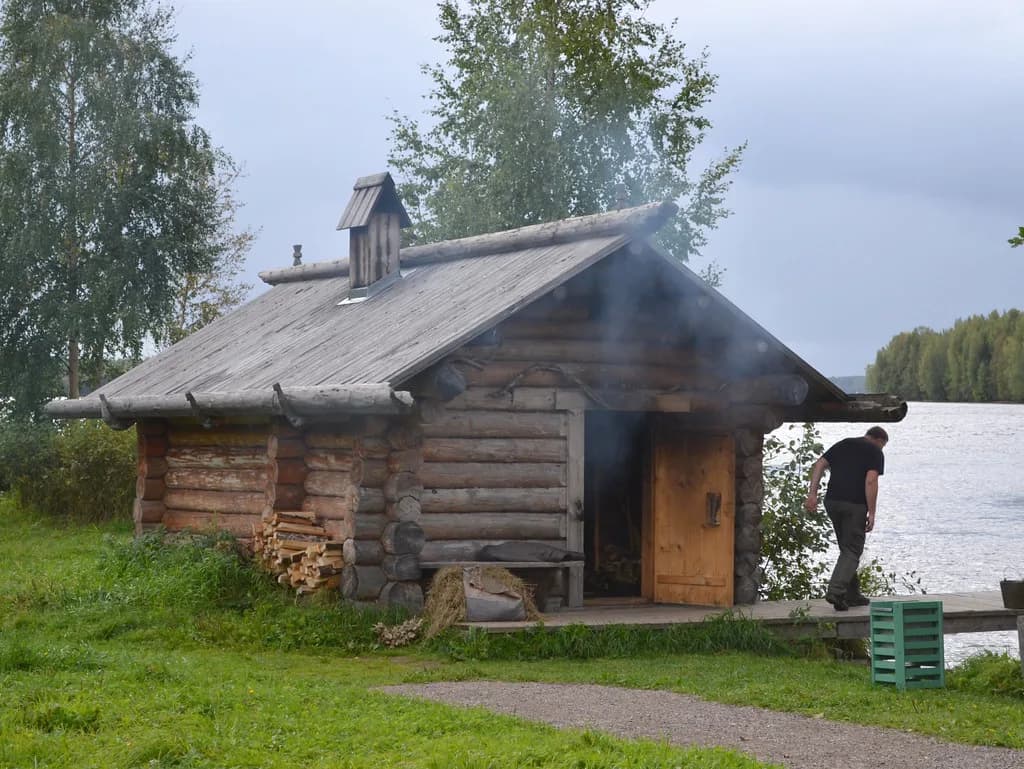
Finland is the reference point: the Finnish sauna is a nude space, families and friends bathe together, and swimwear in the cabin is the odd choice rather than the polite one. That is a cultural norm, not a universal rule, and it does not travel intact.
Germany leans the same way in many public saunas and spa complexes, with mixed nude cabins as the default in a lot of traditional bathhouses, while single-sex areas and textile days exist alongside them. The practical move is to read the signage at the entrance before you get undressed, because German venues often run different rules on different days or floors.
Britain and Ireland go the other way. In UK pools, gyms and spas, swimwear is the norm and full nudity in a public cabin would raise eyebrows; the towel is for sitting on, not for wrapping up in the heat.
The Baltic states, Russia and much of eastern Europe sit in between depending on whether you are in a public banya-style bathhouse or a small hotel sauna. The safe assumption everywhere is that you follow what the majority in the changing room are doing and what the printed rules say.
Mixed or single-sex sessions: how to read a venue before you undress
Session format is the detail travellers get wrong most often, and it is almost always posted rather than improvised. Look for a board or leaflet at reception listing which cabins are mixed, which are women-only or men-only, and whether certain hours are textile or nude. If the changing room is communal and open-plan, that usually signals a mixed, nude setup; separate cubicles and a towel wrap usually signal something more covered.
Cities vary more than countries do. A harbour-side urban sauna may run mixed sessions all day while a suburban swimming hall keeps separate days for men and women. A roundup of mixed saunas gives a sense of how common each arrangement is, and it is worth checking before you turn up with the wrong expectations.
When in doubt, ask at the desk in one sentence. Staff are used to it, and the answer takes ten seconds.
Löyly, Aufguss and saunagus: asking before you throw water
Pouring water on the stones is the heart of the Finnish tradition, where it is called Löyly, and it is also the fastest way to annoy a room. The rule is simple: ask first. A short question to the people around you, then a modest ladle rather than half a bucket, is the accepted sequence almost everywhere.
A choreographed Aufguss is a different event. In Germany, Austria and increasingly across central Europe, a saunameister runs the session: they control the stove, add ice or aromatic water, move the heat around the room with a towel and set the pace of the whole round. Your job is to sit where they indicate, keep still and follow the timing they announce rather than getting up to splash the stones yourself.
The same principle applies to saunagus in the Baltic states and to the aromatic pours that have become standard in many European venues. There is a useful analogy in Estonian and Latvian bathing culture, where the person running the session sets the rhythm. In a guided session, you do not manage the stove.
Never add essential oils to the water without agreement. Scents linger, some bathers react badly to them, and what seems like a pleasant touch can end someone else's session.
How long a round usually lasts, and how many rounds people take
Finns typically stay somewhere around five to fifteen minutes in the hot room, come out, cool down and go back for another round, often two to four times over an evening. That is custom rather than prescription: the number of rounds is set by how you feel, and nothing stops you cutting a round short or sitting one out.
If you are new to it, start shorter than you think you need. The first round is the one where people overestimate their tolerance, and a five-minute round followed by a proper cool-down will teach you more than sitting tight for fifteen. Some European venues run timed slots for guided sessions, in which case the saunameister's clock wins.
Public saunas are shared spaces, so do not camp on a bench when people are waiting. Finish your round, cool off, and get back in the queue.
Cooling off: cold showers, plunge pools, sea and lake dips
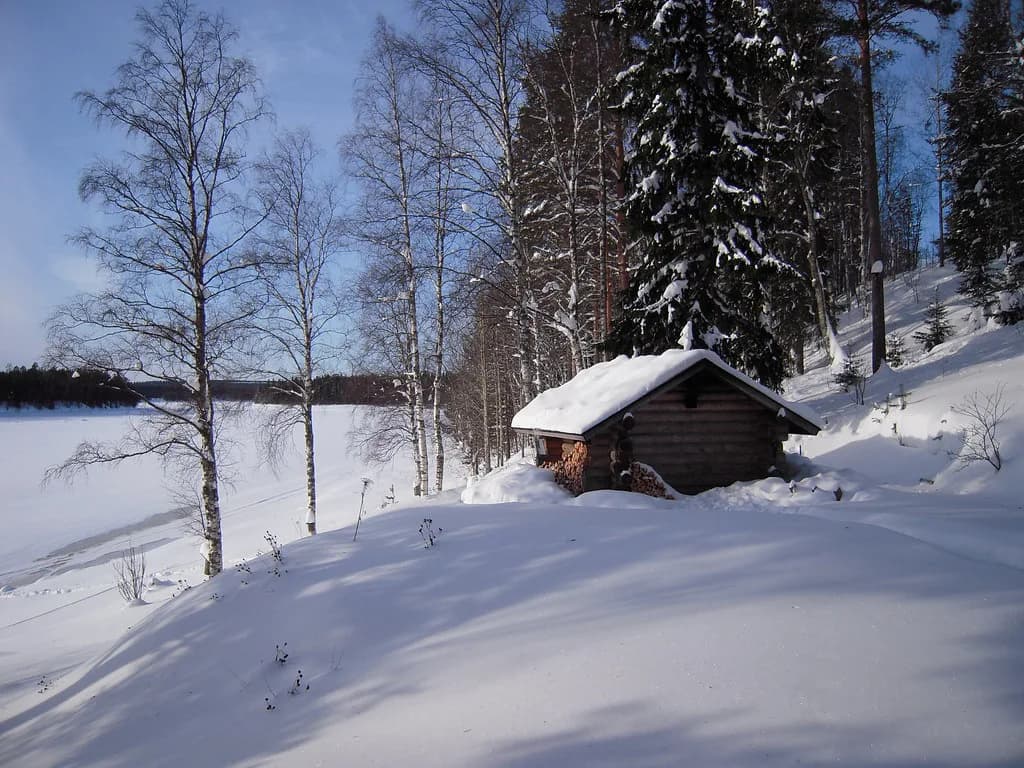
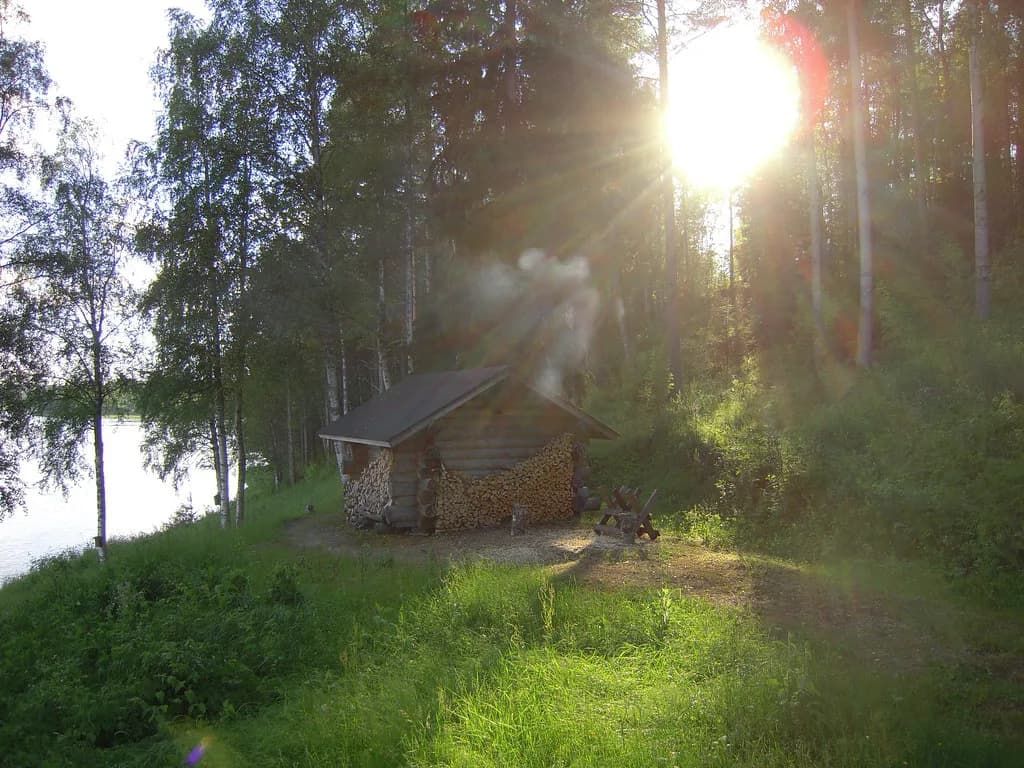
Cooling off is half the ritual. A cold shower, a plunge pool, a bucket of cold water or a dip in the sea or a lake all serve the same purpose: bring your temperature down between rounds so the next one is comfortable. Many outdoor and waterside saunas in Scandinavia, the Baltic states and the Nordic-leaning parts of Germany are built around exactly that route from hot room to water.
Plan the walk. A harbour, lake or sea dip in winter means a real outdoor crossing between the sauna and the water, and the most common mistake is bringing no footwear for the cold stretch or letting your towel get soaked on the first trip. A second towel, sandals and somewhere dry to leave a robe make a whole evening easier.
Going straight from a hot cabin into icy water is a strong step, and it is not for everyone. Cool down gradually if you are unsure, and finish each round with your body temperature back near normal before you get dressed.
Silence, small talk, phones and photos
The sauna is a quiet room by custom. Conversation is kept low and brief, and a full conversation about your day will be heard by everyone. A remark about the heat or a question about adding water is fine; a monologue is not.
Phones stay out of the cabin. Cameras are an absolute no in a room full of undressed or half-undressed strangers, and even in swimwear-only venues, photographing people without their agreement is not acceptable. Leave the phone in the locker unless it is genuinely needed for medical reasons.
There is a useful lesson in how Britain handles this: bathers in UK saunas tend to fill silence with small talk and sometimes keep shoes on, which the Nordic tradition would read as missing the point. A rundown of the common sauna etiquette mistakes notes trainers in the cabin, idle chit-chat and over-watering the stones as the recurring ones.
Etiquette across Europe does have a shared spine even where the details differ, and a wider look at sauna culture shows how much of it comes back to the same few habits of quiet, space and hygiene.
Children, and why many public saunas set age limits
Age rules are set by the venue, not by the country, and they vary enough that you should look them up before you travel with a family. One UK spa operator, for example, allows no one under 16 into its sauna at all. Small hotel and campsite saunas are often more relaxed, while big city bathhouses may run family hours instead of admitting children at any time.
Where children are allowed, the etiquette is the same as for adults plus a little more supervision: shorter rounds, a towel each, an adult within reach and a quick exit if the heat feels like too much. Ask at reception whether there is a family slot rather than turning up mid-evening.
Country by country: Finland, Germany, the UK, the Baltic states and Russia
Finland is nude, largely silent and family-based, with a strong swimming-hall and public-sauna culture. Germany is nude and mixed in many traditional bathhouses, with Aufguss sessions as choreographed entertainment and clear signage about which areas are textile. The UK and Ireland are swimwear-first, towel-wrapped and chatty, with nudity unusual in public cabins. The Baltic states and Russia lean towards banya-style bathhouse culture, where a session is often a social occasion booked by the hour.
Older urban bathhouse traditions do a lot to set expectations in Estonia, Latvia and Russia, where the pirts and the banya each carry their own ritual, from birch whisking to the sequence of steam, cool-down and tea. The practical etiquette stays familiar: ask before adding water, keep the room quiet, sit on a towel.
For a full picture of what the Finnish end of that spectrum looks like, the Finnish sauna guide covers the swimming halls, public saunas and harbour venues where the tradition is still lived rather than staged.
What to bring, and what to leave in the locker
Pack a towel, a second towel or robe for the walk to cold water, sandals for wet floors, a water bottle that is not glass, and a hair tie if you need one. Leave metal jewellery, contact lenses, cameras and shoes in the locker. A fuller list of what to bring to a sauna covers the less obvious items, such as a dry bag for wet swimwear and a small padlock for the locker.
Swimwear if you are in the UK, Germany's textile areas or a city pool; nothing if you are in a Finnish or German nude cabin. Check the session type at reception before you change and you will avoid the most common mistake of the trip.
Tipping is not a sauna convention anywhere in Europe in the way it is in restaurants. You pay the entry fee or the session price at the desk, and that is that.
One plain safety line: hydration, alcohol, feeling unwell
Drink water before and after, skip alcohol before bathing, leave the cabin if you feel unwell, and speak to a doctor first if you have a heart condition or are pregnant. That is the whole safety brief, and it is the same advice in a Helsinki swimming hall as in a London spa.
Be aware of your own limits. A sauna should be pleasant rather than a test of endurance, and stepping out early is never a breach of etiquette; it is exactly what the room expects of anyone who has had enough.
Plan Your Sauna Visit
If you remember four things, remember these: shower first, sit on a towel, shut the door and ask before you pour. Everything else, from whether you wear a swimsuit to whether you talk, is set by the venue and the country.
Do one practical thing before you go: look at the venue's own site for the session format and house rules for the day you plan to visit. That single step resolves the clothing question, the mixed or single-sex question and the age question at once.
After that, the session itself is straightforward. Go in, get comfortable on a bench height that suits you, cool off properly and go back for another round if you feel like it. The room will tell you the rest.
Explore more Europe sauna guides
Frequently Asked Questions
Do you wear clothes in a sauna in Europe?
It depends on the country and the venue. In Finland and in many German bathhouses the custom is nude, with a towel to sit on. In the UK and Ireland, swimwear is the norm in public cabins, and a towel is for sitting on rather than wrapping up in. Follow the signage or ask at reception before you change.
Do you have to shower before entering a sauna?
Yes, showering before you enter is the most widely shared rule in European sauna house rules. It rinses off sweat and product and gets your skin used to the heat. Showers are usually right next to the cabin, and a rinse after each round is the usual finish.
Should you ask before pouring water on the sauna stones?
Ask first, then add a modest ladle rather than a bucket. In a choreographed Aufguss or a guided saunagus session, the saunameister controls the stove and sets the pace, so you stay seated and follow their lead instead of adding water yourself. Never add aromatic oils without agreement from the room.
How long should one sauna round last?
Finnish custom is roughly five to fifteen minutes per round, with a cool-down between rounds and two to four rounds over an evening. That is a habit rather than a rule. If you are new, start shorter than you think you need and lengthen once you know how you respond to the heat.
Can you talk in a sauna?
Keep it quiet and brief. A short exchange about the heat or a question about adding water is fine, but a full conversation carries in a small room. In Finnish saunas the expectation is close to silence, and in British saunas a little small talk is more normal.
Can you take your phone into a sauna?
Leave it in the locker. Cameras and phones are a firm no in a cabin full of undressed or half-undressed people, and heat is hard on electronics. Photography in a public sauna without the clear agreement of everyone in the room is not acceptable, whatever the venue.
Is it rude to leave a sauna early?
No. Leaving when the heat feels like too much is exactly the right behaviour, and nobody in a public sauna will think less of you for it. Close the door behind you, cool down properly and rejoin the session if you feel like another round.
What is Aufguss etiquette?
Sit where the saunameister indicates, keep still and follow the timing of the round rather than getting up to manage the stove. Aufguss is run as a choreographed session with ice, aromatic water and towel work. If you arrive mid-session, wait for the next one rather than slipping in and out.
Sources
Sauna notes for your next trip
Optional updates to our sauna guides.
You might also like
Continue reading
More guides you'll find useful