How to Pronounce Sauna in Finland, the UK and the US
Finnish says SOW-nah, British English often says SAW-nuh and American English usually says SOW-nuh. Here is how to say sauna and the Finnish words around it.
On this page
Say it SOW-nah in Finnish, SAW-nuh if you learned British English, and SOW-nuh if you learned American English. All three are in circulation, and Finns will understand any of them; the differences come from how English spelling handles the letters au and from the short, clean vowels Finnish uses.
Why one short word has three pronunciations
English spelling gives au no single sound, so the same four letters land differently depending on where you learned to read them. Finnish, by contrast, spells close to the way it sounds: each vowel keeps a stable value and doubled letters are simply held longer. That is why a Finnish speaker's SOW-nah feels clipped and even, while an English speaker's version often stretches or rounds the first syllable.
How do Finns pronounce sauna? Finns say SOW-nah, with two clean syllables: the first rhymes with how and the second is a plain open ah. The stress falls on the first syllable, as it does in most Finnish words, and neither syllable is drawn out.
Why do British people say SAW-nuh? The British form uses the long back vowel of saw, which is how British English commonly handles the letters au. It is an accent difference rather than an error, and it sits further from the Finnish vowel than the American version does.
Is it SOW-na or SOW-nah? Both end in a reduced syllable in English speech, but the Finnish form keeps a plain open ah at the end, closer to SOW-nah. English speakers often shorten that final vowel to nuh, which is why the two spellings appear.
The British form is the outlier that catches visitors out. Pronunciations of sauna in British English are commonly transcribed with the vowel of saw, as in the British English sauna pronunciation, which is why a Finn may hear something closer to SAW-nuh than to the open diphthong they expect.
Finnish: SOW-nah, with a plain ah at the end
In Finnish the word is two clean syllables: sau-na. The first rhymes with how, the second is a plain open ah, and neither is drawn out. Put the stress on the first syllable, as Finnish always does, and keep the ending short.
The Finnish sauna is not a room you visit so much as a routine you join, and the vocabulary around it is built the same way: short words, first-syllable stress, no surprises for anyone who takes the sounds at face value. Our guide to the Finnish sauna walks through a full round, from undressing to the cold water, if you want the practice alongside the language.
British English: SAW-nuh, the vowel that surprises visitors
British dictionaries and pronunciation trainers commonly give a form with the vowel of saw plus a weak final syllable, roughly SAW-nuh. The vowel is long and sits at the back of the mouth, which is a long way from the Finnish diphthong.
That difference is a matter of accent, not error, and it is worth knowing before you assume a British companion has said the word wrong. If you want to move toward the Finnish form, practise the first syllable as an open glide and cut the ending cleanly instead of letting it trail.
American English: SOW-nuh, the most common US form
American usage usually gives SOW-nuh, with the first syllable rhyming with how and a reduced second syllable. It is the version most English-language sauna copy written for a US audience assumes, and it sits closer to the Finnish original than the British form does.
Transcriptions aimed at English learners sometimes render the word as SOW plus nuh and note that the vowel choice varies between accents, which is why you will hear both even within one country.
Saying it in Finland: what local ears actually hear
Finnish speakers are used to hearing sauna pronounced from outside the language and rarely correct anyone; the word has travelled too widely for that. In practice you will hear English-speaking visitors say SAW-nuh and Finns answer without a pause, because context carries the word.
One forum tradition holds that sow-nah, with the first syllable like the animal, is the only correct form, which shows how firmly English speakers defend their own version. As the sauna pronunciation debate shows, treat that as usage rather than a rule, and remember that neither the British nor the American habit will cause confusion in a changing room.
Case endings you will see on signs and booking pages
Finnish attaches endings to the word rather than using prepositions, so the form changes with the sentence. Saunassa means in the sauna, saunaan means into the sauna, and saunasta means out of the sauna. A changing-room sign or a ticket page may use any of them.
Read the ending as a small map of the round: saunaan is the step through the door, saunassa is the time on the bench, saunasta is the exit toward the shower or the water. Recognising the three forms covers almost every sign a visitor will meet.
Other Finnish sauna words worth getting right
Löyly is the steam that rises when water hits the stones, and it is the heart of the session; the ö is a front rounded vowel English does not have, so round your lips as if saying ay while keeping the tongue forward. Kiuas is the stove that produces it, two syllables and a hard k. A vihta, also called vasta, is the bundle of birch twigs used to beat the skin and move air around the body, and an avanto is the hole cut in lake ice for cold-water dips.
Pesuhuone is the washing room next door, where you shower before entering, and it is usually the first door you open. A löylykauha is the ladle you use to throw water on the stones and a löylymittari is the thermometer on the wall. Picking up four or five of these terms is enough to follow instructions and read signs without a phrasebook.
The avanto, the ice hole that anchors winter bathing, has its own vocabulary of safety and timing that is worth reading before a first winter plunge, and our guide to avanto ice swimming in Finland explains the sequence.
Pronunciation traps: Löyly, kiuas and the long vowels
Finnish distinguishes short and long sounds, and English ears often flatten the difference. A doubled vowel or consonant is held roughly twice as long: tuli is fire and tulli is customs, a distinction that matters little in a sauna but explains why Finns hear the length clearly. Hold the y in Löyly and the double consonant in kiuas rather than clipping them.
The hardest sound for English speakers is ö, which has no equivalent in most English accents. Start from the vowel in bed, then round your lips without moving your tongue; the result is close enough for Löyly to be understood on the first try.
Using the words at a public sauna in Finland
At a public sauna the useful phrase is a question, not a slogan: a simple saako tulla? works as a way of asking to join a bench, and a shower before entering is expected. If you want a towel, ask at the desk with pyyhe, and if the cold water is your aim, the word is avanto or, in summer, the lake or sea itself.
Helsinki's public saunas range from harbour-side pools with mixed sessions to older neighbourhood halls with separate turns for men and women, and the words on the door often carry the only cue about which session you have walked into. Kotiharjun sauna in Kallio is the classic wood-heated hall, and knowing that saunassa is where you sit and saunasta is where you leave helps you read the signs on the way in and out. For a fuller rundown of the halls themselves, our Helsinki sauna guide covers the best saunas in Helsinki.
A sauna hat is optional kit, but a seat cover and a towel are practical essentials in any public hall, and it is fine to ask for both at the counter before you pay; if you want the full case for the hat, the Finnish sauna hat is worth a read.
A short etiquette note
Sessions are usually mixed at public venues unless the timetable says otherwise, and swimwear rules vary, so read the sign at the door rather than assuming. A towel to sit on is standard, showering before you enter is expected, and quiet conversation is the norm rather than a rule. Our Finnish sauna etiquette guide sets out the rest of the customs in the order you will meet them.
Stay hydrated, skip alcohol before bathing and leave if you feel unwell; ask a doctor first if you have a heart condition or are pregnant.
Where the words come alive: a harbour sauna and a lakeside smoke sauna
Allas Sea Pool at Helsinki's South Harbour puts saunas beside seawater pools, so the avanto idea becomes a step out of a warm room and into cold water within a few metres. It is a good first stop if you want to hear the vocabulary used casually by Finns in swimwear rather than in a lesson.
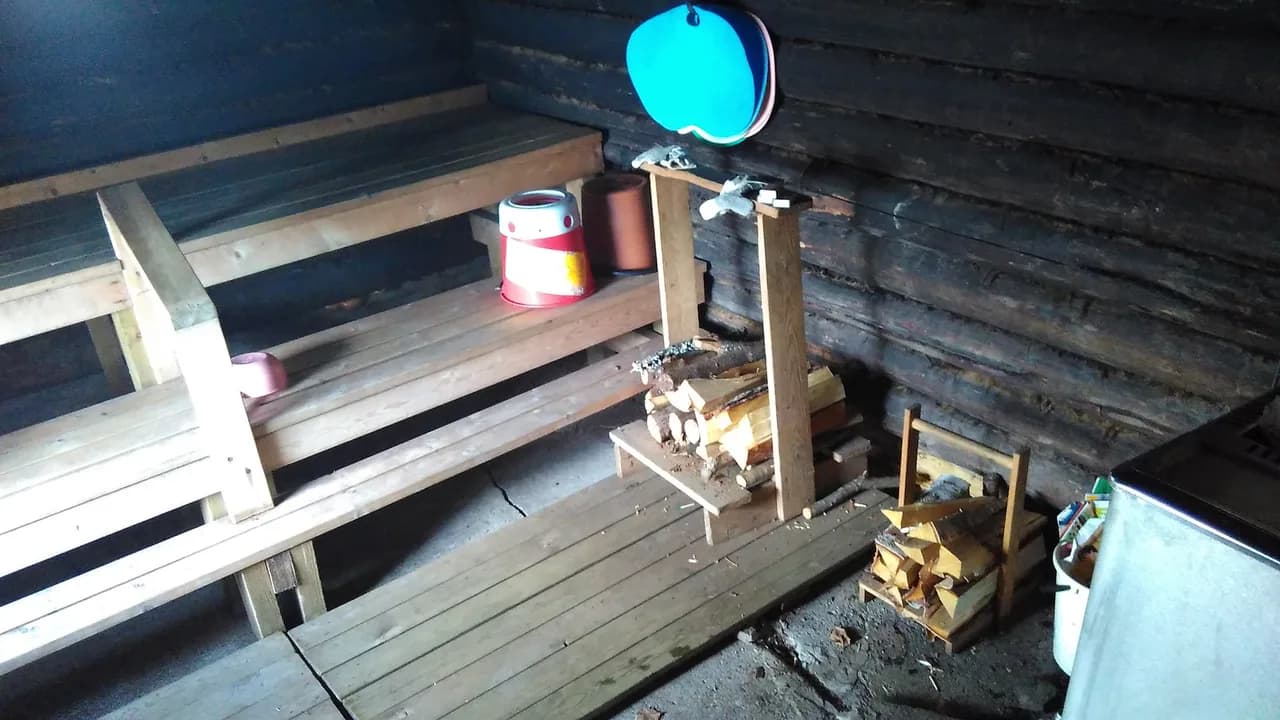
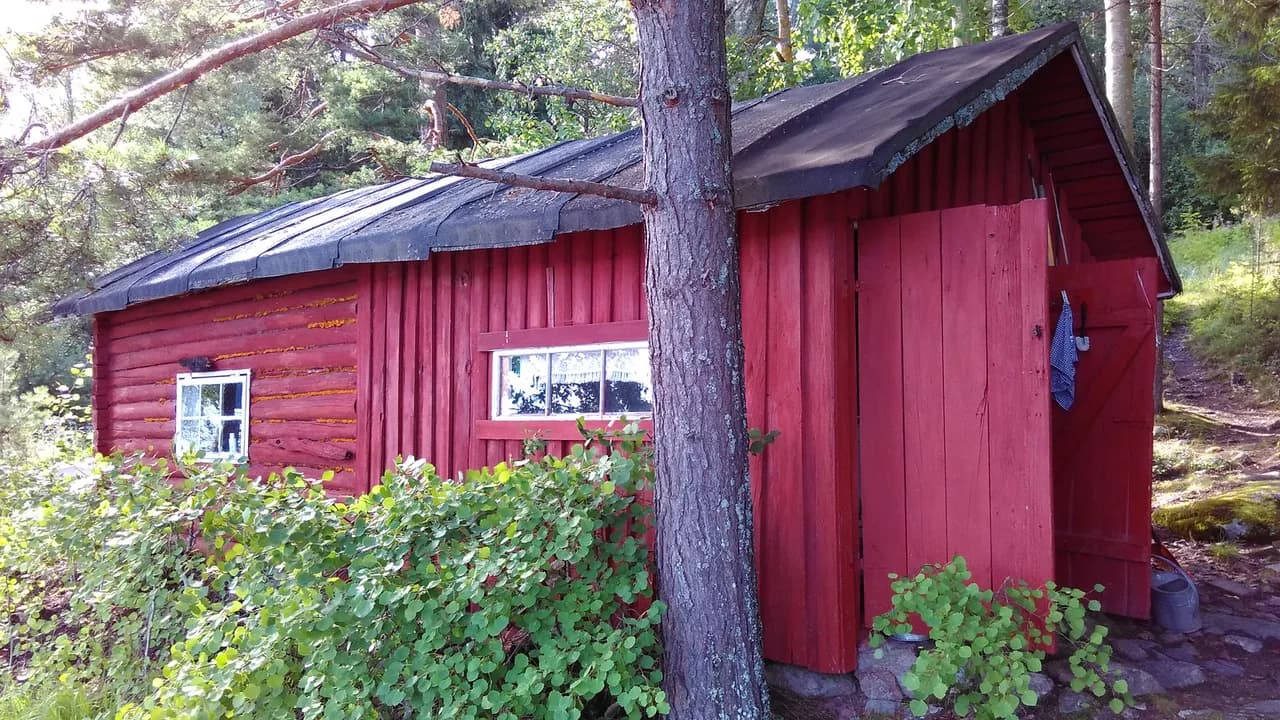
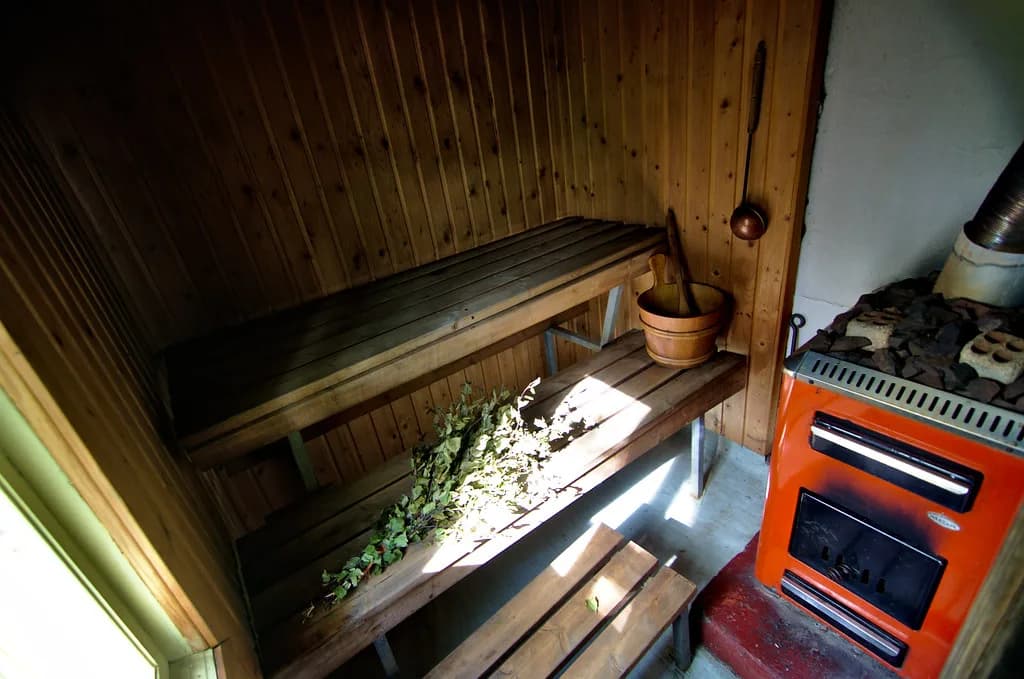
For the older form of the word, a savusauna is a smoke sauna: a wood-heated room with no chimney, where the smoke is let out before bathers enter and the smell stays in the walls. The experience is slower and darker than a modern electric hall, and the vocabulary that goes with it, including vihta and Löyly, feels more at home there than anywhere.
Further reading
Pronunciation is the easy part; the round itself has a rhythm that differs from most spa visits elsewhere in Europe. The temperature on the wall, the length of each stay and the order of cooling are all part of the same set of words, and a guide to Finnish sauna temperature explains why the numbers read higher than visitors expect.
For context on how ordinary the sauna is in Finland, the sheer count of them is the best answer: the country has more saunas than people. If you would rather know which halls to walk into first, start with the public saunas in Finland and work from there.
How the word sauna is pronounced in Australian English
Readers who have followed the British and American forms above sometimes ask where Australian English fits. Pronunciation resources treat Australian English as its own accent option alongside US, UK, Canadian, Irish, Scottish and New Zealand English, and the sauna entry there collects 11 pronunciations recorded by Australian speakers. That is a useful reminder that the word has more than the two main variants discussed so far, even though our focus here is Finland.
The transcription given for the word in that collection breaks it into two syllables, written as "SOW" plus "nuh", with the traditional IPA form ˈsaʊnə and a modern IPA form of sáwnə. If you are practising at home, the advice offered alongside it is to say the two sounds out loud, exaggerating at first, then record yourself and listen back for clarity, word stress and intonation.
For comparison, the British English transcription of the same word is /ˈsɔː.nə/, also two syllables, with the vowel represented as ɔː rather than the Australian aʊ. A Finnish speaker reading a sign or a booking page will still see one short word, but the vowel at its centre shifts from accent to accent.
A forum discussion of the same question frames the choice more bluntly, asking whether the first part of "sow-nah" should sound like "throw (the ball)" or like "mouse". That is exactly the distinction the transcriptions capture: the British form points one way and the Australian and American forms the other.
Say It, Then Step In
Pick the version that comes naturally, learn a handful of Finnish words, and you have everything you need to walk into a hall and follow what is happening. The word itself is forgiving; the round is what people remember.
Explore more Finland sauna guides
Frequently Asked Questions
How do Finns pronounce sauna?
Finns say SOW-nah, with two clean syllables: the first rhymes with how and the second is a plain open ah. The stress falls on the first syllable, as it does in most Finnish words, and neither syllable is drawn out.
Why do British people say SAW-nuh?
The British form uses the long back vowel of saw, which is how British English commonly handles the letters au. It is an accent difference rather than an error, and it sits further from the Finnish vowel than the American version does.
Is it SOW-na or SOW-nah?
Both end in a reduced syllable in English speech, but the Finnish form keeps a plain open ah at the end, closer to SOW-nah. English speakers often shorten that final vowel to nuh, which is why the two spellings appear.
Is sauna Finnish or Swedish?
The word and the bathing tradition are Finnish in origin, and sauna is Finland's best-known export word. Swedish and other languages have borrowed it, but the Finnish form sau-na with first-syllable stress is the reference point.
Sources
Sauna notes for your next trip
Optional updates to our sauna guides.
You might also like
Continue reading
More guides you'll find useful