Public Saunas in Finland: How They Work and Where to Go
Public saunas in Finland run on a simple loop: shower, sit hot, cool off in the sea, repeat. Here is how sessions work and which public saunas to pick.
On this page
A public sauna in Finland is a shared room, usually municipal or volunteer-run, where the ticket gets you a bench, a stove and a changing room rather than a spa menu. Some are free and rough-edged, others are booked in hourly slots with a towel and locker included. The ritual is the same in both: shower, sit, sweat, cool off, repeat.
If you only know saunas from hotel basements, the public version is the real thing. There are over 3.3 million saunas in a country of 5.5 million people, and UNESCO lists sauna culture in Finland as intangible cultural heritage, so the public room is a social ritual rather than a wellness add-on.
What a public sauna in Finland actually is
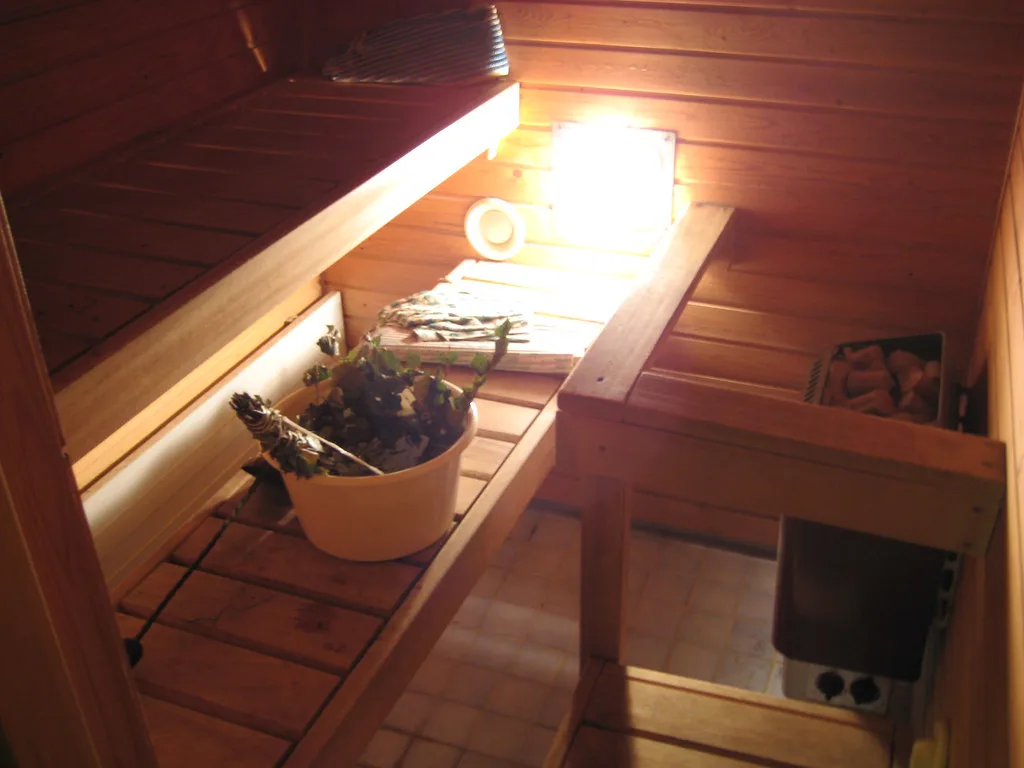
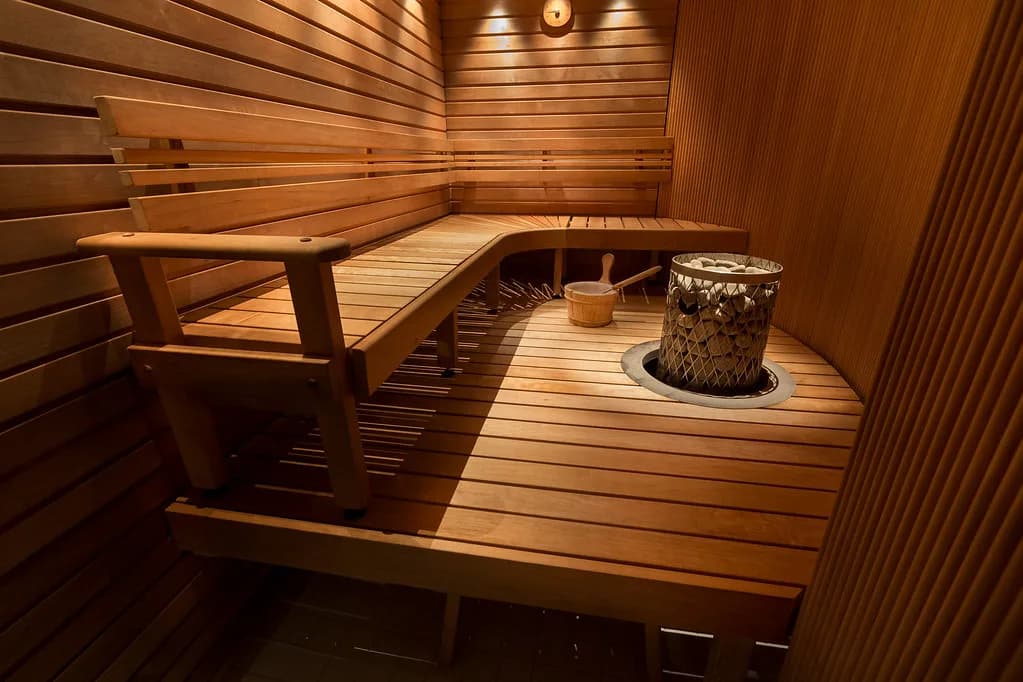
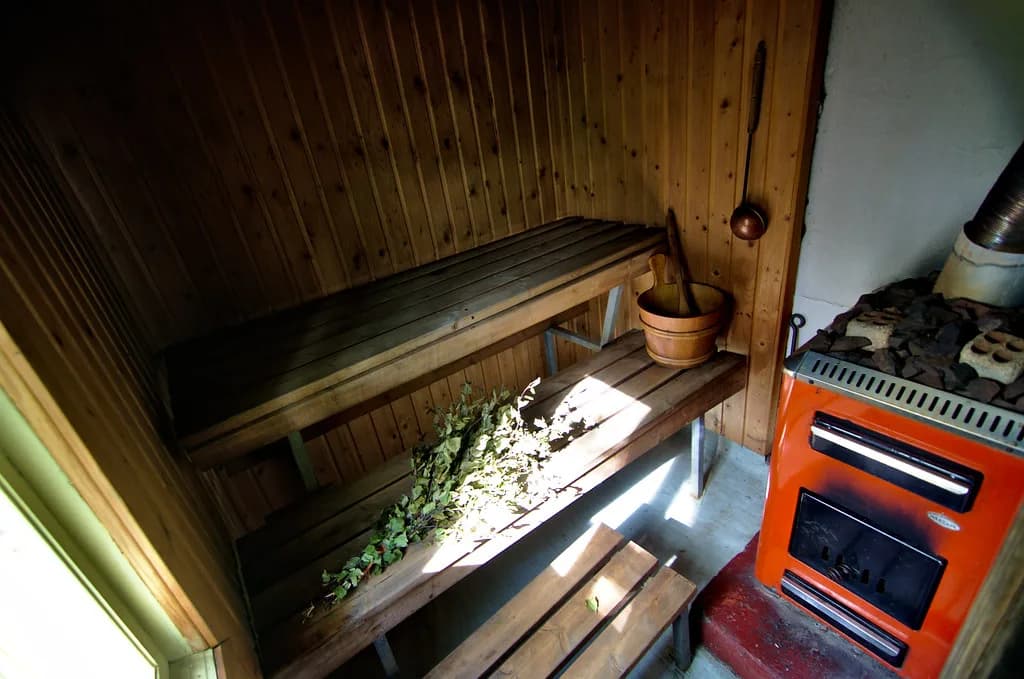
Think of it as a bathing house crossed with a living room: a heated timber room with tiered benches, a stove piled with stones, a bucket and ladle, and a cold-water option at the door. You get changed, you shower on site, and you take your towel or seat cover onto the bench. Nobody is selling you a treatment, and nobody is timing you with a clipboard.
Do you wear swimwear in a public sauna in Finland? In most Finnish public saunas the norm is nude, sitting on a towel, in a mixed room. Wrapping yourself in a towel is fine if you prefer.
How long should you stay in a Finnish sauna? Start with five to ten minutes for your first round and leave when you feel ready. A typical Finnish session is several rounds of roughly five to fifteen minutes, each followed by a cool-down in a shower, plunge pool, lake or sea.
Is there a free public sauna in Helsinki? Yes. Sompasauna is a free public sauna in Helsinki, open essentially around the clock and funded by donations, with no reception or towel service.
Finns tend to treat the session as a loop rather than a single sitting. A typical round runs five to fifteen minutes, then you step outside to cool down, and then you go back in for another round. Start with five to ten minutes and see how the room treats you.
Public saunas come in two practical flavours: the free or coin-in-the-box kind that a neighbourhood maintains itself, and the ticketed kind with online booking, staff and a capacity cap. The first asks for effort and tolerance; the second asks for a reservation. Deciding which suits you is the main planning decision.
How a standard session runs, step by step
Shower first, and shower properly, because the room is shared and the benches are hot. Then hang your towel or lay a small seat cover where you plan to sit. Choose a lower bench near the door if you want the gentlest heat, or a higher tier if you want the full furnace.
Ladle a little water onto the stones when you feel ready, not the moment you sit down. A small ladleful raises the humidity and the perceived heat sharply, and people around you will feel it too, so a quick glance at your neighbours before you pour is good manners.
Stay as long as feels comfortable, then leave. Cool off under a shower, in a plunge pool, or in the sea or lake if the sauna sits on the water. Dry off, drink water, sit quietly for a few minutes, and go back in when you want another round. Two or three rounds is a normal evening.
The one safety line worth repeating: drink water, skip alcohol before bathing, leave the room if you feel unwell, and talk to a doctor first if you have a heart condition or are pregnant.
Wood, smoke and electric stoves: what each one feels like
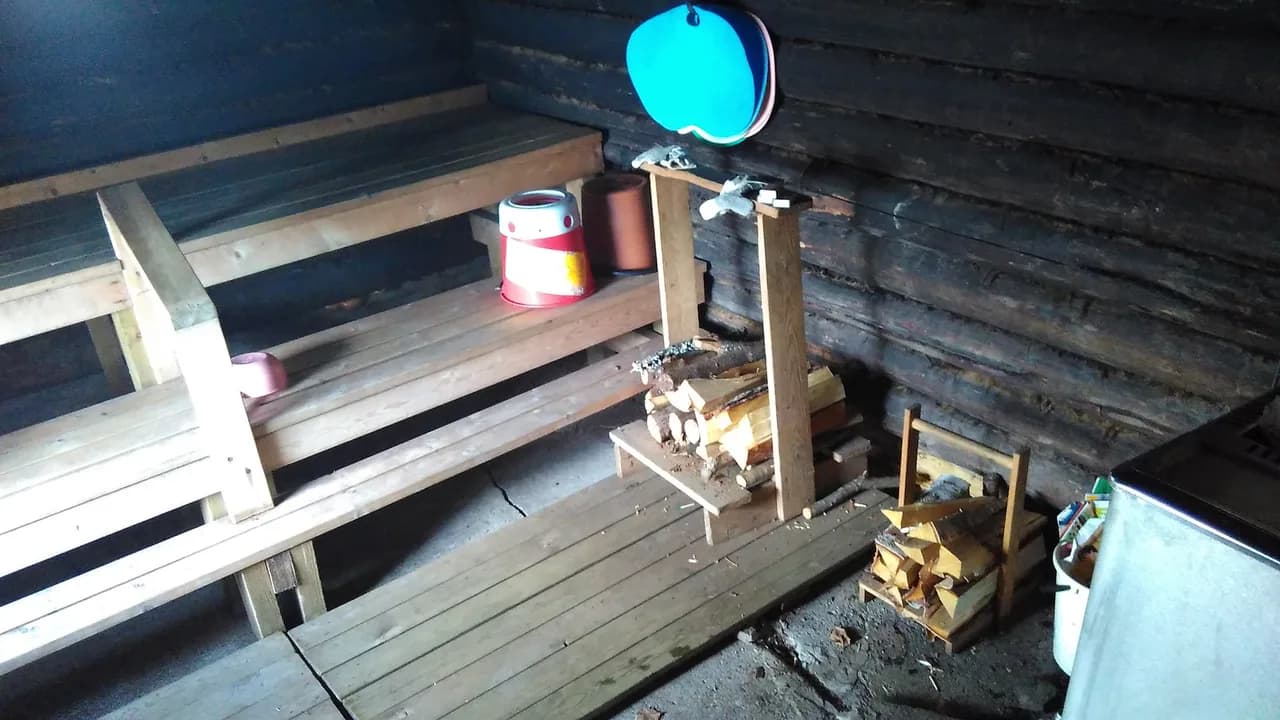
The Finnish Sauna Society recognises three heat sources: wood, smoke and electric. Wood and smoke stoves are usually judged the more authentic experience, while electric stoves dominate in towns because they are simpler to run, which is why a city-centre sauna is so often electric.
A wood-fired room is typically heated to around 80–110°C, a range that sounds alarming until you learn that bench height decides what you actually feel. Climbing one tier up changes the experience more than any dial does, so pick your seat deliberately.
A smoke sauna, or savusauna, is the oldest and rarest type, and it behaves differently: it may only reach around 60°C but carries far more humidity, so it feels hotter than the thermometer suggests. Lighting it and airing the room takes roughly two hours, and a savusauna should only be prepared by someone who knows how to heat and clear it safely.
Do not expect a smoke sauna to be available on a whim at a public hall; it is usually a booked or scheduled event because of the heating time. If you want one, treat it as the centrepiece of a day rather than an hour. The numbers behind the country's sauna density are worth a look if you are curious how ordinary these rooms are.
Nude or swimwear, mixed or single-sex
In Finland the usual answer is nude, in a mixed room, with a towel to sit on. That is the norm rather than a rule enforced by staff, and wrapping yourself in a towel is entirely acceptable if you are shy. Follow the room: if everyone is nude and calm, do the same; if it is a swimsuit crowd, keep yours on.
Public swimming halls often split men and women by session or by changing room, while saunas attached to a swimming pool or a raft are usually mixed and swimwear-friendly. Check which kind you have booked before you undress, because the two setups are not interchangeable.
A towel is your seat cover in most public rooms, and some venues sell or lend a small cloth for the bench. Bring a large towel of your own, a second one if you plan to swim, and a water bottle. Flip-flops help on shared floors, and a hat is a real comfort in a hot room.
The cold-water half of the ritual
For many Finns the cooling-off is the point, not an afterthought. In summer that means a lake, the sea or a river; in winter it can mean rolling in snow or stepping through a hole cut in the ice. Public saunas near water are prized for exactly this reason.
If you visit between roughly November and April, the walk from the hot room to the water is short but brutal, so bring something to stand on and a towel you can wrap around yourself immediately. The full routine of a winter dip, from the changing room to the hole in the ice, is worth reading before you try it.
The birch whisk, called vasta or vihta, is part of the same ritual: bathers tap themselves gently with leafy bundles in the hot room. It is a custom, not a requirement, and public saunas often sell or lend one.
Helsinki's public saunas: Sompasauna and the free benchmark
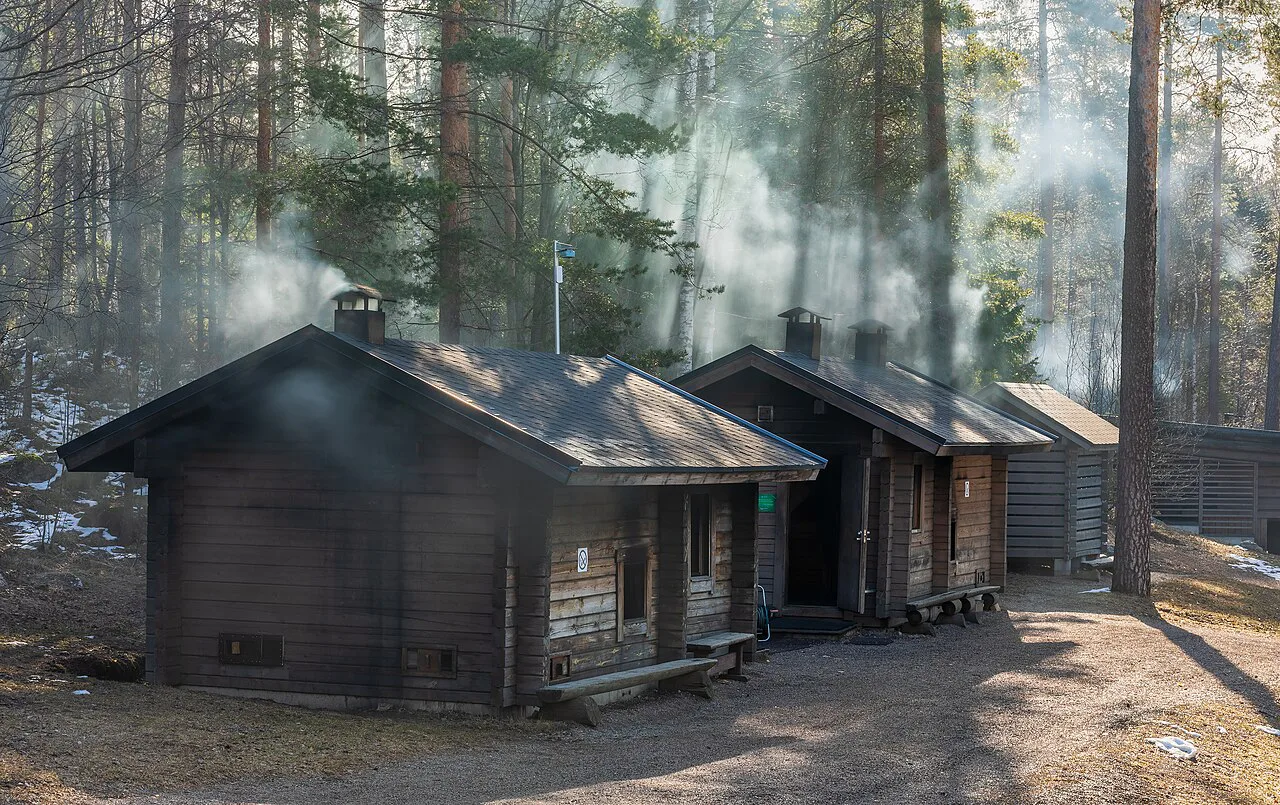
Sompasauna is the reference point for the no-frills end of the spectrum: a free public sauna in Helsinki, open essentially around the clock, funded by donations and kept going by the people who use it. There is no reception, no towel service and no queue system beyond what the crowd invents.
What you pay there is effort: bringing your own towel and water, waiting your turn, and tolerating a changeable, volunteer-maintained building. In return you get the most honest version of the Finnish public sauna, and a crowd that ranges from locals on a weeknight to travellers who heard about it.
Helsinki's built-up public saunas sit at the other end: designed waterfront rooms with cafés and sea access, where you book or pay at the door. Kotiharjun sauna, a traditional wood-heated neighbourhood sauna, is the classic counterpoint to the harbour-front venues, while Allas Sea Pool combines a central location with outdoor pools and sauna. For the full spread of harbour-front and neighbourhood rooms, our Helsinki sauna guide compares them side by side.
Booking, session length and capacity: the floating raft example
Ticketed public saunas in Finland increasingly run on fixed slots to keep the room from crowding. Lainesauna, the public sauna raft in Oulu, releases sessions every hour for up to 25 people, with staggered starts so groups do not collide in the changing area.
A reserved slot lasts one hour, and you can extend it if the next session is not full, but staff must agree before your time runs out. Arrive changed into swimwear if you can, because the changing rooms are the bottleneck on a busy raft.
That pattern holds across booked saunas: the hour is the unit, capacity is capped, and turning up without a reservation on a summer evening is a gamble. Book the slot that matches your day and treat the sauna as an appointment rather than a stop you squeeze in between two museums.
Prices: what a public sauna ticket costs
Lainesauna charges from €17 for a session, with hot tub access at €3 per person paid on site at the raft, or a combined sauna and hot tub ticket bought online for €20. Those are the venue's own published rates, quoted in euros.
Elsewhere the price level splits along the free-versus-ticketed line: volunteer-run rooms like Sompasauna ask for a donation rather than an entry fee, while designed waterfront saunas and swimming halls charge a modest ticket, often with a separate fee for a towel, a locker or a hot tub.
Budget for the extras rather than the entry alone: a towel rental, a hot tub, a drink afterwards and a locker can add up to as much as the sauna itself. Bring your own towel and bottle and the bill stays close to the ticket price.
Etiquette worth knowing before you sit down
Public saunas are quiet places. Conversation happens, but at low volume, and the hot room is not the spot for a phone call or a video. Leave the phone in the locker; steam and screens do not mix.
Ladle for the room, not just yourself: one or two scoops, then pause and let people settle. Keep the door shut when you come and go, because a propped door dumps the heat and everyone notices. And give people space on the bench rather than squeezing in beside a stranger.
If you want to understand why these small rules carry weight, the vocabulary helps. Knowing what a vasta is, or how to say the word sauna properly, turns a confusing room into a familiar one.
The sauna itself is an old room, and the customs around it go back further than any of the current venues. A short look at the history of the sauna makes the public rooms read as a continuation rather than a trend.
What to bring and what to leave behind
Bring a large towel, a water bottle, flip-flops and a change of clothes, plus a small cloth or your towel to sit on. A hat is optional but popular in hot rooms, and a plastic bag for wet kit saves the rest of your luggage.
Leave behind jewellery that heats up, your phone, and anything you would not want steamed. Bring cash or a card depending on the venue: the smallest volunteer-run places may run on donations, while booked saunas take payment online in advance.
Swimwear depends on the room, so pack it even if you plan to go nude; a spare pair of shorts takes no space and covers the mixed, swimwear-only sessions at swimming halls and rafts.
Getting there and what winter changes
Most public saunas in Helsinki and other Finnish cities sit on a tram, metro or bus line, and the city transport operators publish routes and stop names that put you within a short walk of the door. Waterfront saunas are usually a ten- to fifteen-minute walk from the nearest stop, so allow for the last stretch in the cold.
Winter changes the logistics more than the sauna: you queue outside in the cold, you walk to the water in the dark, and you need shoes you can slip on and off. Summer brings the opposite problem, with locals filling the free and popular rooms on warm evenings.
A few dates carry their own customs. The Christmas sauna is a long-standing Finnish tradition, and it fills the days around the holiday in a way that changes opening patterns at public venues.
The Finnish sauna in context
The public room carries the same tradition as the cottage sauna by the lake: the same stove, the same bucket, the same loop between heat and cold. It is not a watered-down version for tourists, which is why the rules about nudity, quiet and ladling hold there too.
If you want the full picture of how the tradition fits together, from the cottage to the harbour, start with our guide to the Finnish sauna. It explains the vocabulary and the routines that make an unfamiliar room feel ordinary within one session, and the etiquette piece goes deeper on bench manners.
For a sense of how seriously the country takes the numbers, remember that sauna culture in Finland is on UNESCO's Intangible Cultural Heritage list. That is the context in which a free volunteer-run room and a ticketed floating raft count as the same institution.
Plan Your Sauna Visit
Pick one free or volunteer-run sauna and one ticketed, booked session, and you will understand the whole spectrum in a single trip. Sompasauna gives you the rough-edged Helsinki version; a raft or waterfront sauna gives you the polished one.
Book the ticketed slot in advance, arrive changed if the venue advises it, and carry your own towel and water. Then follow the loop: shower, five to ten minutes, cool off, repeat, with a proper pause between rounds.
The rest is manners: keep the door shut, ladle for the room, stay quiet, and sit where the heat suits you. Do that and the public sauna stops being an unfamiliar ritual and becomes the best hour of your day.
Explore more Finland sauna guides
Frequently Asked Questions
Do you wear swimwear in a public sauna in Finland?
In most Finnish public saunas the norm is nude, sitting on a towel, in a mixed room. Wrapping yourself in a towel is fine if you prefer. Swimming halls often run single-sex sessions, and saunas attached to pools or rafts are usually mixed and swimwear-friendly, so check which type you have booked before you undress.
How long should you stay in a Finnish sauna?
Start with five to ten minutes for your first round and leave when you feel ready. A typical Finnish session is several rounds of roughly five to fifteen minutes, each followed by a cool-down in a shower, plunge pool, lake or sea. Two or three rounds makes a normal evening.
Is there a free public sauna in Helsinki?
Yes. Sompasauna is a free public sauna in Helsinki, open essentially around the clock and funded by donations, with no reception or towel service. You bring your own towel and water, wait your turn, and accept that the building is volunteer-maintained.
How much does a public sauna cost in Finland?
It ranges from free, donation-funded rooms to ticketed saunas with online booking. Lainesauna in Oulu publishes its session, hot tub and combined ticket rates in euros on its own booking pages, which is where the current figures sit.
Can you book a public sauna session in advance?
Many ticketed public saunas release fixed hourly slots online, and Lainesauna in Oulu caps each session at 25 people with staggered starts. A reserved slot lasts one hour and can be extended if the next session is not full, with staff agreement. Free volunteer-run saunas work on a turn-up-and-wait basis.
What should you bring to a public sauna in Finland?
Bring a large towel to sit on and dry with, a water bottle, flip-flops and a change of clothes. A hat is optional but popular in hot rooms, and a plastic bag for wet kit helps. Pack swimwear even if you plan to go nude, since some sessions are swimwear-only.
What is a savusauna and why does it feel hotter?
A savusauna is a smoke sauna, the oldest and rarest Finnish type. It may only reach around 60°C, but its higher humidity makes it feel hotter than the thermometer suggests. Heating it and airing the smoke takes roughly two hours, so it is usually a scheduled event rather than a walk-in.
Is there a safety rule for first-time sauna users?
Drink water, skip alcohol before bathing, and leave the room if you feel unwell. If you have a heart condition or are pregnant, talk to a doctor before your first session.
Sources
Sauna notes for your next trip
Optional updates to our sauna guides.
You might also like
Continue reading
More guides you'll find useful