The Kiuas: What a Finnish Sauna Stove Is and How It Works
A kiuas is the Finnish sauna stove, built to heat rocks rather than a room. Here is how wood-burning and electric kiuas work, and why they shape Löyly.
On this page
A kiuas is the heater at the heart of a Finnish sauna, and its job is narrower than most visitors expect: it heats rocks, and the rocks heat the room. That is why a kiuas is fired differently from a household woodstove and why the stones, not the flames, are what you feel on the upper bench. The distinction runs through everything from the smell of a wood-fired room to the way a public sauna in Helsinki is run, and it is the first thing worth understanding about the Finnish sauna.
What a kiuas is
The word covers both a wood-burning stove and an electric heater, because the function is the same in each case: a mass of stones is brought up to temperature and water is thrown on them to produce Löyly. A sauna builder writing about the distinction puts it bluntly, describing the kiuas as the heart of the sauna and something quite separate from a woodstove. In a public hall or a lakeside cabin alike, the kiuas is the piece of equipment that decides how the room behaves.
What is a kiuas in a Finnish sauna? A kiuas is the heater, whether it burns wood or runs on electricity. Its purpose is to bring a mass of stones up to temperature; the stones then heat the room and produce Löyly when water is thrown on them.
Is a sauna stove just a woodstove? No. A household woodstove is built to heat a house slowly and hold a fire overnight, while a kiuas is built to heat rocks quickly and withstand water thrown onto a red-hot surface.
How long does a wood-burning kiuas take to heat the stones? IKI-Kiuas states that its stoves bring their stone mass fully hot within about an hour, helped by airflow through the open frame and a large contact area between stones and furnace. Light the fire well before you plan to bathe and let the stones carry the session rather than the flames.
The design logic is visible in the hardware. IKI-Kiuas, a Finnish maker based in Pieksämäki, builds wood-burning stoves around a stainless steel mesh frame and a large stone capacity, so the stones themselves become the heated mass. That open structure is the point: heat stored in stone is released steadily, while a bare metal box cools the moment the fire dies.
How a wood-burning kiuas heats the stones
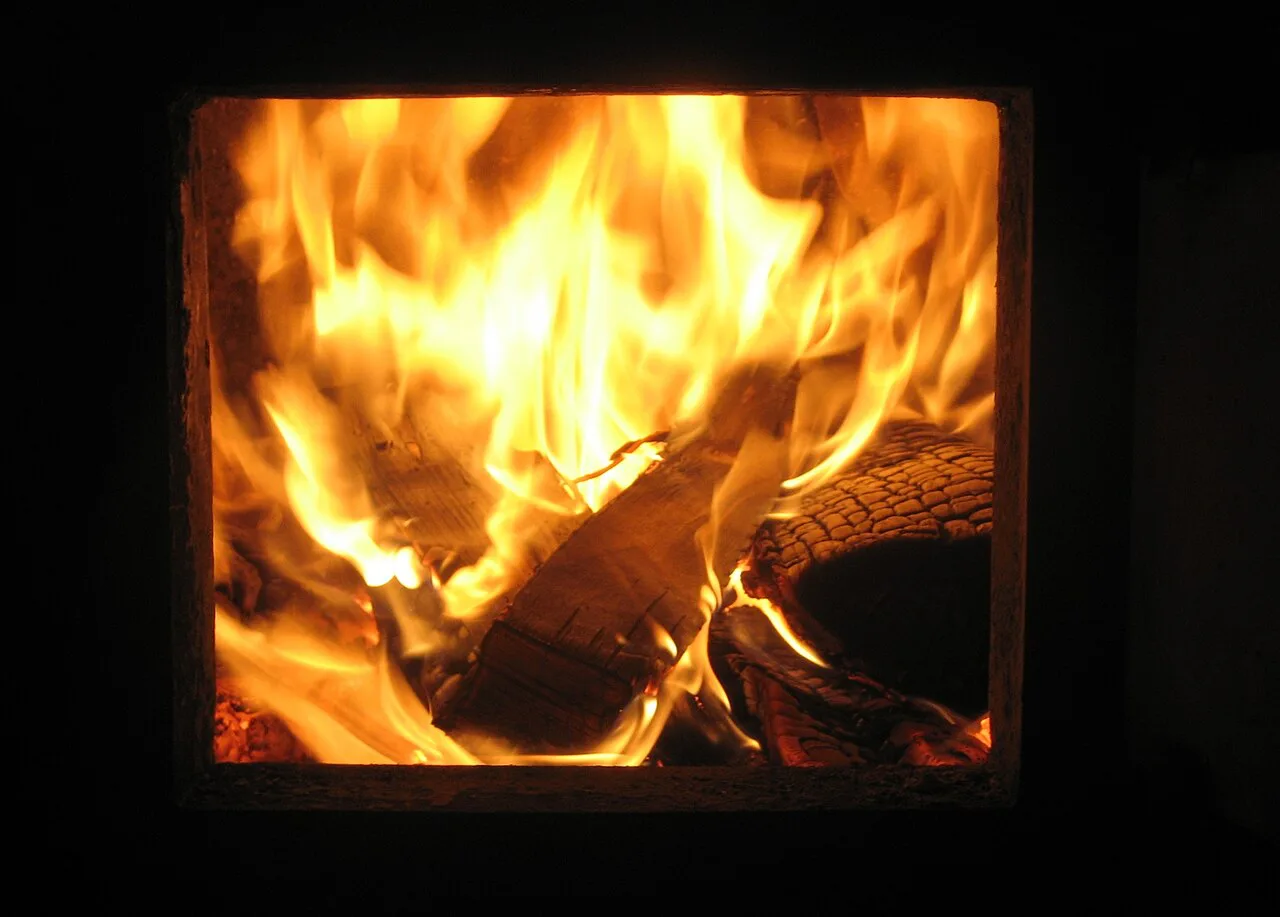
A wood-fired kiuas is run hot and fast. The maker states that efficient airflow and a large contact area between stones, furnace and fire pipe bring the mass of stones fully hot within about an hour, and that the furnace is ventilated well enough that only a small amount of wood is needed. The fire is fed with sticks and dry kindling rather than big logs, and the aim is a clean, hot burn rather than a long smoulder. In practice you light it well before you plan to bathe, then let the stone mass carry the session.
IKI describes its stoves as among the cleanest-combusting sauna stoves on the market, and Finnmark Sauna, the UK retailer that stocks the range, quotes emissions as low as 0.10 percent against the Finnish limit of 1 percent for sauna stoves. Read those as manufacturer and retailer figures rather than independent test results, but the direction fits how these stoves are fired: a hot, short burn leaves little smoke. A visitor to a wood-fired sauna notices this as an absence — no smouldering smell, just heat and the occasional creak of expanding steel.
Why stones and open frames matter
Löyly is the burst of steam you get when water hits hot stone, and its quality depends on how much stone is hot and how freely air moves around it. Finnmark describes IKI heaters as holding large stone capacities in a mesh frame that lets air circulate, producing what the retailer calls humid, soft steam; the stones then stay hot for a long time. Because heat transfer from stone is slow, a room can hold its temperature for a stretch even with the heater switched off, which is why commercial saunas can cycle the power between sessions.
This is the practical reason regulars judge a sauna by its stones rather than its thermometer. A room with a thin layer of cool stones on a small electric element gives a sharp, thin steam that disappears quickly. A deep stone mass gives a rounder, longer wave, and you feel the difference in how long you can sit before you want the door.
Electric kiuas: the same idea with a mesh basket
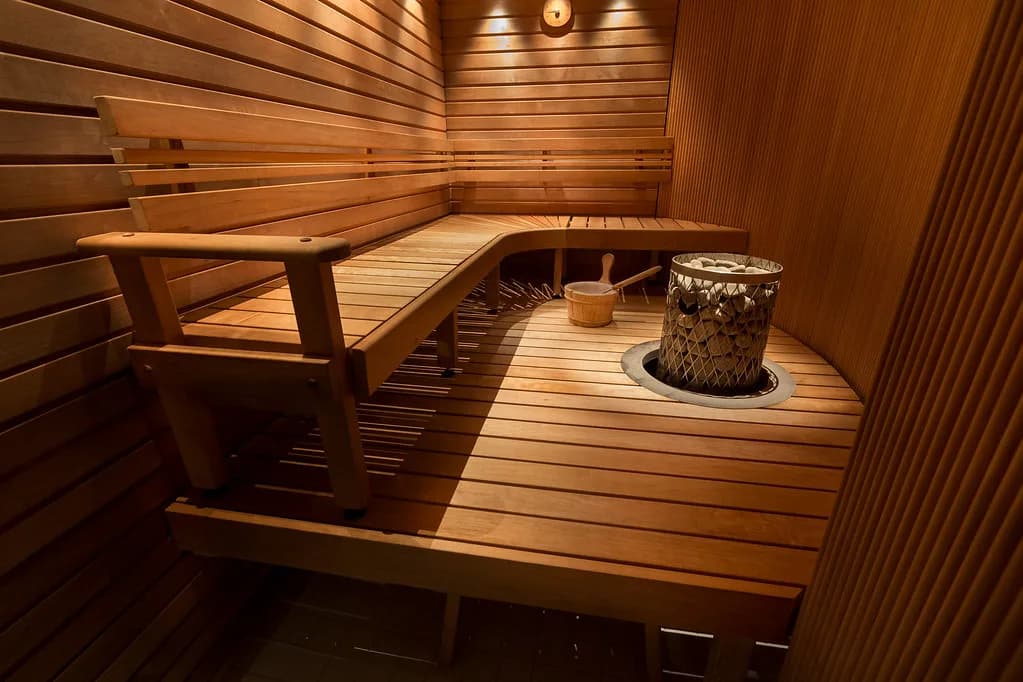
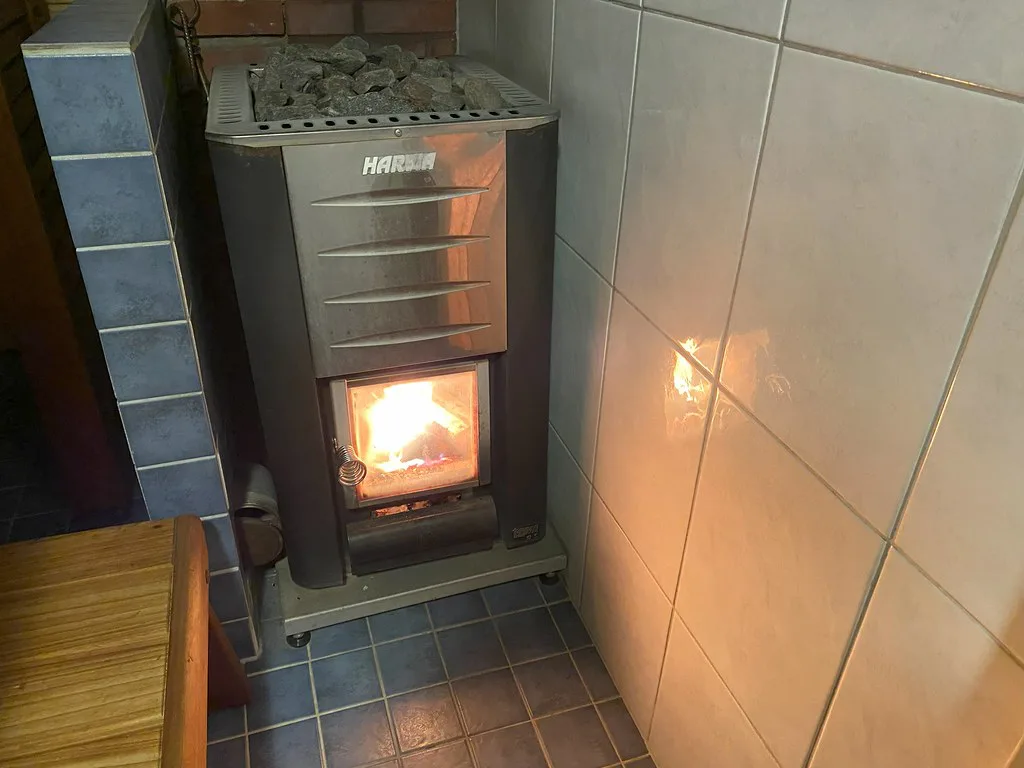
Most public saunas in Finland run on electric kiuas, and the better ones copy the wood-burning logic: a tall mesh basket packed with stones around a powerful element. Finnmark's range illustrates how far this goes, with wall, pillar, corner and freestanding models rated in kilowatts and sized for domestic or commercial rooms. The bather's experience is cleaner and more predictable than wood — no smoke, no stoking, no wait for a fire to catch — but the Löyly is generally less aromatic and, in a poorly loaded heater, thinner.
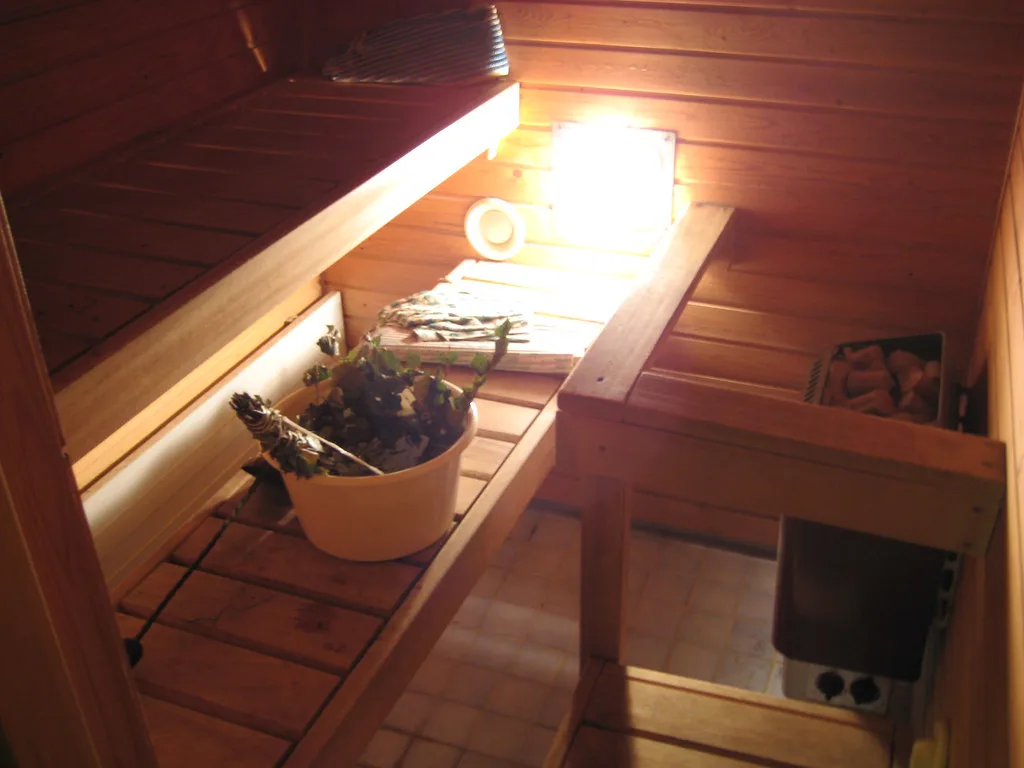
When you walk into a public sauna in Helsinki or Tampere, look at the heater before you sit down. A big open basket of dark, damp-looking stones suggests a well-run room; a small closed box with a few pale stones suggests the opposite. Neither tells you whether you will enjoy the session, but it tells you what kind of Löyly to expect. For the venues themselves, our Tampere sauna guide picks out the best public rooms to test this on.
The vocabulary: kiuas, Löyly, kivet
Three words carry most of a Finnish sauna conversation. Kiuas is the heater; kivet are the stones; Löyly is the steam and, by extension, the whole experience of the room — Finns will ask whether the Löyly was good rather than whether the sauna was hot. Knowing the terms makes it easier to follow what a sauna master or a fellow bather is telling you.
Bathing customs around the heater are simple and consistent: sit on a towel or seat cover, keep the door shut, and pour water sparingly until you learn the room. A whisk, the vihta or vasta, is used to beat the skin lightly and is a separate pleasure from the Löyly itself. If you are new to this, the Finnish sauna etiquette is worth reading before you go rather than guessing in a silent room.
Savusauna and the smoke sauna: the kiuas at its oldest
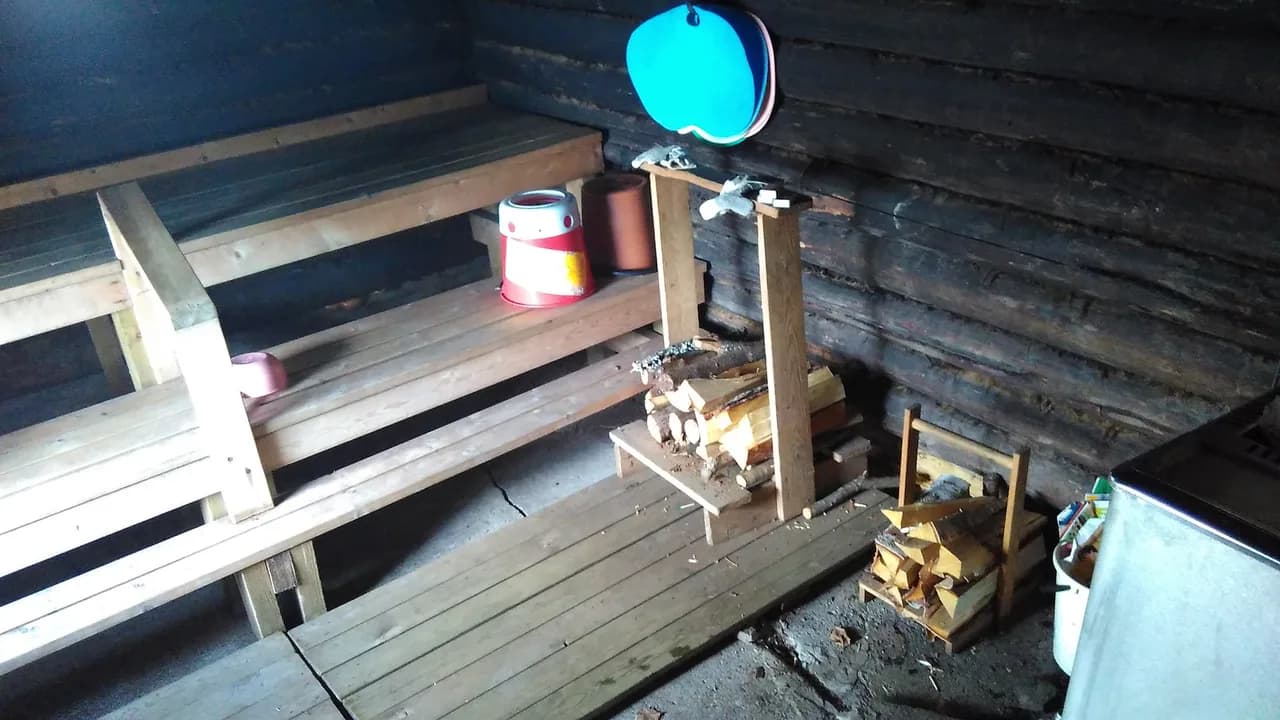
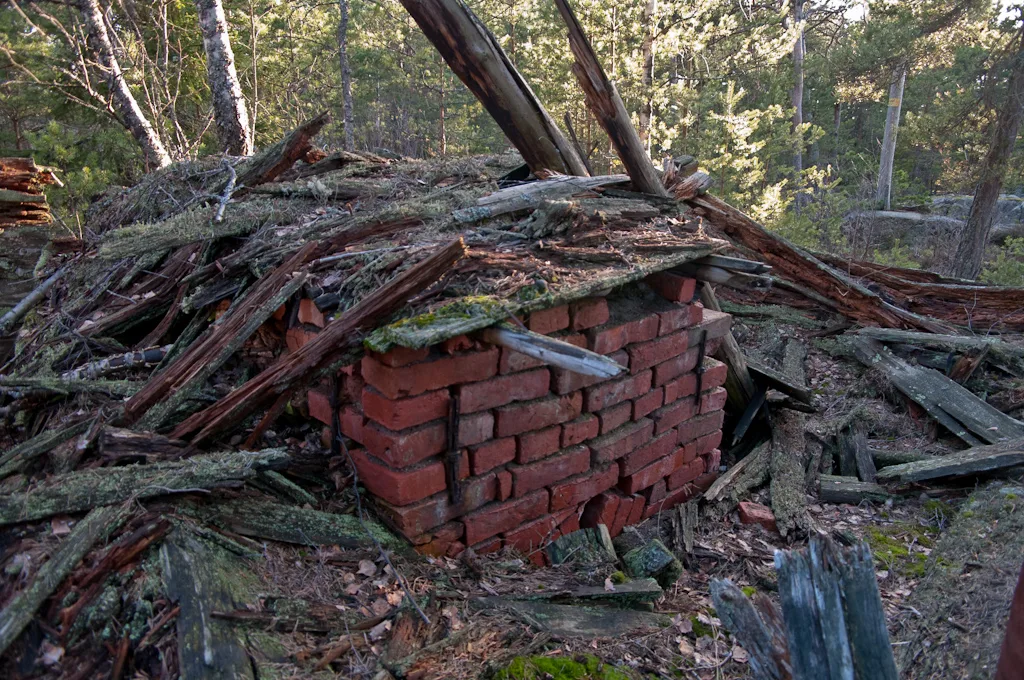
The savusauna is the kiuas before metal: a pile of stones heated by a fire in a room without a chimney, with the smoke cleared through vents before bathers enter. The kiuas in its oldest form was exactly this — stones heated directly by fire, with no stove body at all — and the smoke-scented room that results is still the benchmark for many Finns. It is a slower, dirtier, more involving way to bathe, and it is why smoke saunas are usually booked as an evening rather than slotted in for twenty minutes.
If you want to understand what the kiuas is for, a smoke sauna is the clearest demonstration: the room itself is the heater, and the stones hold the heat long after the fire is out. For how these sessions are run and where in Finland to find one, the history of the sauna is the right place to start.
How a wood-fired room feels different from an electric one
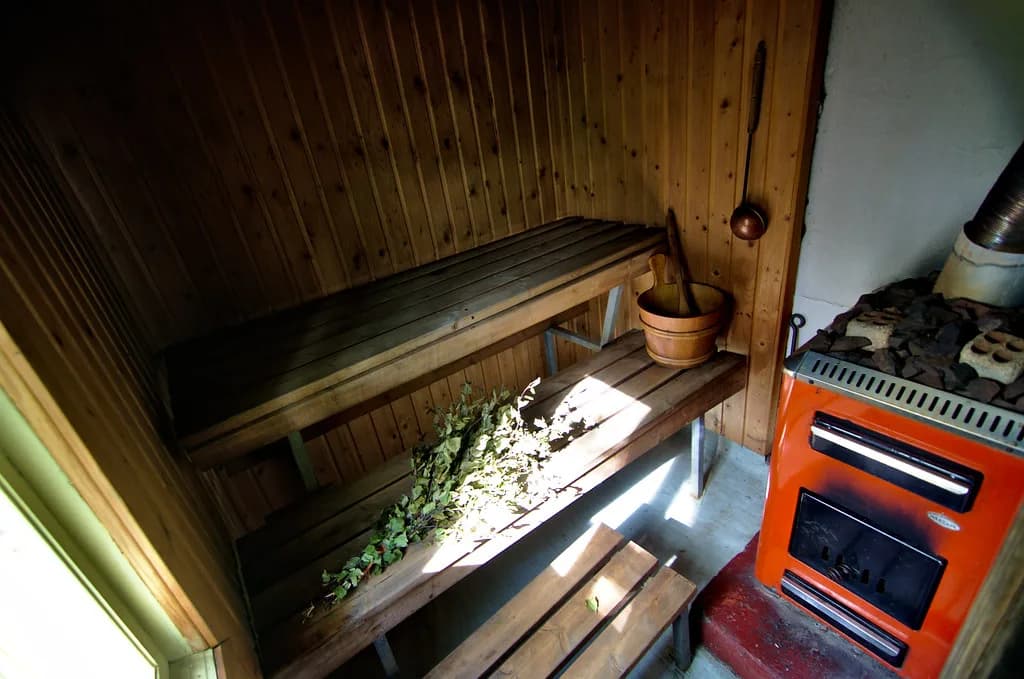
A wood-fired sauna usually has a lower, softer heat and a faint resin smell; an electric sauna is drier, more even and quicker to reach temperature. The difference is not moral — plenty of excellent public saunas are electric — but it changes the rhythm of a session. In a wood-fired room you tend to sit longer and throw less water; in a hot electric room the rounds are shorter and the cold plunge matters more.
Wood also brings constraints. Someone has to light the fire an hour ahead, the room has to be watched, and the stove takes space and clearances that an electric basket does not. That is why wood-fired public saunas are often smaller, booked in slots, and more expensive to run than their electric equivalents.
Buying or building one: the trade-offs
For anyone fitting out a sauna, the first decision is wood or electric, and the second is size. IKI publishes sauna-volume ranges for each model: Mini-IKI for rooms of roughly 5 to 12 cubic metres, Löyly-IKI jr. for 8 to 14, the Original IKI for 14 to 30, Löyly-IKI for 20 to 40, and the KIVI-IKI range for 10 to 30 depending on the variant. Sizing by cubic metres rather than by guesswork is the single most useful thing a buyer can do.
Wood-burning kiuas are welded steel, not cast iron, because cast iron cracks under water thrown on a hot surface. The same builder notes a further practical point: fire the kiuas from outside the room where possible, since the stove draws combustion air from the space you and your friends are sitting in. Clearances and heat shields around the stove are not negotiable.
Expect wood-fired equipment to cost more than a basic electric heater and to need proper installation, chimney parts and a safe floor. Finnmark's collection gives a sense of the spread — its IKI electric heaters start at £923.99 for the Corner model and the wood-burning models run from £1,755.99 for the Mini-IKI up to £3,431.50 for the KIVI-IKI, the most expensive model in the wood-burning range.
The mistake people make: treating a kiuas like a home woodstove
The common error is to buy a used household woodstove and build a sauna around it. A home stove is designed to heat a house slowly and hold a fire overnight; a kiuas is designed to heat rocks fast and take water at red heat. The two look similar in a photograph and behave nothing alike, and the mismatch shows up as a room that never gives decent Löyly and a stove that corrodes.
There is a regulatory side too. A wood-burning kiuas installed in or attached to a house may need inspection and clearances that a builder or insurer will ask about, and standards differ between Europe, Canada and the United States. Sort that out before the stove is delivered, not after the chimney is up.
Practical notes for bathers in Finland
You do not need to know how a kiuas works to enjoy a sauna, but a few details help. Bring a towel large enough to sit on, since seat covers and towels are the norm; take a shower before you go in; and expect single-sex and mixed sessions depending on the venue and the day. Public saunas range from grand harbour-side complexes to neighbourhood halls with a single wood-fired room, and the atmosphere differs accordingly.
In winter, the cold option is often snow, a hole cut in the ice, or a plunge pool, and the walk between the sauna and the water can be the most memorable part of the evening. A hat, sandals and a towel you do not mind getting wet make the routine easier. For the wider picture — how many saunas there are, why they matter, and how a Finnish evening is put together — the Finnish sauna hat is a small but genuinely useful piece of kit.
A Stone Heater, Not a Room Heater
The kiuas is the clearest single idea in Finnish sauna culture: you heat rocks, and the rocks do the rest. Once you have that in your head, the model names, the stone baskets, the smoke saunas and the hour-long pre-heat all make sense.
Bathe sensibly. Drink water, skip alcohol before a session, leave the room if you feel unwell, and take a doctor's advice if you have a heart condition or are pregnant. Otherwise, find a sauna, sit down, and wait for the stones to do their work.
Explore more Finland sauna guides
Frequently Asked Questions
What is a kiuas in a Finnish sauna?
A kiuas is the heater, whether it burns wood or runs on electricity. Its purpose is to bring a mass of stones up to temperature; the stones then heat the room and produce Löyly when water is thrown on them. Finns judge a sauna by the quality of that steam more than by the number on the thermometer.
Is a sauna stove just a woodstove?
No. A household woodstove is built to heat a house slowly and hold a fire overnight, while a kiuas is built to heat rocks quickly and withstand water thrown onto a red-hot surface. Kiuas bodies are welded steel rather than cast iron for that reason, and a used house stove makes a poor sauna heater.
How long does a wood-burning kiuas take to heat the stones?
IKI-Kiuas states that its stoves bring their stone mass fully hot within about an hour, helped by airflow through the open frame and a large contact area between stones and furnace. Light the fire well before you plan to bathe and let the stones carry the session rather than the flames.
What is the difference between a wood-burning and an electric kiuas?
A wood-burning kiuas gives a softer, faintly resinous heat but needs lighting in advance, stoking and clearances around the stove. An electric kiuas with a mesh basket of stones reaches temperature quickly and predictably with no smoke, which is why most Finnish public saunas use one.
What is Löyly?
Löyly is the wave of steam released when water is poured onto hot sauna stones, and by extension the whole experience of the room. Its character depends on how much stone is hot and how freely air circulates around it, so a deep, open stone mass gives a rounder steam than a thin layer on a small element.
Sources
Sauna notes for your next trip
Optional updates to our sauna guides.
You might also like


Continue reading
More guides you'll find useful