Finnish Sauna: How It Works, Etiquette and Where to Try It
What makes a sauna Finnish, how Löyly works, what to expect in a public sauna, and the Helsinki and Tampere venues worth planning a trip around.
On this page
A Finnish sauna is a hot room built around a stove of stones, and the point of it is Löyly — the steam that rises when you throw water onto those stones. That single act separates a Finnish sauna from a dry hot room, and it is what Finns mean when they say the heat is good. Everything else, from the birch whisk to the roll in the snow, hangs off that.
It is also a national institution rather than a leisure trend. Sauna culture in Finland was inscribed on UNESCO's Representative List of the Intangible Cultural Heritage of Humanity in 2020, and UNESCO counts 3.3 million saunas in a country of 5.5 million inhabitants. For a traveller, that density means public saunas are ordinary infrastructure, not attractions — which is exactly why they are worth planning a day around.
What makes a sauna Finnish: a hot room, a stove of stones, and Löyly
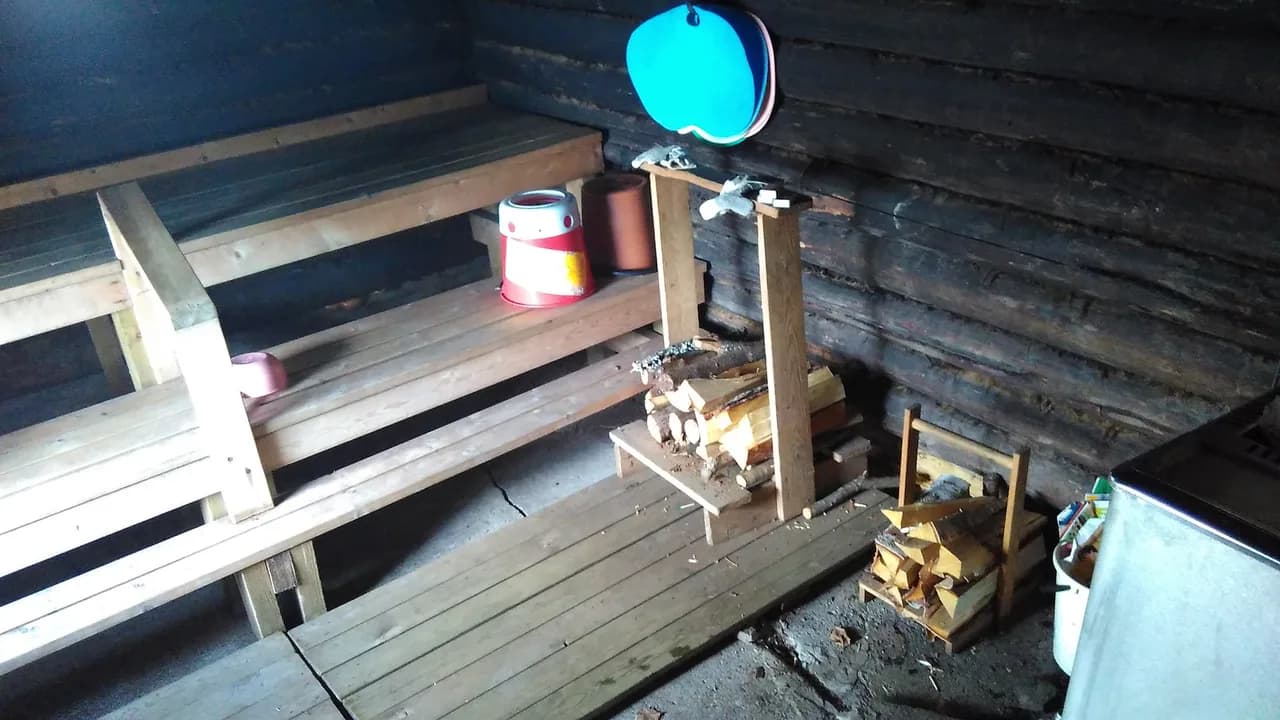
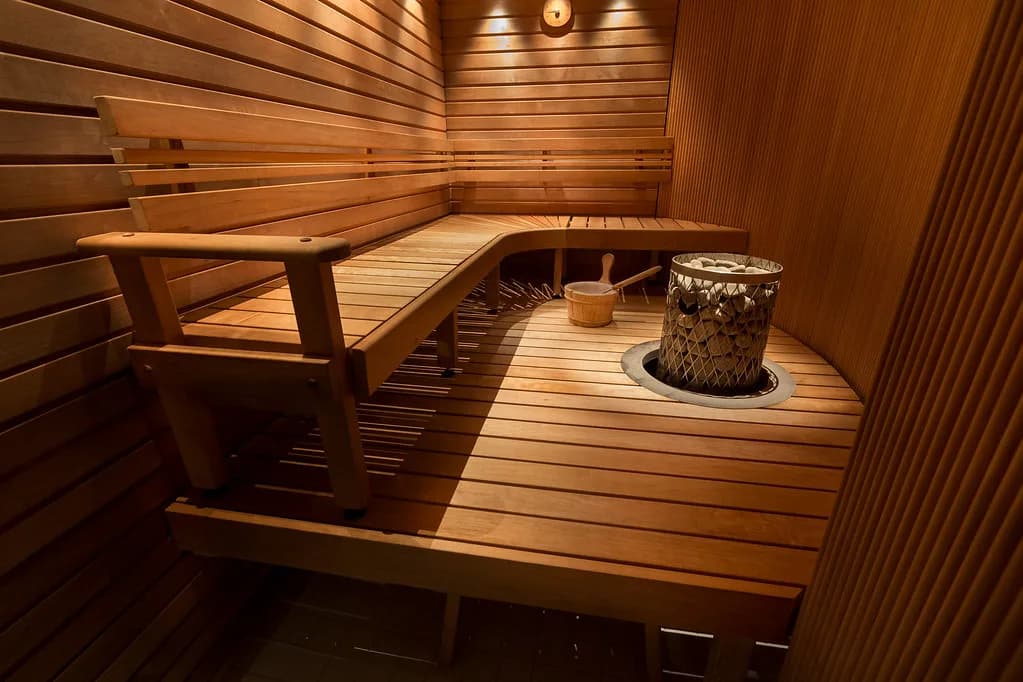
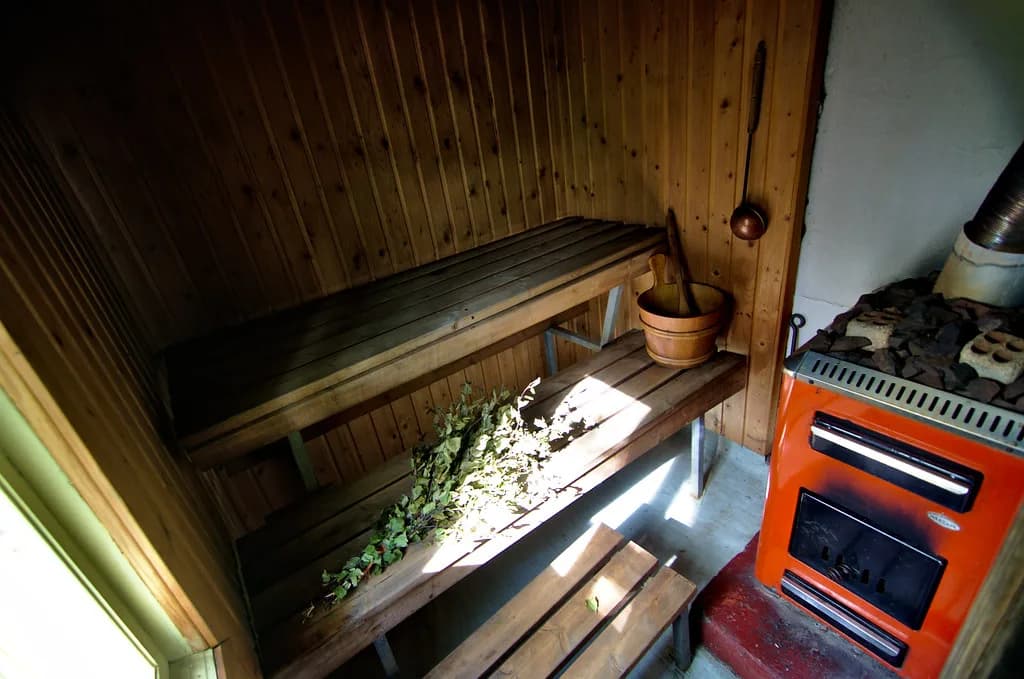
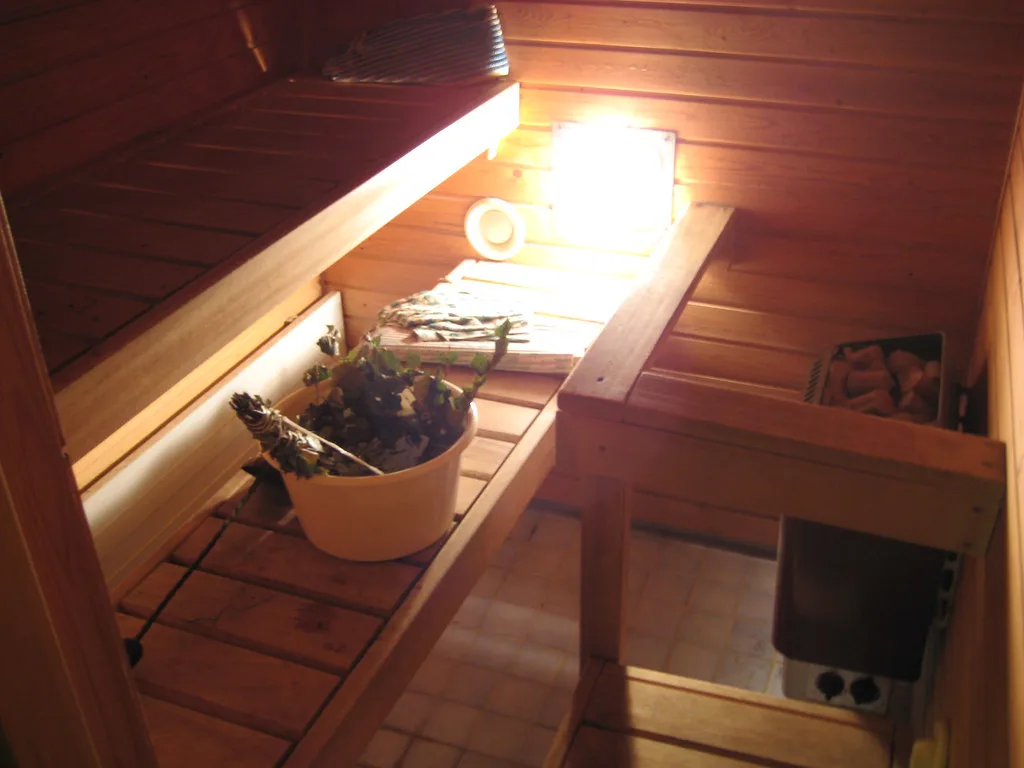
The anatomy is simple and consistent: a wooden room with benches at two or three heights, a kiuas (stove) loaded with stones, a bucket and a ladle. Sit high for the fiercest heat, low for a gentler version. You pour water on the stones, the steam expands, and for a minute or two the room feels considerably hotter without the thermometer moving at all.
What is the Finnish word for steam in a sauna? Löyly. It means the steam released when you ladle water onto the heated stones of the kiuas, and it is used more broadly to describe the quality of the heat in a sauna.
Do you wear a swimsuit in a Finnish sauna? It depends on the venue. Most mixed public saunas in Helsinki allow a swimsuit or a towel wrap, while single-sex swimming-hall saunas forbid swimwear and bathers sit nude on a towel or seat cover.
How long should you stay in a Finnish sauna? Traditionally five to fifteen minutes per round, with two or three rounds and cooling off between each. There is no timer and no target, and staying longer is not better; leave when you have had enough.
That steam is Löyly, and it is treated as the main event rather than a side effect. A dry room at 90°C and a room at 80°C that has just taken a ladle of water are different experiences, and most Finns will judge a sauna on the quality of its Löyly — soft or sharp, long-lasting or quick to fade. Finnish saunas commonly sit somewhere between 70 and 90°C.
If the heat side of this is new to you, our guide to Finnish sauna temperature explains why the number on the thermometer tells you less than the humidity does. The practical upshot: judge a sauna by how it feels after the first ladle, not by the dial outside the door.
The UNESCO listing describes sauna culture as spanning homes and public places, with Löyly at the heart of the experience and no hierarchy between electric, wood-heated, smoke and other forms. Take that as permission: no one is grading your technique, and there is no single correct way to sit in a hot room.
Why sauna sits at the centre of Finnish life
Sauna in Finland has historically been the practical place to wash, and it has kept a social role that other countries give to the pub or the kitchen table. State institutions and companies keep their own saunas; the president has an official one. Sauna is where meetings relax, families catch up and strangers end up talking.
UNESCO frames it as a space that is more than washing — a place people go to cleanse body and mind, traditionally regarded as something close to sacred. That register matters when you visit: quiet is a default, not an awkward silence you need to fill.
The scale is genuinely unusual. Finland counts somewhere around three million saunas for a population of about 5.5 million, which is roughly one per household. If you want the arithmetic and the reasons behind it, our piece on how many saunas are in Finland digs into the numbers; the short version is that sauna is domestic infrastructure, not a novelty.
The urban public sauna nearly vanished after the 1950s as home saunas spread, then came back through private initiatives. That is why the public saunas you can visit now split so cleanly into two families: century-old neighbourhood bathhouses and new waterfront buildings designed as destinations.
Sauna types: wood-fired, electric and savusauna
Wood-fired saunas give a softer, heavier heat and a faint smoke smell; electric ones heat in under an hour and dominate flats and gyms. Neither is a lesser experience in Finnish eyes — the UNESCO listing explicitly puts no hierarchy between heating methods. Choose by atmosphere and by how much time you have.
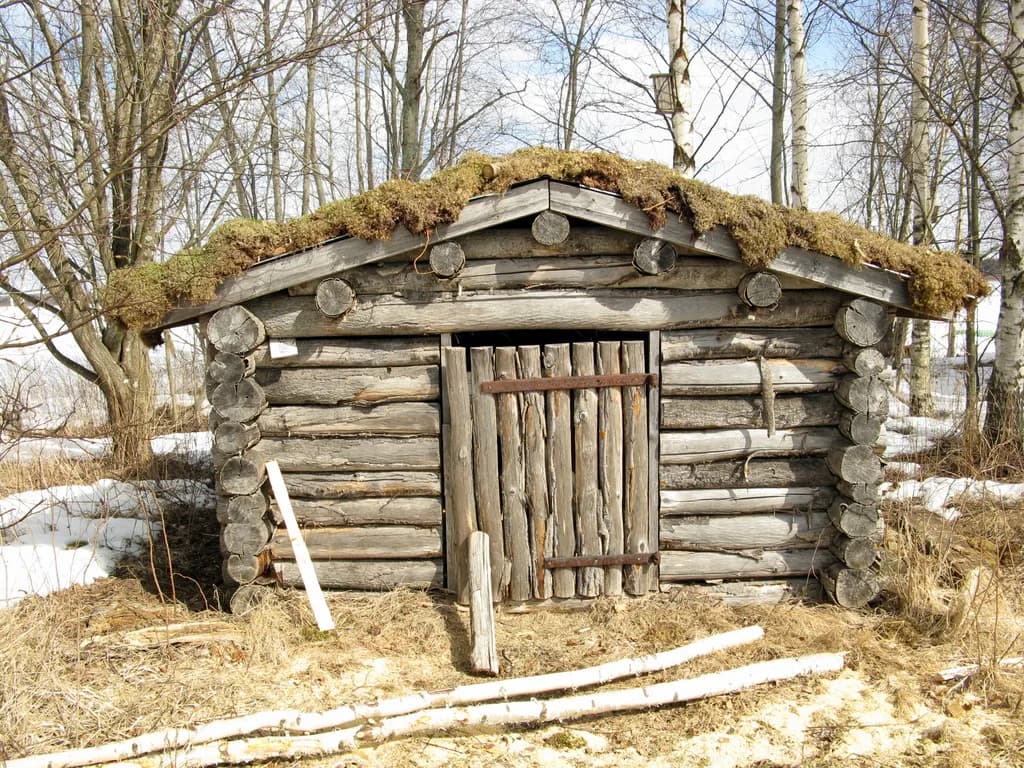
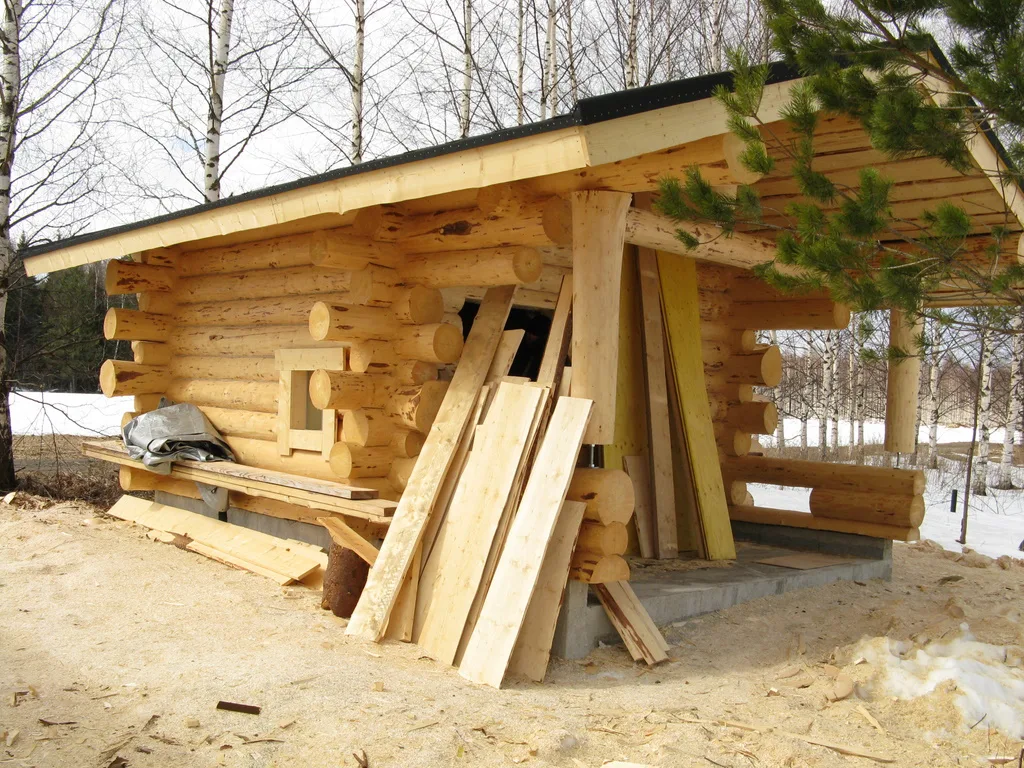
The savusauna, or smoke sauna, is the original form: a stove with no chimney, fired for hours until the room is up to temperature, then aired out so the smoke clears and only a soft, resinous heat remains. Heating takes several hours, which is why smoke saunas are rarer and usually run to a schedule rather than as walk-in.
If you want to understand why Finns treat smoke saunas as the pinnacle, the difference is in the heat: gentler on the skin, longer-lasting, and less aggressive when you add water. It is worth arranging a trip around a smoke sauna session rather than hoping to stumble into one.
For the long view of how the building and the ritual developed, our history of the sauna covers the transition from pit saunas to the urban bathhouses you can still visit. Practical advice does not change much across the centuries: heat, water, cool down, repeat.
Where to try it: Helsinki's public saunas
Helsinki has at least 60 public saunas, from 1920s neighbourhood bathhouses to glass-and-timber buildings on the waterfront. That range is the reason to plan two visits rather than one: a traditional wood-fired room in the morning, a seaside sauna with a Baltic dip in the evening.
Kotiharjun Sauna in Kallio is Helsinki's classic wood-burning neighbourhood bathhouse, built in 1928 and still heated the old way. The public sauna costs 16 €, runs Tuesday to Sunday 14:00–20:00 with bathing until 21:30, and takes no reservation for the public side — you walk in. Men's and women's sides are separate, towels rent for 4 € and a vihta for 8 €.
Löyly at Hernesaarenranta 4 is the opposite proposition: a design sauna and restaurant on the Baltic, with a terrace to cool off on and a restaurant menu rather than a cafeteria counter. Opening hours shift day by day, with some days split into a morning and an evening block, so plan around the published schedule on Löyly's own site rather than guessing at an evening slot. Book sauna and table together if you want to eat afterwards.
Allas Sea Pool, Sompasauna and Kulttuurisauna round out the city's range — a heated outdoor pool complex by the harbour, a free community-built sauna, and a quiet architectural sauna respectively. Our guide to the best saunas in Helsinki compares them side by side. For the broader national picture, our guide to public saunas in Finland covers what to expect from municipal and club saunas outside the capital.
Where to try it: Tampere, the Sauna Capital of the World
Tampere has called itself the Sauna Capital of the World since 2018, a title backed by the International Sauna Association and the Finnish Sauna Society, and the region now counts over 70 public saunas. It is a compact city, which means you can bathe in a historic wood-fired room and a floating sauna on the same day; our guide to saunas in Tampere maps them all. If you want to compare this scene with a Baltic neighbour, our Stockholm sauna guide covers the best saunas in Stockholm, including floating and lakeside picks. Across the Gulf, our Tallinn sauna guide covers the best saunas in Tallinn for another city scene to weigh against Finland's.
Rajaportti in Pispala, established in 1906, is the oldest still-operating public sauna in Finland and still wood-heated. Sauna-Restaurant Kuuma in the centre pairs a wood-heated room and a modern smoke sauna with a pier into Lake Pyhäjärvi for year-round cooling. Kaupinoja on Lake Näsijärvi has high benches for heat-seekers and a wood-fired sauna built inside a yurt.
One planning note that will affect an itinerary: Rauhaniemi sauna on Lake Näsijärvi is closed until spring 2027 for renovations, so build a lakeside swim around Kaupinoja or Suomensaari instead. FLOU, the floating experience centre, moves with the seasons — at Ratina in summer and on the Pyynikki shore in winter — so its location depends on when you visit.
For a smoke sauna in the region, Niemi-Kapee in Teisko opens to the public only a few times each month, and the drive is part of the deal. Our savusauna guide explains what you are signing up for and why the wait is worth it.
How a public sauna visit works, step by step
You arrive, pay at the desk and take a locker key; at Kotiharju the lockers come with keys already in them and you pick your own. Undress, shower thoroughly with soap, then take a towel or paper seat cover to sit on — pefletti in Finnish. The shower is not optional politeness; it keeps the benches clean for everyone after you.
Then you bathe in rounds. Most people take two or three sessions of five to fifteen minutes, cooling off between each, and wash properly with soap towards the end. There is no timer and no target; if you feel done, you are done.
Löyly is shared property. Ask the others in the room before you throw a ladle of water on the stones, and if someone is sitting on the highest bench, they usually decide how much steam the room takes. Some saunas run two rooms, one mild and one for the heat-hardened, so you can choose your crowd.
At the Finnish Sauna Society's house in Vaskiniemi, Lauttasaari, the mechanics differ: it is a members' club by the sea with six wood-burning saunas and one electric, each with its own character. Aino is the quiet, low-heat room where conversation and whisks are banned; Louhi is a hot chimneyless sauna where whisks are allowed. Members may bring one guest at a time, and Fridays are members only.
Nude, towel or swimsuit: what to wear and where
At most mixed public saunas in Helsinki you can wear a swimsuit or wrap yourself in a towel, and nobody will comment either way. Swimming halls are stricter: their single-sex saunas forbid swimwear because heated fabric gives off fumes, and bathers go nude with a towel to sit on.
The Finnish Sauna Society takes the traditional line: no swimming costumes in its saunas at all, though you can wear one for swimming or outdoors, and a towel wrap is accepted for religious reasons. Its house rules ask for a bathrobe or towel in the other rooms. Kotiharju likewise prohibits trunks and underwear in the hot room but allows a fresh towel wrapped around you.
The working rule is to read the room you are entering rather than the country. Mixed, design-led and seaside saunas are relaxed about swimwear; old bathhouses and club saunas expect nudity with a seat cover. When in doubt, undress, wrap a towel and follow what the people on the benches are doing.
Mixed and single-sex sessions
Helsinki's public saunas divide fairly cleanly by type. Design and seaside saunas tend to run mixed sessions, with swimwear or towels permitted, which makes them the easiest first stop for a nervous visitor. Traditional bathhouses like Kotiharju run separate men's and women's sides — the men's on the ground floor, the women's upstairs — and you stay on yours.
Swimming halls follow the same single-sex convention for their saunas, with the pools themselves often mixed. If you are visiting as a couple or a group with different preferences, check the session type before you buy tickets; it is the one detail that can derail a plan at the door.
Some venues also run women-only or quiet sessions at set times, and Tampere's Kaukajärvi sauna hosts regular quiet sessions for people who want a silent room. Those are worth seeking out if a crowded Saturday sauna sounds like the opposite of relaxing.
Cooling off: sea, lake, plunge pool and the avanto
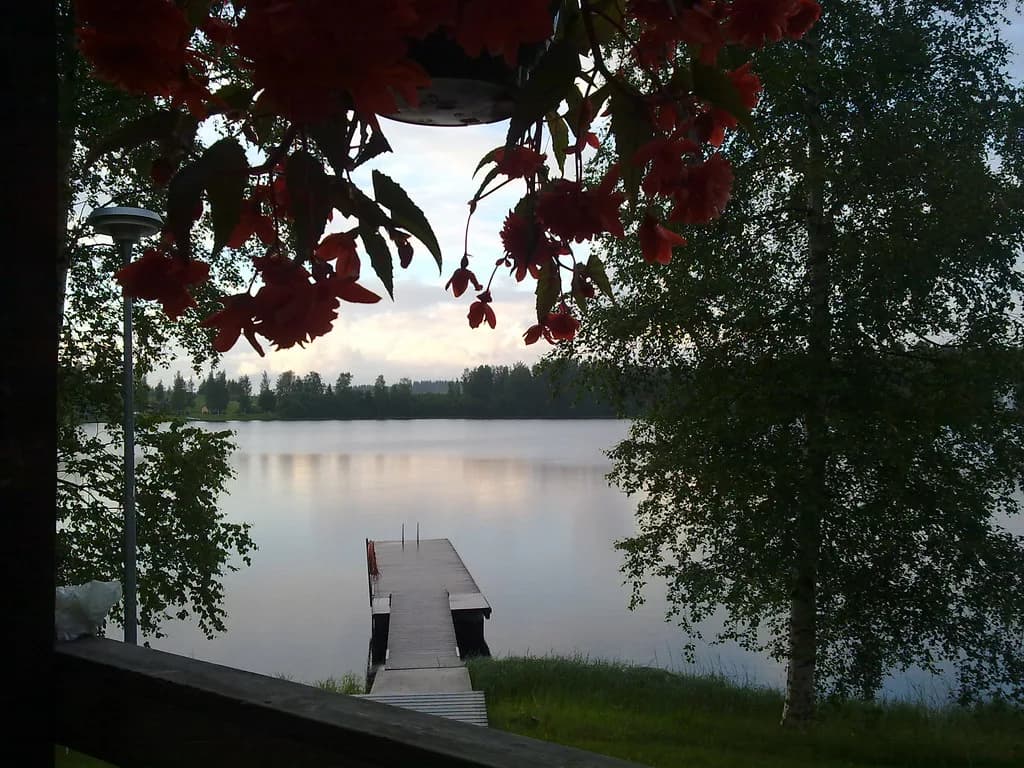
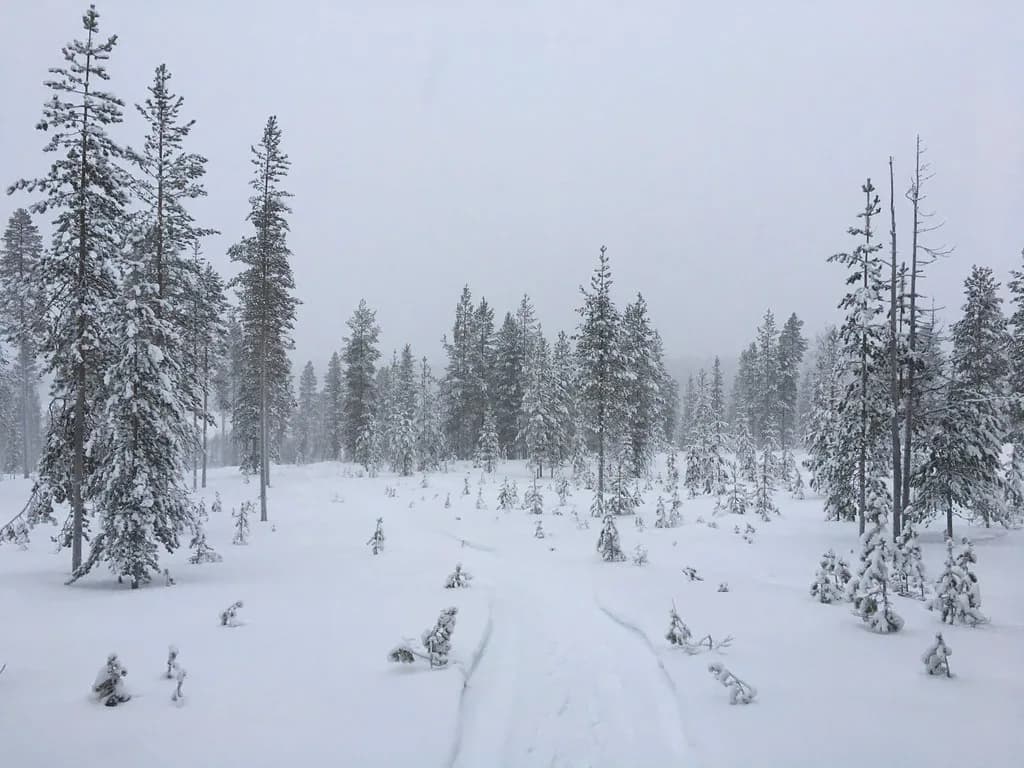
Cooling down is half the ritual, and in Finland it usually means water rather than a cold shower. Seaside saunas let you step from the hot room into the Baltic; lakeside saunas have a pier and a ladder. In winter the ice is cut open, and that hole is the avanto.
You do not have to plunge. A cold shower, a bucket of water or simply sitting outside in the yard works, and many public saunas have a terrace or courtyard for exactly that. At Vaskiniemi you can swim in the sea year round, but the yard and patio are equally legitimate places to cool down between rounds.
Tampere's lake saunas make this easy: Kuuma's pier into Lake Pyhäjärvi is in use all year, and Kaupinoja sits on Lake Näsijärvi with ice swimming in winter, as Rauhaniemi will again once its renovation is finished. Do not linger wet outdoors in February, though — bring something to stand on and something warm to pull on straight after.
If you want the mechanics of a proper hot-cold cycle, our guide to avanto ice swimming in Finland walks through how a dip is timed and how locals fit it between rounds. The short version: in, out, dry off, back in the sauna, repeat as long as it feels good.
What to bring and what to rent
Bring a towel, a water bottle and sandals if the floor might be hot — Kotiharju recommends sandals and will lend them if you forget. Venues rent or sell what you lack: towels, vihtas, seat covers and in some cases sauna hats, so a first visit does not require shopping beforehand.
A vihta (also called vasta) is a bundle of birch twigs you soak and use to whisk yourself or a neighbour, and it is optional rather than essential. Kotiharju's price list quotes a vihta at 8 €, or 9 € to take away, and rents towels at 4 €. If you are curious about technique, our sauna whisk guide covers how to soften and use one without shredding your skin. A sauna hat sounds like a joke and is not: felt or wool keeps your ears and scalp comfortable in high heat and slows the feeling of overheating. Kotiharju sells a full wool hat for 15 €. For why they work and how to choose one, see our Finnish sauna hat explainer.
Leave the phone in the locker. Helsinki's etiquette guidance is blunt about it: nothing belongs in the sauna except you, a seat cover and perhaps a swimsuit. That rule is also the reason a public sauna feels like a genuine break from the city.
What it costs
Public sauna pricing in Finland is modest and varies by venue type. Kotiharju charges 16 € for the public sauna, with reduced rates for students, pensioners and children, and multi-visit cards that bring the per-session price down. Towel rental and a vihta are charged separately.
Design and seaside saunas sit higher, often with a restaurant attached and sometimes with a combined sauna-and-meal booking; the entry price is one line of a longer bill. Member clubs work differently again — Vaskiniemi is a members' house and takes card payments only.
Lakeside and municipal saunas in Tampere sit at the affordable end, where the entry fee stays modest and simple. Expect to pay for what you use rather than for a package: towel, whisk, locker and any food or drink on top of the entry fee.
Etiquette: the do's and the don'ts
Shower first, sit on a towel or seat cover, and ask before you throw Löyly. Keep conversation quiet unless others are talking, and never compete over heat tolerance — the Finnish Sauna Society bans heat-tolerance competitions outright, and the general view is that they are both silly and unwise.
The sauna is a rare egalitarian room: presidents and labourers sit on the same benches at the same temperature, and the old adage about everyone being equal in the sauna still holds. That is the spirit to match — friendly, low-key, and uninterested in status.
For a fuller list of the small rules — where to drink, what not to bring, how to handle children — our Finnish sauna etiquette guide covers the details venue by venue, and our wider sauna etiquette guide compares the customs across Europe. The etiquette is not there to trip you up; it is mostly about giving the next person a clean bench and a quiet room.
The vocabulary: Löyly, kiuas, lauteet, vihta, avanto, savusauna
Six words carry most of a sauna visit. Löyly is the steam from the stones; kiuas is the stove; lauteet are the benches; vihta or vasta is the birch whisk; avanto is the ice hole; savusauna is a smoke sauna. Learn those and the signage and chatter around you will make sense.
Pronunciation is easier than the spelling suggests — the stress falls on the first syllable and every letter is spoken. Our sauna whisk guide goes deeper on vihta versus vasta, which are regional names for the same bundle of birch twigs and the source of minor friendly arguments.
Finnish is also unusually friendly to learners on this topic: sauna is one of the few Finnish words that has travelled into other languages intact. If you want to know how far, and why the Finnish language is worth a little effort before you go, our guide to how to pronounce sauna is a painless place to start.
A first-visit plan for a two-hour session
Pick a traditional bathhouse for your first visit if you want the real thing with no fuss: Kotiharju, walk-in, mid-afternoon on a weekday, with a towel and a vihta. You need roughly two hours, and an hour of that is showering, dressing and cooling down rather than sitting in heat.
If you would rather have a view and a meal, book a mixed seaside sauna instead and eat afterwards — Löyly's restaurant and its terrace over the Baltic are the obvious pick. Go early in the day for a quieter room; evening slots at waterfront venues get busy and book out.
Add a cold dip to whichever you choose. A shower counts, but stepping into the Baltic or a lake between rounds is the part people remember. Bring something to stand on, keep the first plunge short and go back inside before you start shivering.
Plan Your Visit
Two visits beat one. Choose an old wood-fired bathhouse for the traditional experience and a seaside or lakeside sauna for the cold water and the view, and you will understand why Finns treat this as ordinary life rather than an occasion. Helsinki's 60-plus public saunas and Tampere's 70-plus make that easy to arrange.
Keep the practical side simple: shower, sit on a seat cover, ask before you throw Löyly, cool off between rounds, and leave when you feel done. Drink water, skip alcohol beforehand, and step out if you feel unwell; anyone with a heart condition or who is pregnant should ask a doctor first.
Explore more Finland sauna guides
- Avanto: Ice Swimming in Finland, and How a Sauna Round Works
- How to Pronounce Sauna (and Other Finnish Sauna Words)
- Sauna Whisk
- Savusauna
- The Finnish Sauna Hat
- The Sauna World Championships
- Finnish Sauna Etiquette
- Finnish Sauna Temperature
- How Many Saunas Are in Finland? Three Million, for 5.5 Million People
- Public Saunas in Finland
- The History of the Sauna
- The Kiuas
- Christmas Sauna in Finland
- Jätkänkämppä Smoke Sauna in Kuopio
- The Best Saunas in Turku
Frequently Asked Questions
What is the Finnish word for steam in a sauna?
Löyly. It means the steam released when you ladle water onto the heated stones of the kiuas, and it is used more broadly to describe the quality of the heat in a sauna. Asking before you throw a ladle is normal courtesy.
Do you wear a swimsuit in a Finnish sauna?
It depends on the venue. Most mixed public saunas in Helsinki allow a swimsuit or a towel wrap, while single-sex swimming-hall saunas forbid swimwear and bathers sit nude on a towel or seat cover. The Finnish Sauna Society does not allow swimming costumes in its saunas at all.
How long should you stay in a Finnish sauna?
Traditionally five to fifteen minutes per round, with two or three rounds and cooling off between each. There is no timer and no target, and staying longer is not better; leave when you have had enough.
What is the difference between a Finnish sauna and a smoke sauna?
A savusauna, or smoke sauna, has no chimney: the wood is burned inside the room, the smoke is aired out, and the stones hold a soft, long-lasting heat. A regular wood-fired or electric sauna heats faster and has a cleaner, less smoky atmosphere.
Can you visit a public sauna in Finland without booking?
Often, yes. Kotiharju in Helsinki takes no reservations for its public sauna, and many municipal and lakeside saunas work the same way. Waterfront design saunas usually do take bookings and can sell out at peak times, so reserve those in advance.
What is an avanto?
An avanto is a hole cut in the ice for winter swimming, usually next to a sauna. You go from the hot room into the water and back inside; how long you stay in is entirely up to you, and many people keep the first dip very short.
How many public saunas are there in Helsinki and Tampere?
Helsinki has at least 60 public saunas, and the Tampere region has over 70. Tampere has called itself the Sauna Capital of the World since 2018.
Sources
- Sauna culture in Finland - UNESCO Intangible Cultural Heritage
- Bare facts of the sauna in Finland - thisisFINLAND
- Helsinki sauna guide: best public saunas & urban sauna culture
- Helsinki sauna etiquette: 7 simple tips
- Sauna bathing and customs - Sauna
- Löyly Helsinki | Unique Sauna & Restaurant by the Seacookies
- Kotiharjun sauna | traditional Finnish sauna | Harjutorinkatu 1, Helsinki, Finland
- Saunas at Vaskiniemi - Sauna
- For media: The Sauna Capital - Visit Tampere
- The hottest public saunas in Tampere - Visit Tampere
- Traditional saunas - FINLAND, NATURALLY
Sauna notes for your next trip
Optional updates to our sauna guides.
You might also like
Continue reading
More guides you'll find useful